
Shoppers have stopped taking ingredient lists on faith. Clean label rice syrup owes its rising shelf presence to exactly that shift: what began as a premium positioning strategy a decade ago has hardened into a baseline expectation across developed food markets, and any natural sweetener for clean label products now gets judged against that standard. Rice syrup clears the bar better than almost any alternative, combining solid functional performance with credentials consumers actually trust.
🧾 What “Clean Label” Actually Means for Sweeteners
Nobody has written clean label into regulation, but shoppers agree on what it looks like in practice. Four expectations keep converging:
- Short ingredient lists: fewer, more recognizable entries
- Natural processing: ingredients made without harsh synthetic chemicals
- Transparency: clear communication of origins and processing methods
- Free-from attributes: no artificial colors, flavors, preservatives, or controversial additives
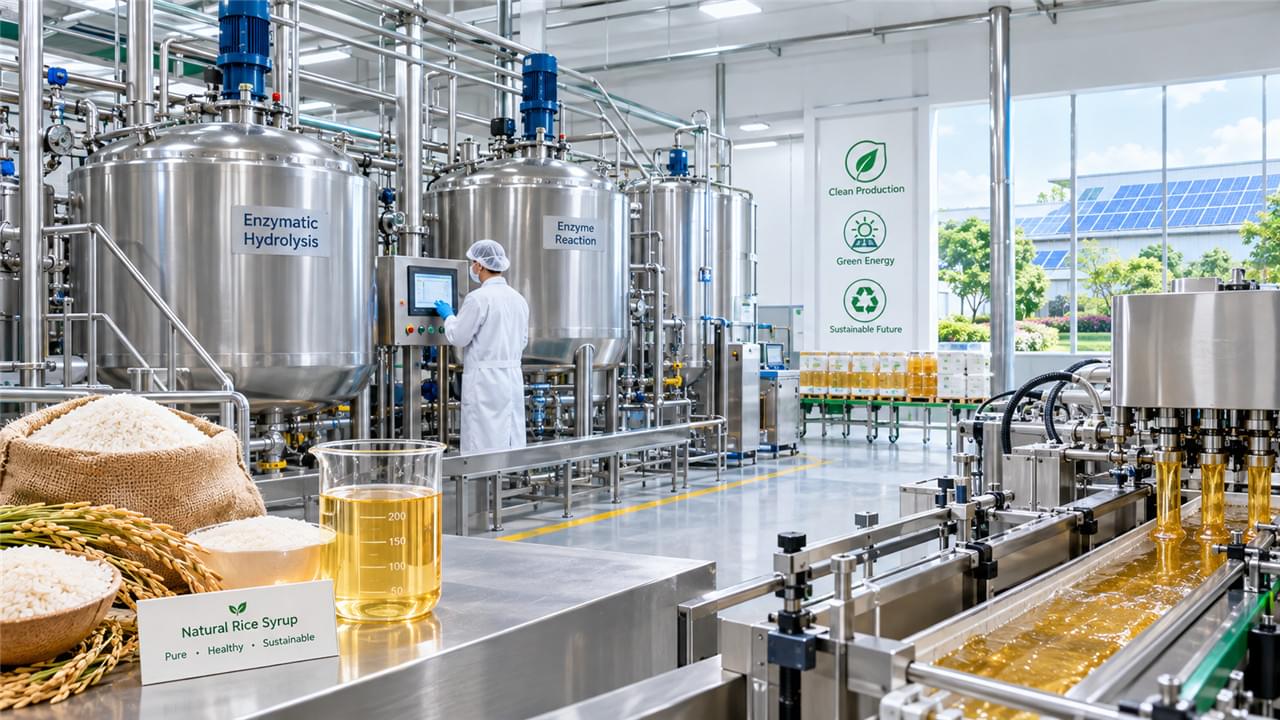
Clean label rice syrup is one of the rare ingredients that satisfies all four at once. It’s made through enzymatic hydrolysis of rice starch — a process analogous to natural digestion — with no synthetic chemical reagents, bleaching agents, or artificial catalysts along the way.
🛒 Why Shoppers Actually Choose Rice Syrup Products
Consumer research across multiple studies points to three consistent patterns:
Recognizability. “Rice syrup” explains itself — a familiar, culturally trusted grain. Compare that to “high maltose corn syrup” or “dextrose monohydrate,” names that send shoppers straight to their phones.
Allergen safety. Parents of children with food allergies are among the most influential clean label buyers. Because rice syrup contains none of the top-9 allergens (wheat/gluten, dairy, eggs, peanuts, tree nuts, soy, fish, shellfish, sesame), it’s a natural fit in allergy-conscious households.
Non-GMO confidence. No commercially approved GMO rice exists, which means non-GMO rice syrup can carry the claim with confidence — and without the heavy testing burden that corn- or soy-derived ingredients demand.
🏅 Building a Certification Portfolio That Backs the Claim
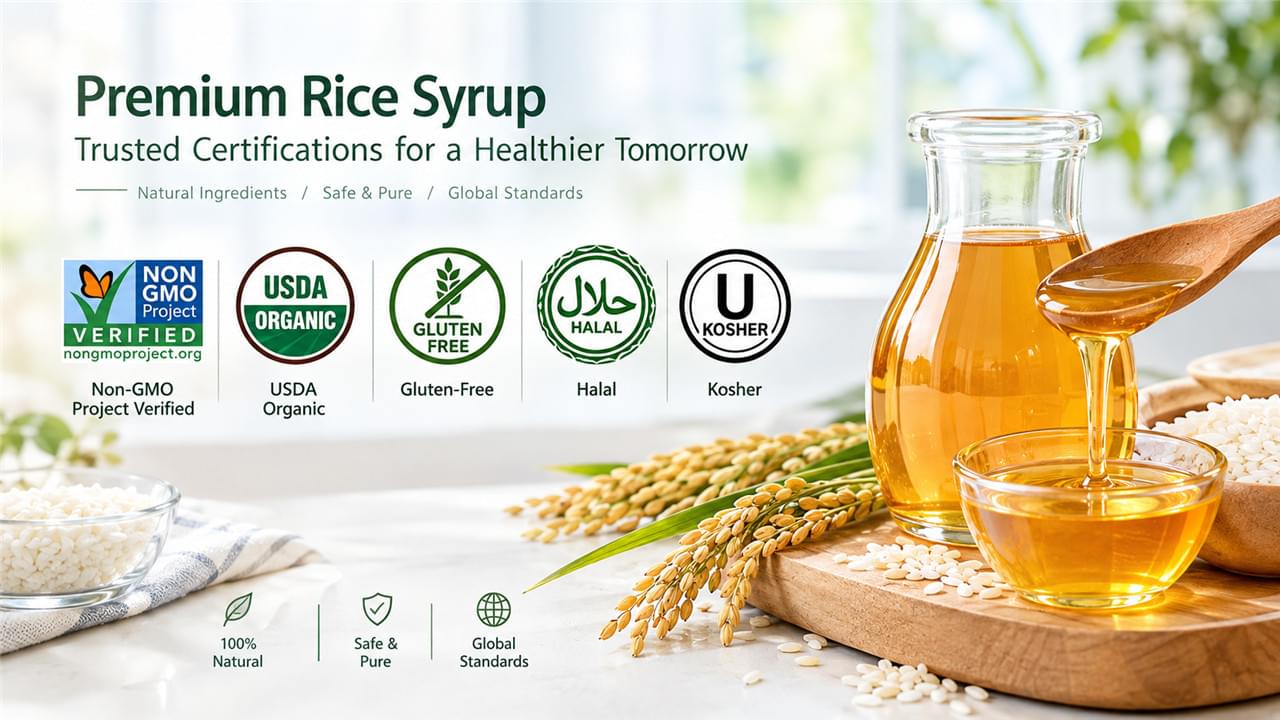
Credentials do the talking when shoppers scan the shelf. A serious clean label rice syrup portfolio covers several standards.
Clean Label Rice Syrup on the Non-GMO Project Path
The Non-GMO Project remains the leading third-party verification program in North America. For rice syrup, it requires documented grain sourcing from non-GMO fields, a facility audit covering GMO cross-contamination risk, and annual renewal with updated paperwork — so non-GMO rice syrup arrives on your spec sheet already defensible.
Clean Label Rice Syrup and the Organic Premium
Organic rice syrup commands a 20–40% price premium in specialty and natural channels — proof that shoppers pay for the claim. Earning organic rice syrup certification takes 100% organically grown rice, organic-compliant processing aids only, dedicated organic lines or documented cleaning protocols, and an annual third-party audit.
Clean Label Rice Syrup: Gluten-Free by Certification
Rice is naturally gluten-free, but shared facilities change the math. For celiac and gluten-sensitive consumers, GFCO certification — with testing to <10 ppm — is what turns “naturally gluten-free” into a claim you can print.
Clean Label Rice Syrup for Kosher & Halal Markets
For food service and institutional markets, Kosher (OU, Kof-K) and Halal (IFANCA, MUI) certifications widen market access while reinforcing the clean ingredient story.
🧪 Formulation Strategies That Keep the Label Clean
Deploying clean label rice syrup well means understanding its functional profile:
Sweetness management. At DE 42, rice syrup delivers roughly 60% of sucrose sweetness, so reaching target sweetness takes care. Blending with stevia or monk fruit cuts calories without giving up clean label positioning.
Moisture retention. Its hygroscopic nature keeps baked goods and bars soft, quietly replacing synthetic humectants like propylene glycol.
Texture building. In chewy formats — bars, gummies, chews — rice syrup brings body and cohesion, reducing or eliminating synthetic binding agents.
Browning control. The glucose content participates in Maillard browning. Manage it in temperature-sensitive applications; leverage it for appealing color in bakery.
📣 Telling the Clean Label Story on Pack and Online
Effective communication reaches past the ingredient list:
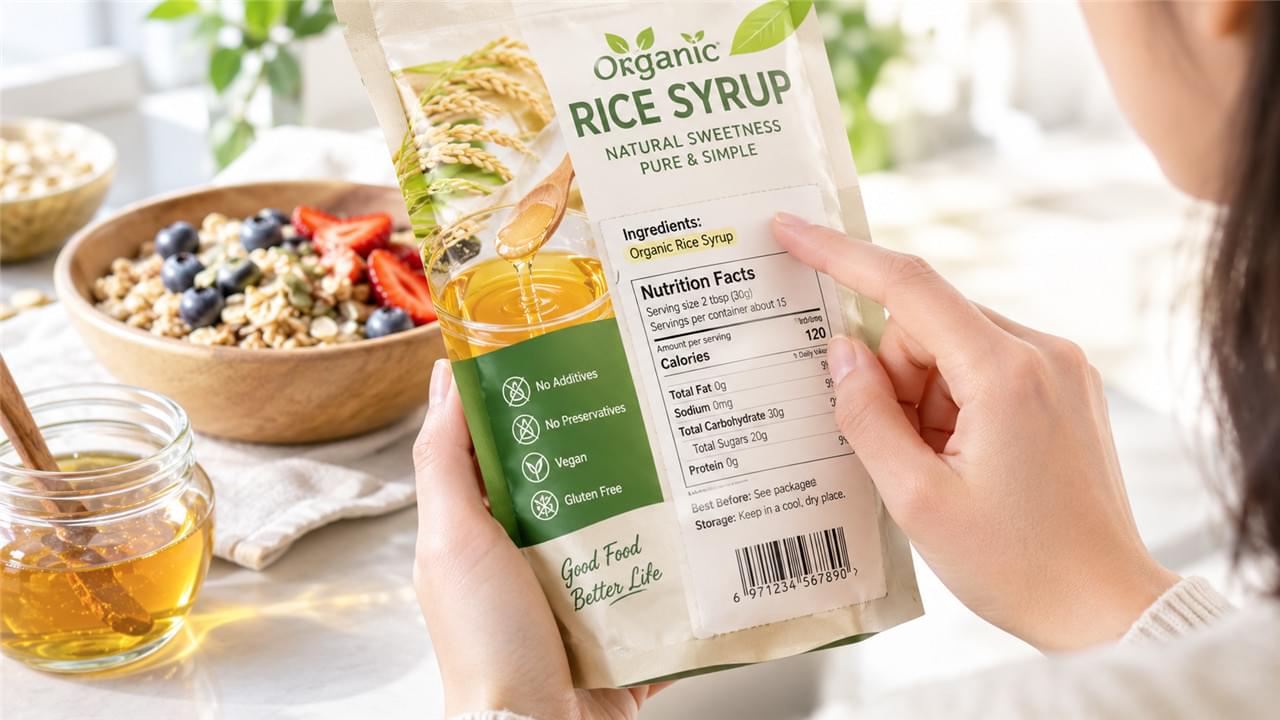
- Front-of-pack: “Sweetened with rice syrup” or “Made with brown rice syrup” as a positive call-out
- Back-of-pack: a brief, honest explanation of origin and production
- Digital transparency: QR-linked traceability documentation for the growing segment of shoppers who research ingredients before buying
✅ Conclusion: A Durable Advantage in Natural Food Development
Clean label rice syrup sits where consumer preference, regulatory compliance, and functional performance all point the same direction. As demand intensifies across global markets, manufacturers who master rice syrup formulation will hold a durable competitive edge in natural food development.
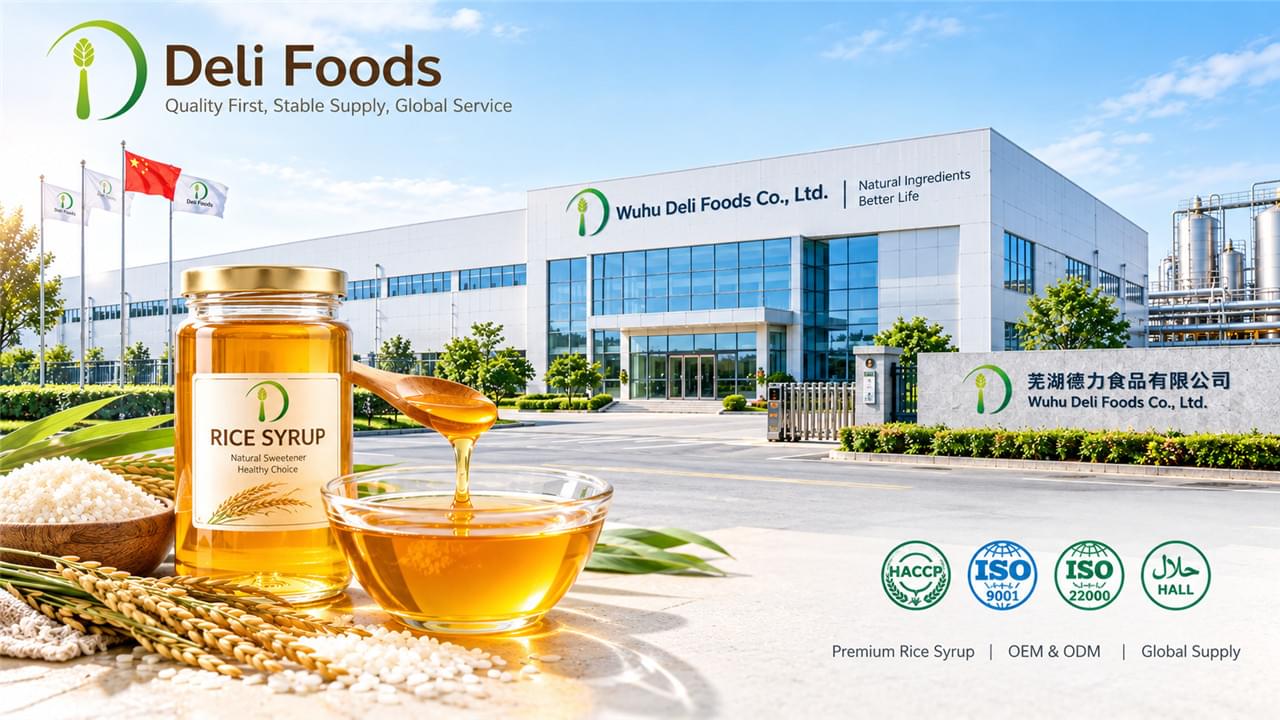
Wuhu Deli Foods supplies clean label rice syrup with complete certification support — non-GMO, organic, Halal, Kosher, and gluten-free grades available for immediate qualification.

 English
 Deutsch
 Español
 العربية
 Français
 Русский
 Bahasa Indonesia
 한국어
한국어 日本語
日本語 Polski
 Português
 Bahasa Melayu