
Na dzisiejszym konkurencyjnym rynku mleczarskim producenci nieustannie poszukują składników, które poprawią jakość produktu, a jednocześnie spełnią oczekiwania konsumentów dotyczące czystszych etykiet. Syrop ryżowy w produktach mlecznych stał się coraz cenniejszym rozwiązaniem dla producentów opracowujących wysokiej jakości lody, fermentowane produkty mleczne, smakowe napoje mleczne i alternatywy na bazie roślin.
Oprócz słodkości, syrop ryżowy oferuje wiele korzyści funkcjonalnych, w tym obniżenie temperatury zamarzania, wspomaganie fermentacji, zatrzymywanie wilgoci i lepszą konsystencję. Te cechy sprawiają, że jest to wszechstronny składnik zarówno tradycyjnych produktów mlecznych, jak i innowacyjnych alternatyw dla nabiału.
Konsumenci coraz częściej stawiają na naturalne składniki i przejrzyste etykiety, dlatego syrop ryżowy oferuje markom mleczarskim praktyczny sposób na poprawę jakości produktu bez uszczerbku dla atrakcyjności rynkowej.
🍦 Dlaczego syrop ryżowy w produktach mlecznych zyskuje na popularności
Syrop ryżowy powstaje w wyniku enzymatycznej przemiany skrobi ryżowej w zbilansowaną mieszankę glukozy, maltozy, maltotriozy i wyższych sacharydów. Ten unikalny profil węglowodanowy zapewnia funkcjonalność wykraczającą daleko poza proste słodzenie.
W porównaniu ze słodzikami wysoko rafinowanymi syrop ryżowy zapewnia:
✔ Zrównoważona słodycz
✔ Poprawiona stabilność tekstury
✔ Lepsze zarządzanie wilgocią
✔ Wsparcie dla systemów fermentacyjnych
✔ Czysta etykieta, atrakcyjna dla konsumenta
Zgodnie z Międzynarodowe Stowarzyszenie Producentów Produktów Mlecznych (IDFA), Składniki z czystą etykietą nadal wpływają na decyzje zakupowe w globalnych kategoriach produktów mlecznych. Syrop ryżowy doskonale wpisuje się w ten trend, oferując rozpoznawalne etykiety i wielofunkcyjne działanie.
🍨 Syrop ryżowy w produktach mlecznych do receptur lodów
Kontrola punktu zamarzania dla lepszej możliwości nabierania
Jedno z najcenniejszych zastosowań Syrop ryżowy w produktach mlecznych jest producentem lodów premium.
Zróżnicowany skład cukru w syropie ryżowym pomaga obniżyć temperaturę zamarzania mieszanki, dzięki czemu lody pozostają miękkie i nadają się do nabierania łyżką nawet w standardowych temperaturach przechowywania wynoszących około -18°C.
Korzyści obejmują:
- Zmniejszona twardość produktu
- Ulepszone doświadczenie serwowania
- Lepsza stabilność podczas przechowywania w stanie zamrożonym
- Mniejsze zapotrzebowanie na dodatkowe środki nawilżające
Zarządzanie kryształkami lodu i bardziej kremowa konsystencja
Duże kryształki lodu to jeden z najczęstszych problemów jakościowych w mrożonych deserach. Węglowodany o wyższej masie cząsteczkowej zawarte w syropie ryżowym pomagają spowolnić wzrost kryształków lodu podczas przechowywania.
W rezultacie otrzymujemy:
- Gładsza konsystencja
- Zwiększona kremowość
- Poprawiona spójność tekstury
- Lepsze postrzeganie przez konsumentów
Optymalizacja słodkości
Dla producentów poszukujących rozwiązań o obniżonej zawartości cukru, syrop ryżowy do lodów zapewnia znaczną elastyczność.
Syrop ryżowy o DE w zakresie 42–50 zazwyczaj zapewnia około 40–50% słodkości sacharozy. Pozwala to producentom obniżyć ogólny poziom cukru, zachowując jednocześnie przyjemny profil smakowy.
Zalecane użycie
| Parametr | Zalecenie |
| Poziom wykorzystania | 8–18% |
| Zasięg DE | 42–52 |
| Zamiennik sacharozy | 20–40% |
Producenci wysokiej jakości lodów ekologicznych często wybierają klarowany syrop ryżowy ze względu na jego neutralny smak i doskonałe właściwości barwiące.
🥣 Syrop ryżowy w produktach mlecznych do produkcji jogurtu
Wspieranie wydajności fermentacji
Kolejną ważną zaletą Syrop ryżowy w produktach mlecznych jest jego kompatybilność z zastosowaniami w mleczarniach fermentowanych.
W procesie fermentacji glukoza i maltoza stanowią łatwo dostępne źródła węglowodanów, które wspomagają aktywność bakterii.
Potencjalne korzyści obejmują:
- Spójne zachowanie fermentacji
- Poprawiona niezawodność procesu
- Jednolity rozwój kwasu
- Zwiększona wydajność produkcji
Korzyści ze słodzenia po fermentacji
Wielu producentów jogurtu woli dodawać syrop ryżowy po fermentacji.
Dzięki takiemu podejściu producenci mogą:
✔ Dopasuj poziom słodkości
✔ Zachowuje konsystencję jogurtu
✔ Utrzymuje strukturę żelu
✔ Zrównoważona naturalna kwasowość
Łagodny profil słodkości syrop ryżowy w produkcji jogurtu uzupełnia smaki kultur mlecznych, nie przytłaczając ich.
Zalecane użycie
| Parametr | Zalecenie |
| Poziom wykorzystania | 4–10% |
| Zasięg DE | 42–55 |
Ponieważ można go po prostu nazwać “syropem ryżowym”, producenci mogą zachować przyjazny dla konsumenta skład.
🥛 Syrop ryżowy w produktach mlecznych do napojów mlecznych o smaku
Mleko czekoladowe, mleko waniliowe, mleko kawowe i inne gotowe do spożycia napoje mleczne również mogą skorzystać na dodaniu syropu ryżowego.
Ulepszone wrażenia smakowe i bogactwo
Syrop ryżowy o średniej gęstości (DE) nadaje potrawie gęstość i lepkość, które zwiększają odczuwalną kremowość.
Zalety obejmują:
- Pełniejsza tekstura
- Zmniejszone uczucie wodnistości
- Lepsze dostarczanie smaku
- Lepsze wrażenia z picia
Stabilna wydajność słodkości
W przeciwieństwie do niektórych środków słodzących, syrop ryżowy pozostaje stabilny w warunkach chłodniczych i nie powoduje niepożądanej krystalizacji.
Typowa formuła mleka czekoladowego może zawierać:
- Mleko pełne: 90%
- Kakao w proszku: 1–2%
- Syrop ryżowy (DE 48–55): 4–7%
- Cukier: 0–3%
- Karagen: 0,01–0,02%
Aby uzyskać dodatkowe informacje na temat funkcjonalności słodzika, producenci mogą zapoznać się z materiałami udostępnionymi przez Instytut Technologów Żywności (IFT).
🌱 Syrop ryżowy w produktach mlecznych jako alternatywa dla produktów mlecznych
Zastosowania jogurtu kokosowego
Szybki rozwój kategorii produktów mlecznych pochodzenia roślinnego stworzył nowe możliwości dla Syrop ryżowy w produktach mlecznych i alternatywnych receptur mlecznych.
W systemach jogurtu kokosowego syrop ryżowy pomaga zapewnić:
- Zrównoważona słodycz
- Ulepszone odczucie w ustach
- Wsparcie fermentacji
- Czystszy profil smakowy
Typowa formuła:
- Baza kokosowa: 70–80%
- Syrop ryżowy (DE 42–52): 4–8%
- Kultury żywe: W razie potrzeby
Desery na bazie nerkowców i orzechów
W deserach premium na bazie orzechów, syrop ryżowy jako alternatywa dla produktów mlecznych zapewnia delikatną słodycz bez wprowadzania intensywnych nut smakowych.
Typowa formuła:
- Baza z orzechów nerkowca: 20–30%
- Syrop ryżowy (DE 45–55): 8–15%
W porównaniu ze słodzikami na bazie kukurydzy lub owsa, syrop ryżowy zapewnia czystszy smak i minimalizuje posmak skrobi.
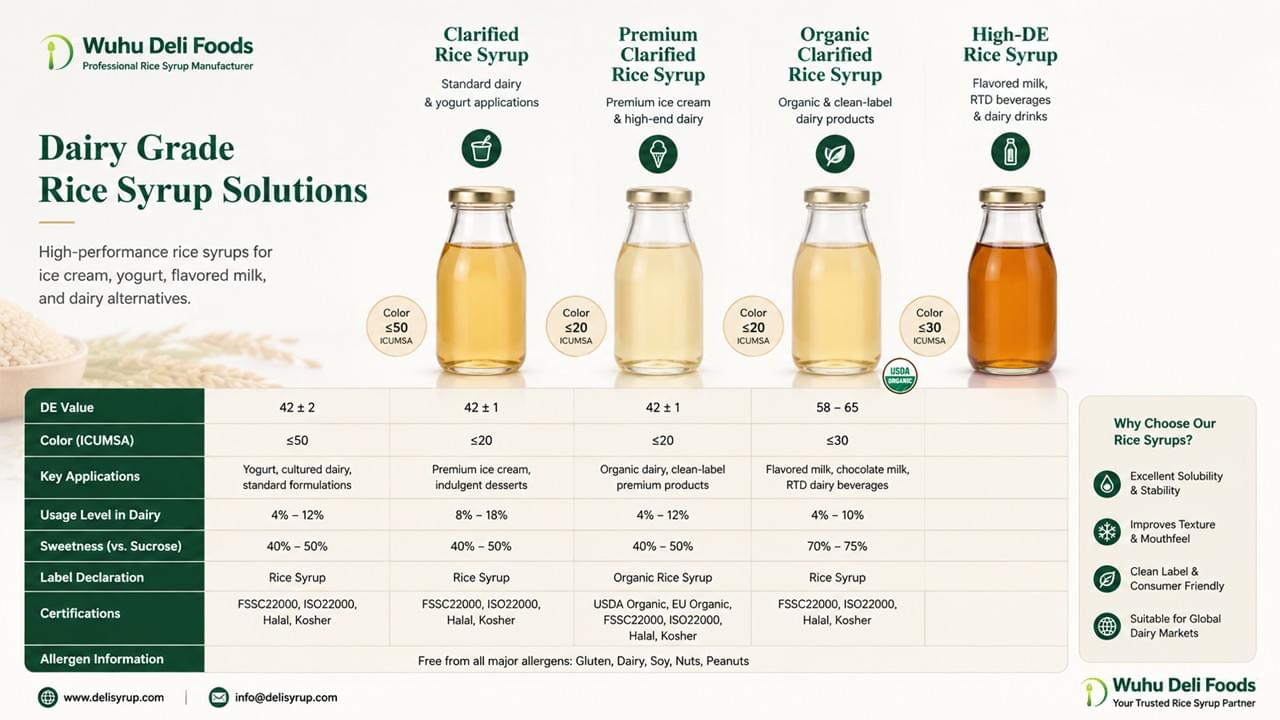
🏭 Wuhu Deli Foods Rozwiązania w zakresie składników mlecznych
Aby sprostać zróżnicowanym potrzebom producentów produktów mlecznych, firma Wuhu Deli Foods dostarcza syropy ryżowe o różnych specyfikacjach, odpowiednie do mrożonych deserów, fermentowanych produktów mlecznych, smakowych napojów mlecznych i alternatyw dla produktów mlecznych.
| Produkt | Wartość DE | Kolor (ICUMSA) | Aplikacja |
| Syrop z ryżu klarowanego | 42 ± 2 | ≤50 | Jogurt i standardowe produkty mleczne |
| Syrop ryżowy premium klarowany | 42 ± 1 | ≤20 | Lody premium |
| Ekologiczny syrop ryżowy klarowany | 42 ± 1 | ≤20 | Organiczne produkty mleczne |
| Syrop ryżowy o wysokiej zawartości DE | 58–65 | ≤30 | Napoje mleczne RTD |
Zalety regulacyjne i „czystej etykiety”
✅ Deklaracja składników przyjazna dla etykiety
✅ Dostępne opcje z certyfikatem ekologicznym
✅ Bez głównych alergenów
✅ Nadaje się do rynków UE, USA, Japonii, Chin i innych rynków międzynarodowych
🚀 Ostatnie przemyślenia
W miarę jak producenci wyrobów mlecznych starają się znaleźć równowagę między jakością produktu, oczekiwaniami konsumentów i wydajnością receptur, Syrop ryżowy w produktach mlecznych oferuje praktyczne i wszechstronne rozwiązanie.
Niezależnie od tego, czy jest stosowany w lodach premium, jogurtach fermentowanych, smakowych napojach mlecznych, czy roślinnych alternatywach dla nabiału, syrop ryżowy zapewnia znaczące korzyści funkcjonalne wykraczające poza słodycz. Jego zdolność do poprawy tekstury, wspomagania fermentacji, wzmacniania smaku i spełniania wymogów „czystej etykiety” sprawia, że staje się coraz cenniejszym składnikiem w nowoczesnych kategoriach nabiałowych.
👉 Poproś Wuhu Deli Foods o próbki produktów mlecznych →
Aby uzyskać szerszy przegląd branży, odwiedź naszą stronę Przewodnik po stosowaniu syropu ryżowego i odkrywać Syrop ryżowy w zdrowej i funkcjonalnej żywności aby odkryć dodatkowe możliwości formulacji.




 English
 Deutsch
 Español
 العربية
 Français
 Русский
 Bahasa Indonesia
 한국어
한국어 日本語
日本語 Polski
 Português
 Bahasa Melayu