
W miarę jak globalny przemysł spożywczy stale się rozwija, Standardy Jakości Syropu Ryżowego stały się kluczowym czynnikiem dla producentów, dystrybutorów i międzynarodowych nabywców. Niezależnie od tego, czy pozyskujesz syrop ryżowy do napojów, wyrobów cukierniczych, żywienia niemowląt czy przetworzonej żywności, spełnienie wymogów regulacyjnych nie jest już opcjonalne – jest niezbędne do uzyskania dostępu do rynku, budowania zaufania konsumentów i długoterminowego sukcesu biznesowego.
🌍 Każdy rynek docelowy stosuje własne ramy prawne dotyczące bezpieczeństwa żywności, etykietowania, limitów zanieczyszczeń i praktyk produkcyjnych. Jednocześnie uznane na całym świecie certyfikaty zapewniają dodatkową gwarancję, że dostawca utrzymuje spójne zarządzanie jakością i kontrolę produkcji.
Niniejszy przewodnik wyjaśnia główne standardy jakości dotyczące syropu ryżowego na całym świecie, w tym przepisy obowiązujące w Stanach Zjednoczonych, Unii Europejskiej, Chinach i Japonii. Dowiesz się również, jakie certyfikaty najczęściej wymagają nabywcy, jakie dokumenty są potrzebne w handlu międzynarodowym oraz uzyskasz praktyczne rekomendacje dotyczące pewnej oceny dostawców.
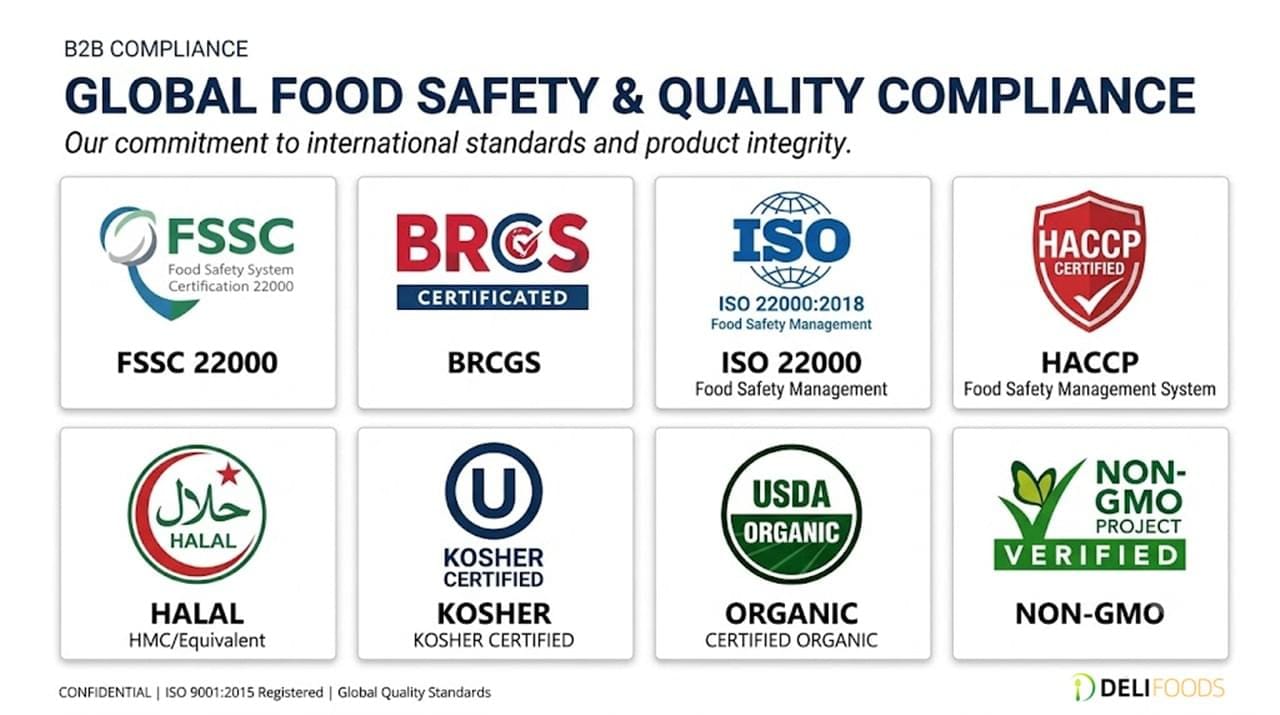
🌍 Zrozumienie globalnych ram standardów jakości syropu ryżowego
Chociaż przepisy dotyczące żywności różnią się w zależności od kraju, większość organów podziela ten sam cel: ochronę konsumentów poprzez zapewnienie, że składniki żywności są bezpieczne, prawidłowo oznakowane i produkowane w sposób spójny.
Dla dostawców syropu ryżowego zgodność zazwyczaj wykracza poza pojedyncze przepisy. Firmy muszą wykazać zgodność z wieloma warstwami wymogów, w tym:
- ✅ Międzynarodowe zasady bezpieczeństwa żywności
- ✅ Krajowe przepisy dotyczące żywności
- ✅ Certyfikaty produkcji
- ✅ Standardy testowania produktów
- ✅ Specyfikacje jakościowe klienta
Zrozumienie, jak te ramy działają razem, pomaga firmom zmniejszyć ryzyko regulacyjne, jednocześnie poprawiając niezawodność łańcucha dostaw.
🌎 Codex Alimentarius: Międzynarodowy punkt odniesienia
Jednym z najbardziej rozpoznawalnych odniesień w zakresie globalnego bezpieczeństwa żywności jest Kodeks Żywnościowy, wspólnie ustanowiony przez Organizacja Narodów Zjednoczonych do spraw Wyżywienia i Rolnictwa (FAO) oraz Światowa Organizacja Zdrowia (WHO). Normy Codex same w sobie nie są prawnie wiążące, ale mają silny wpływ na przepisy dotyczące żywności i politykę handlu międzynarodowego na całym świecie.
Dla producentów syropu ryżowego kilka dokumentów Codex stanowi cenne wskazówki.
✅ Normy Codex dotyczące syropu ryżowego
- Codex STAN 212-1999 — Dotyczy syropów glukozowych i słodzików pochodzenia skrobiowego.
- Codex STAN 1-1985 — Definiuje ogólne wymogi dotyczące etykietowania żywności paczkowanej.
- CAC/RCP 1-1969 — Ustanawia międzynarodowo akceptowane Dobre Praktyki Higieniczne i zasady HACCP.
Wiele krajowych organów regulacyjnych wykorzystuje te dokumenty jako odniesienie przy opracowywaniu własnych przepisów dotyczących żywności, co czyni zgodność z Codex ważnym czynnikiem dla eksporterów.
💡 Pełną bazę danych Codex można przeglądać tutaj:
https://www.fao.org/fao-who-codexalimentarius/
🏭 Systemy zarządzania bezpieczeństwem żywności ISO
Chociaż przepisy rządowe określają wymogi prawne, standardy certyfikacji pomagają producentom wykazać, że wymogi te są konsekwentnie wdrażane.
Jednym z najbardziej rozpoznawalnych systemów jest ISO 22000:2018, który integruje zarządzanie bezpieczeństwem żywności z Analizą Zagrożeń i Krytycznymi Punktami Kontroli (HACCP). Zamiast skupiać się wyłącznie na testowaniu produktów, ISO 22000 kładzie nacisk na profilaktyczne zarządzanie ryzykiem w całym procesie produkcji.
Kluczowe korzyści obejmują:
- ✔ Lepsza identyfikowalność w całym procesie produkcyjnym
- ✔ Ulepszone procedury oceny ryzyka
- ✔ Silniejsze zarządzanie dostawcami
- ✔ Ciągłe doskonalenie jakości
- ✔ Większe zaufanie ze strony klientów międzynarodowych
Dla kupujących oceniających wielu dostawców, certyfikacja ISO często służy jako ważny wskaźnik dojrzałości operacyjnej i spójności jakości.
🏆 Dlaczego FSSC 22000 ma znaczenie
Wiele międzynarodowych firm spożywczych wymaga od dostawców posiadania certyfikatu FSSC 22000 , ponieważ rozszerza on ISO 22000 o dodatkowe kontrole bezpieczeństwa żywności uznane przez Global Food Safety Initiative (GFSI).
W porównaniu ze standardową certyfikacją zarządzania, FSSC 22000 zapewnia większą pewność, że zakłady produkcyjne przestrzegają międzynarodowo akceptowanych praktyk w zakresie bezpieczeństwa żywności.
Korzyści obejmują:
- 🌍 Uznanie na głównych rynkach międzynarodowych
- 🏭 Silne akceptacja wśród globalnych marek spożywczych
- 📋 Ulepszone systemy zarządzania ryzykiem
- 🔍 Niezależne audyty stron trzecich
- 🤝 Zwiększone zaufanie podczas kwalifikacji dostawcy
Dla firm eksportujących syrop ryżowy do wielu krajów, FSSC 22000 może znacznie uprościć procesy zatwierdzania przez klientów.
🇺🇸 Standardy jakości syropu ryżowego w Stanach Zjednoczonych
Stany Zjednoczone pozostają jednym z największych światowych rynków składników żywności, a nadzór regulacyjny sprawuje głównie U.S. Food and Drug Administration (FDA).
Firmy eksportujące syrop ryżowy do USA powinny rozumieć nie tylko wymogi bezpieczeństwa składników, ale także rejestrację zakładów, środki zapobiegawcze i obowiązki dotyczące etykietowania.
✅ Status GRAS i bezpieczeństwo żywności
Syrop ryżowy produkowany w drodze hydrolizy enzymatycznej skrobi ryżowej jest generalnie uważany za Generally Recognized As Safe (GRAS) (Ogólnie Uznany za Bezpieczny), gdy jest produkowany przy użyciu akceptowanych metod przetwarzania żywności.
Jednak status GRAS nie zwalnia z odpowiedzialności regulacyjnej. Od producentów nadal oczekuje się wdrażania zapobiegawczych systemów bezpieczeństwa żywności zgodnie z Food Safety Modernization Act (FSMA) i prowadzenia kompleksowej dokumentacji produkcyjnej.
Zakłady eksportujące składniki żywności do Stanów Zjednoczonych muszą również zarejestrować się w FDA przed wysyłką produktów.
Więcej informacji można znaleźć na oficjalnej stronie internetowej FDA:
https://www.fda.gov/
🏷️ Wymogi dotyczące etykietowania FDA
Właściwe etykietowanie jest niezbędne dla zgodności z przepisami i sprawnego odprawy celnej.
Zgodnie z przepisami FDA dotyczącymi etykietowania, syrop ryżowy powinien:
- ✅ Być deklarowany pod jego powszechną lub zwyczajową nazwą, taką jak “Syrop Ryżowy” lub “Syrop z Brązowego Ryżu”.”
- ✅ Pojawiać się na listach składników według wagi.
- ✅ Spełniać odpowiednie wymogi dotyczące etykietowania wartości odżywczej.
- ✅ Potwierdzać wszelkie oświadczenia o pochodzeniu organicznym za pomocą ważnego certyfikatu USDA Organic.
Dokładne etykietowanie nie tylko spełnia obowiązki prawne, ale także pomaga kupującym zweryfikować autentyczność produktu i utrzymać przejrzyste łańcuchy dostaw.
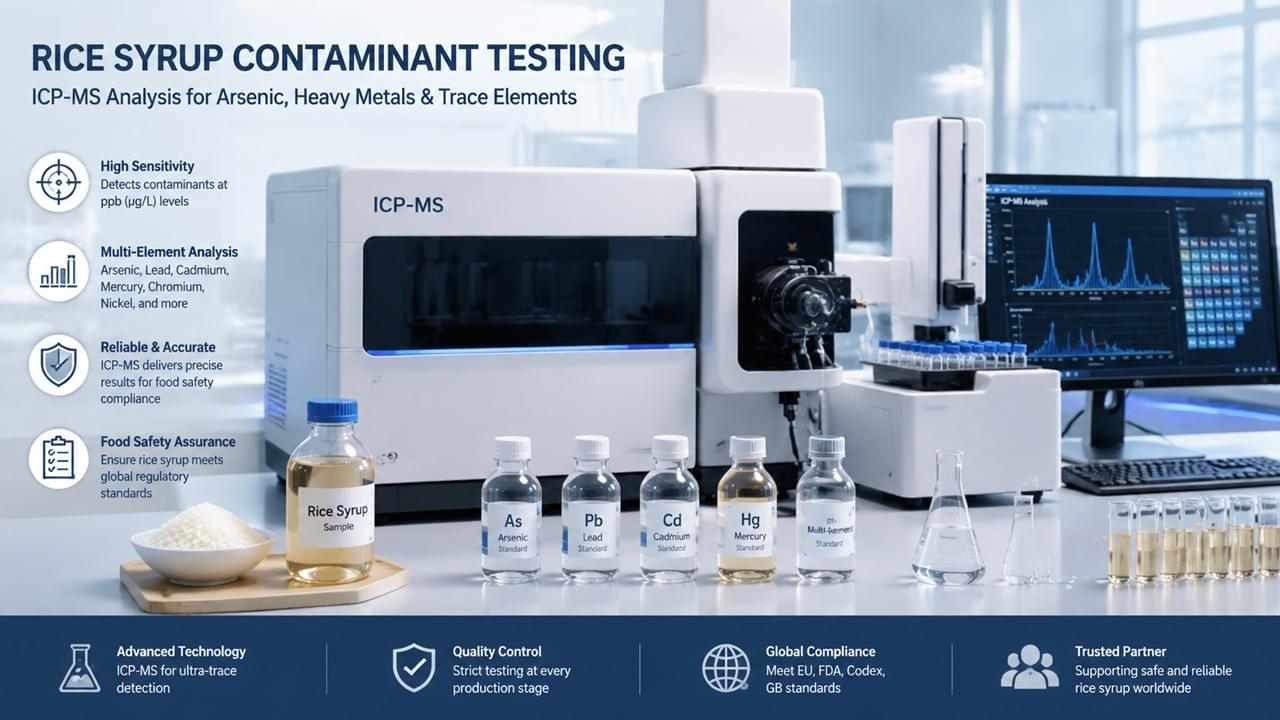
⚠️ Monitorowanie metali ciężkich
Ponieważ ryż naturalnie absorbuje minerały z gleby i wody, międzynarodowi nabywcy coraz częściej zwracają uwagę na badania metali ciężkich.
Odpowiedzialni producenci rutynowo monitorują:
- Arsen
- Ołów
- Kadm
- Rtęć
Zaawansowane metody analityczne, takie jak ICP-MS (spektrometria mas z plazmą indukowaną) zapewniają wysoce dokładne wykrywanie śladowych zanieczyszczeń, umożliwiając producentom weryfikację zgodności z limitami rynków docelowych przed wysyłką.
W przypadku produktów przeznaczonych do żywienia niemowląt lub innych wrażliwych zastosowań, częstotliwość badań jest często wyższa, a wielu nabywców żąda raportów analitycznych dla poszczególnych partii zamiast podsumowań rocznych.
🇪🇺 Standardy jakości syropu ryżowego w Unii Europejskiej
Unia Europejska utrzymuje jeden z najbardziej kompleksowych systemów bezpieczeństwa żywności na świecie. Firmy eksportujące syrop ryżowy do państw członkowskich UE muszą przestrzegać przepisów dotyczących bezpieczeństwa składników, limitów zanieczyszczeń, identyfikowalności, etykietowania i praktyk produkcyjnych.
W przeciwieństwie do niektórych rynków, które koncentrują się głównie na testowaniu gotowych produktów, UE kładzie nacisk na prewencyjne zarządzanie bezpieczeństwem żywności w całym łańcuchu dostaw. W związku z tym producenci powinni być przygotowani do przedstawienia szczegółowej dokumentacji technicznej wraz z raportami laboratoryjnymi.
🏷️ Wymogi dotyczące etykietowania UE
Jasne i dokładne etykietowanie jest niezbędne do wejścia na rynek europejski.
W zależności od składu produktu, syrop ryżowy może być deklarowany jako:
- ✅ Syrop ryżowy
- ✅ Syrop glukozowy (z ryżu)
Gdy syrop jest produkowany wyłącznie z ryżu, zazwyczaj nie jest uważany za jeden z alergenów wymienionych w Rozporządzeniu UE (UE) nr 1169/2011, co czyni go odpowiednim do wielu formuł uwzględniających alergeny. Producenci powinni jednak zawsze weryfikować wymogi dotyczące etykietowania w oparciu o produkt końcowy i kraj przeznaczenia.
W przypadku produktów ekologicznych dostawcy muszą również przestrzegać Rozporządzenia (UE) 2018/848, które reguluje produkcję ekologiczną i certyfikację w całej Unii Europejskiej.
⚠️ Limity zanieczyszczeń i bezpieczeństwo produktu
Władze europejskie stosują ścisłe limity dotyczące zanieczyszczeń powszechnie monitorowanych w składnikach pochodzenia zbożowego.
Typowe programy kontroli jakości obejmują badania na obecność:
- Ołów
- Kadm
- Rtęć
- Arsen
- Mikotoksyn, takich jak Ochratoksyna A
Producenci dostarczający żywność dla niemowląt lub produkty przeznaczone dla wrażliwych grup konsumentów zazwyczaj oczekuje się, że będą spełniać jeszcze bardziej rygorystyczne wymagania dotyczące czystości i utrzymywać wzmocnione kontrole produkcji.
Regularne badania laboratoryjne przeprowadzane przez strony trzecie pomagają wykazać zgodność, jednocześnie wzmacniając zaufanie nabywców podczas kwalifikacji dostawcy.
🇨🇳 Chińskie normy GB dla syropu ryżowego
Chiński krajowy system bezpieczeństwa żywności opiera się na normach GB (Guobiao) , które ustanawiają obowiązkowe wymogi dotyczące produkcji żywności, przetwarzania, etykietowania i kontroli zanieczyszczeń.
Dla producentów syropu ryżowego działających w Chinach lub eksportujących z Chin, zgodność z obowiązującymi normami GB jest podstawowym wymogiem do legalnej produkcji i handlu międzynarodowego.
📋 Kluczowe normy GB
Kilka norm krajowych jest szczególnie istotnych dla produkcji syropu ryżowego.
✅ GB 2760 — Dodatki do żywności i środki pomocnicze w przetwórstwie
Norma ta określa, jakie środki pomocnicze w przetwórstwie mogą być stosowane podczas produkcji, w tym enzymy spożywcze, węgiel aktywny i żywice jonowymienne.
Stosowanie zatwierdzonych materiałów przetwórczych pomaga zapewnić zarówno bezpieczeństwo produktu, jak i zgodność z przepisami.
✅ GB 2762 — Limity zanieczyszczeń
GB 2762 określa maksymalne dopuszczalne poziomy zanieczyszczeń, takich jak:
- Metale ciężkie
- Arsen
- Ołów
- Rtęć
- Kadm
Rutynowe monitorowanie zapewnia, że produkty pozostają w granicach prawnych przed wejściem na rynki krajowe lub eksportowe.
✅ GB 7718 — Etykietowanie żywności
Syrop ryżowy sprzedawany w Chinach musi być zgodny z chińskimi wymogami dotyczącymi etykietowania, w tym ze standaryzowanymi nazwami produktów, deklaracjami składników, informacjami o produkcji i innymi obowiązkowymi elementami etykietowania.
Dokładne etykietowanie nie tylko wspiera zgodność, ale także poprawia identyfikowalność produktu w całym łańcuchu dostaw.
🇯🇵 Japońskie wymogi dotyczące higieny żywności
Japonia jest uznawana za utrzymywanie wyjątkowo wysokich oczekiwań w zakresie bezpieczeństwa żywności. Importerzy często przeprowadzają szczegółowe oceny dostawców przed zatwierdzeniem nowych składników.
W przypadku syropu ryżowego producenci powinni zwrócić szczególną uwagę na:
- ✅ Testowanie metali ciężkich
- ✅ Kontrola higieny żywności
- ✅ Identyfikowalność produktu
- ✅ Właściwe japońskie etykietowanie
- ✅ Spójna dokumentacja jakościowa
Chociaż certyfikacja Japanese Agricultural Standards (JAS) jest dobrowolna dla wielu produktów, uzyskanie uznanych certyfikatów może wzmocnić konkurencyjność rynkową i wykazać zaangażowanie w jakość.
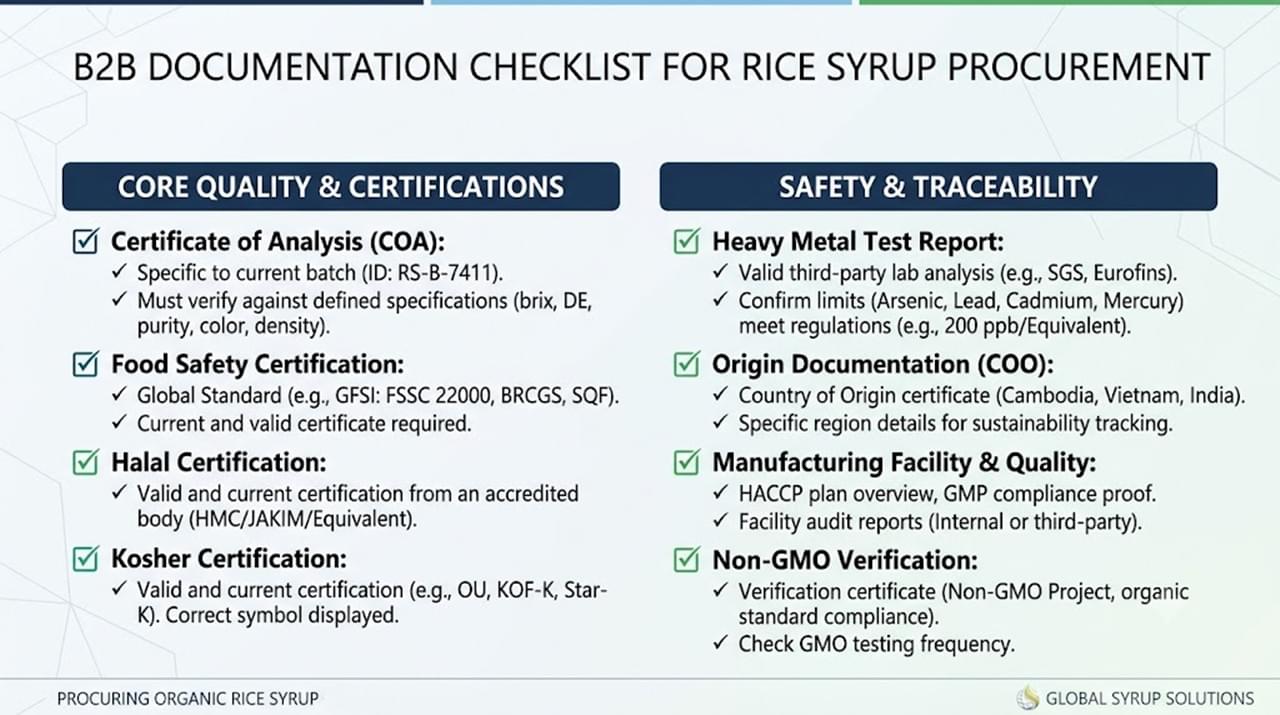
🏅 Certyfikaty branżowe, które nabywcy cenią najbardziej
Poza zgodnością z przepisami, międzynarodowo uznane certyfikaty często odgrywają decydującą rolę w wyborze dostawcy.
Duże zakłady spożywcze i globalne marki często wymagają od dostawców utrzymania certyfikatów potwierdzających solidne systemy zarządzania bezpieczeństwem żywności.
Powszechnie wymagane certyfikaty obejmują:
| Certyfikacja | Główny cel | Uznanie rynkowe |
|---|---|---|
| FSSC 22000 | Zarządzanie bezpieczeństwem żywności | Doskonały |
| ISO 22000 | System Bezpieczeństwa Żywności | Doskonały |
| BRCGS Food | Zgodność Produkcyjna | Bardzo wysoki |
| SQF | Bezpieczeństwo i Jakość Żywności | Bardzo wysoki |
| IFS Food | Europejska Dostawa Detaliczna | Wysoki |
Posiadanie jednego lub więcej z tych certyfikatów pokazuje, że producent stosuje międzynarodowo uznane praktyki, podlega regularnym audytom zewnętrznym i wdraża programy ciągłego doskonalenia.
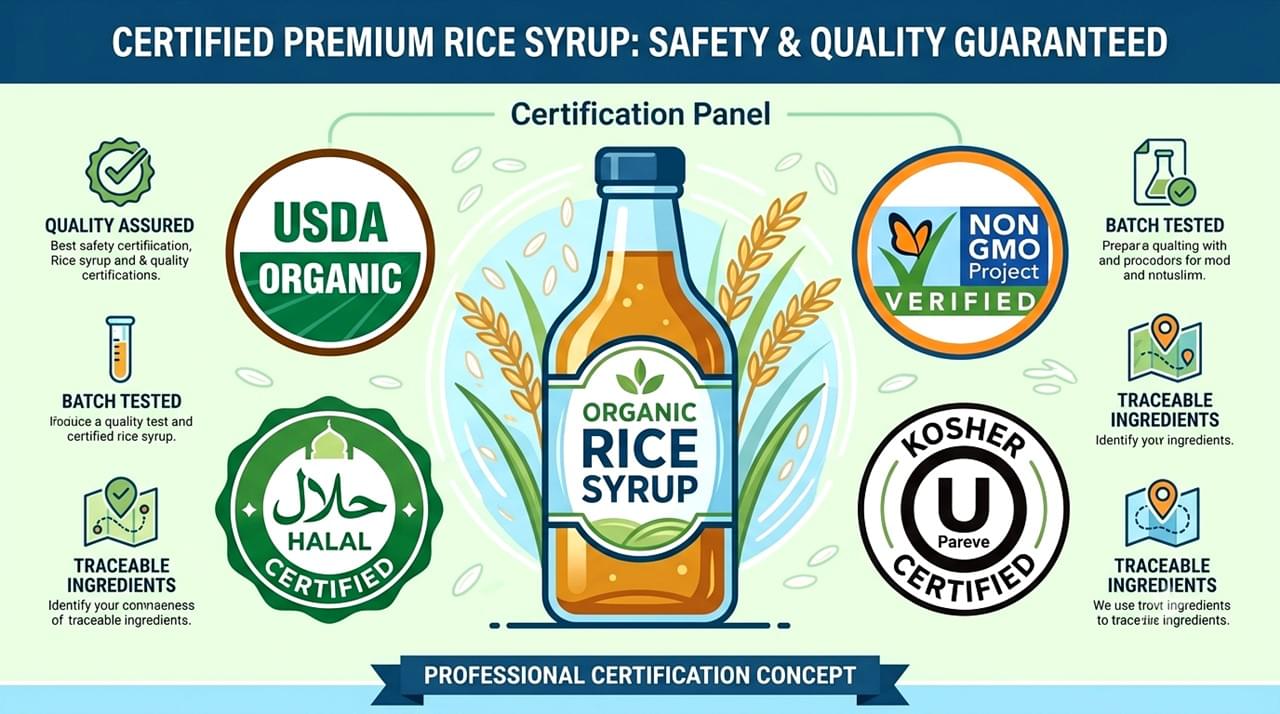
🌍 Certyfikaty Halal i Kosher
Dla firm obsługujących rynki światowe, certyfikaty religijne mogą znacząco poszerzyć możliwości biznesowe.
☪️ Certyfikacja Halal
Certyfikat Halal jest często wymagany przy eksporcie do krajów z większością muzułmańską lub przy dostarczaniu żywności producentom, którzy wytwarzają produkty certyfikowane Halal.
Certyfikacja potwierdza, że surowce, metody przetwarzania i środowiska produkcyjne są zgodne z islamskimi wymogami żywieniowymi.
✡️ Certyfikacja Kosher
Certyfikat Kosher jest szeroko rozpoznawany poza społecznościami żydowskimi i jest często wymagany przez międzynarodowe firmy spożywcze, ponieważ odzwierciedla rygorystyczną weryfikację składników i kontrolę produkcji.
Posiadanie aktualnych certyfikatów Halal i Kosher może pomóc dostawcom w dotarciu do szerszej międzynarodowej bazy klientów, jednocześnie upraszczając procesy zatwierdzania zakupów.
📊 Zalecane ramy specyfikacji jakości
Chociaż wymogi regulacyjne określają minimalne standardy prawne, doświadczeni nabywcy często opracowują własne specyfikacje techniczne, aby zapewnić spójną wydajność produktu.
Kompleksowa specyfikacja syropu ryżowego zazwyczaj obejmuje następujące kategorie.
🔬 Właściwości fizyczne
- Wygląd: przezroczysty do jasno bursztynowego
- Brak widocznych ciał obcych
- Sucha masa (Brix): 78–82°
- Lepkość odpowiednia dla określonej wartości DE
⚗️ Charakterystyka chemiczna
- Kontrolowana wartość DE w uzgodnionych tolerancjach
- pH między 4,0 a 5,5
- Spójne wartości koloru
- Niska zawartość białka i popiołu zgodnie z klasą produktu
Te parametry pomagają utrzymać stabilną słodycz, teksturę i wydajność przetwarzania w różnych zastosowaniach spożywczych.
🛡️ Wymogi mikrobiologiczne i bezpieczeństwa
Rutynowe testy powinny obejmować:
- Całkowita liczba płytek
- Drożdże i pleśń
- Salmonella
- Escherichia coli O157:H7
- Metale ciężkie
Spójna kontrola mikrobiologiczna pomaga chronić jakość produktu podczas przechowywania i transportu, jednocześnie zmniejszając ryzyko związane z bezpieczeństwem żywności.
📄 Niezbędna dokumentacja dla międzynarodowych dostaw B2B
Niezawodna dokumentacja jest równie ważna jak sama jakość produktu. Przed zatwierdzeniem dostawcy, nabywcy zazwyczaj proszą o kompletny pakiet zgodności, który weryfikuje zgodność z przepisami i standardy produkcyjne.
Kluczowe dokumenty, o które często się prosi, to:
- 📑 Certyfikat Analizy (COA) dla każdej partii produkcyjnej
- 🏭 Ważny certyfikat ISO 22000 lub uznany przez GFSI certyfikat bezpieczeństwa żywności
- ☪️ Certyfikat Halal (jeśli dotyczy)
- ✡️ Certyfikat Kosher (jeśli dotyczy)
- 🌱 Certyfikat ekologiczny dla certyfikowanych klas ekologicznych
- 🧪 Raporty z badań na obecność metali ciężkich
- 🌍 Certyfikat pochodzenia i dokumentacja eksportowa
Szybkie dostarczenie tych dokumentów pomaga usprawnić procesy zakupu, odprawy celnej i audytów klientów, jednocześnie wzmacniając zaufanie do systemu zarządzania jakością dostawcy.
💡 Praktyczne wskazówki dotyczące wyboru niezawodnego dostawcy syropu ryżowego
Spełnienie wymogów regulacyjnych to tylko jeden z aspektów oceny dostawcy. Doświadczeni nabywcy biorą również pod uwagę wiedzę techniczną producenta, spójność produkcji i długoterminową niezawodność.
Porównując potencjalnych dostawców, należy wziąć pod uwagę następujące pytania:
- ✅ Czy dostawca posiada międzynarodowo uznane certyfikaty?
- ✅ Czy raporty laboratoryjne są dostępne dla każdej partii produkcyjnej?
- ✅ Czy dostawca może wspierać wymogi regulacyjne specyficzne dla danego kraju?
- ✅ Czy istnieje jasny system identyfikowalności od surowców do produktów gotowych?
- ✅ Czy dostawca zapewnia responsywne wsparcie techniczne i dokumentację?
Dostawca, który potrafi pewnie odpowiedzieć na te pytania, jest zazwyczaj lepiej przygotowany do wspierania stabilnych, długoterminowych partnerstw biznesowych i zmniejszania ryzyka związanego z zgodnością.
📌 Końcowe przemyślenia
Nawigacja Standardy Jakości Syropu Ryżowego wymaga więcej niż tylko spełnienia minimalnych wymogów prawnych. Skuteczni międzynarodowi dostawcy łączą zgodność z przepisami z solidnymi systemami zarządzania jakością, przejrzystą dokumentacją i ciągłą weryfikacją produktów.
W miarę ewolucji przepisów dotyczących bezpieczeństwa żywności, pozostawanie na bieżąco z wymogami FDA, prawodawstwem UE, normami China GB i uznawanymi na całym świecie schematami certyfikacji pomoże firmom zmniejszyć ryzyko i wzmocnić ich konkurencyjność na rynkach światowych.
Niezależnie od tego, czy pozyskujesz syrop ryżowy do produkcji żywności, produktów marek własnych, czy dystrybucji międzynarodowej, wybór dostawcy z udokumentowanymi możliwościami zgodności jest jednym z najskuteczniejszych sposobów ochrony jakości produktu i zapewnienia długoterminowego sukcesu.
Aby uzyskać dodatkowe wskazówki dotyczące uznawanych na całym świecie systemów zarządzania bezpieczeństwem żywności, odwiedź oficjalną ISO 22000 zasób:
https://www.iso.org/iso-22000-food-safety-management.html
📞 Poproś o pełną dokumentację zgodności
Jeśli potrzebujesz szczegółowych informacji technicznych do swojego projektu zaopatrzeniowego, nasz zespół może dostarczyć kompleksową dokumentację wspierającą kwalifikację dostawców, ocenę produktu i przegląd przepisów.
Nasz pakiet zgodności jest dostępny na życzenie i może obejmować:
- 📄 Certyfikaty analizy (COA) dla poszczególnych partii
- 🏅 Dokumenty certyfikacji bezpieczeństwa żywności
- 🧪 Raporty z badań na obecność metali ciężkich
- 🌱 Certyfikaty ekologiczne, halal i koszerne (jeśli dotyczy)
- 🌍 Dokumentacja kraju pochodzenia
- 📋 Specyfikacje techniczne i karty danych produktu
👉 Poproś o pełną dokumentację zgodności od Wuhu Deli Foods →
https://www.delisyrup.com/contact/
Aby dowiedzieć się więcej o naszych programach certyfikacji, odwiedź nasz Przewodnik po certyfikatach bezpieczeństwa żywności dla syropu ryżowego przewodnik.
Szczegółowe informacje na temat analizy zanieczyszczeń można znaleźć w naszym Przewodnik po badaniach arsenu i metali ciężkich.

 English
 Deutsch
 Español
 العربية
 Français
 Русский
 Bahasa Indonesia
 한국어
한국어 日本語
日本語 Polski
 Português
 Bahasa Melayu