
Seizing opportunities while facing challenges, let’s create a prosperous future for the global rice starch trade!
Table of Contents
ToggleI. Overview of Rice Starch
1.1 Definition and Applications
Rice starch is a natural polymer compound extracted from rice, composed of glucose molecules, possessing excellent viscosity, gelatinization, and stability. It finds wide applications in food processing, industrial uses, and the feed industry.
1.2 Production Process
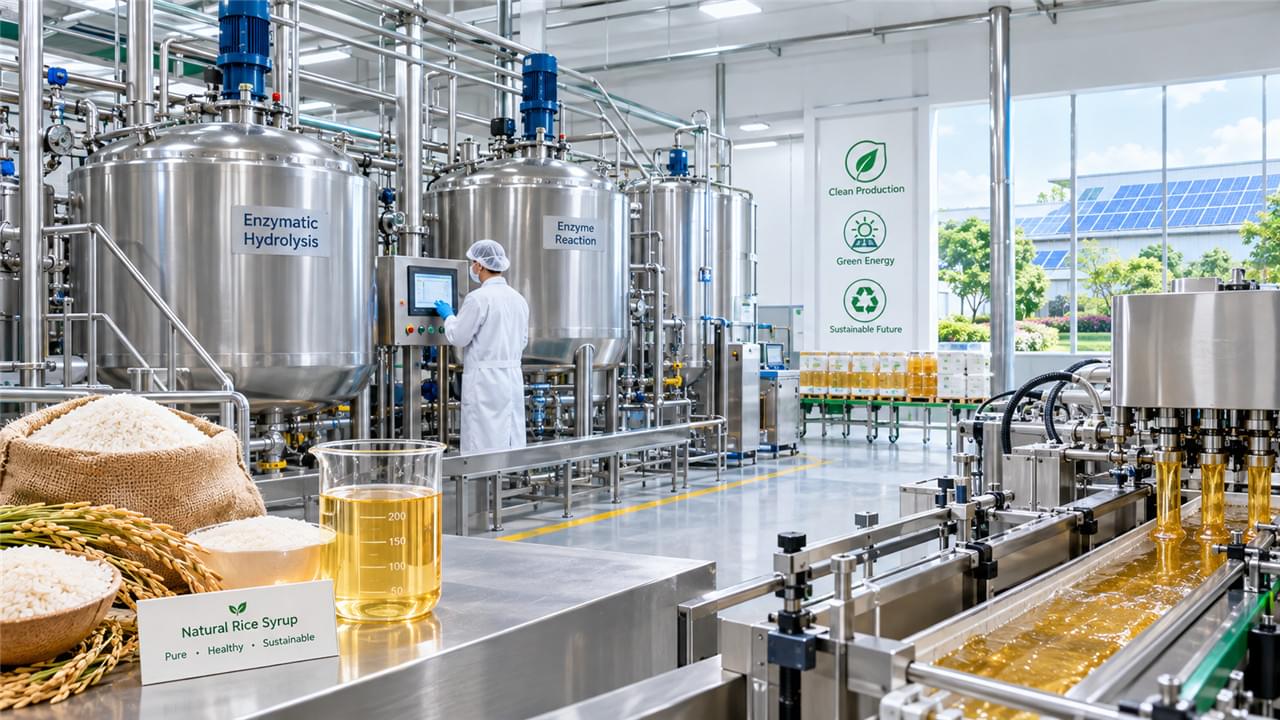
The production process of rice starch mainly includes the following steps:
- Cleaning: Removing impurities and dust from the surface of rice.
- Milling: Crushing rice into fine powder.
- Soaking: Allowing starch particles to absorb water fully.
- Screening: Separating starch particles from impurities like proteins, fats, etc.
- Drying: Drying separated starch particles to meet moisture content standards.
1.3 Physicochemical Properties
The physicochemical properties of rice starch mainly include:
- Appearance: White powder
- Solubility: Insoluble in cold water, soluble in hot water or alkaline solutions
- Viscosity: Exhibits certain viscosity, which varies with starch concentration and temperature
- Gelatinization: Possesses a certain gelatinization property, with gel strength varying with starch concentration and temperature
- Stability: Exhibits stability within a certain range of temperature, pH, and shear force
II. Current Status of Global Rice Starch Trade
2.1 Production and Consumption
According to data from the Food and Agriculture Organization (FAO), the global production of rice starch was approximately 120 million tons in 2022, with China, Thailand, Indonesia, the United States, and Vietnam being the major producers. Global consumption of rice starch is primarily concentrated in industrial uses, food processing, and the feed industry. According to the United States Department of Agriculture (USDA), global rice starch consumption was around 110 million tons in 2022, with the Asia-Pacific region being the largest consumer market.
2.2 Trade Patterns
The trade pattern of global rice starch is complex and variable. Major producing countries like China, Thailand, and Indonesia are both major exporters and importers, resulting in intricate trade relationships. According to data from the World Trade Organization (WTO), the global trade value of rice starch was approximately $20 billion in 2022, with China, Thailand, and the United States being the main exporting countries, while Japan, South Korea, and the European Union are the major importing countries.
2.3 Major Trading Partners
China is the world’s largest producer and exporter of rice starch, with exports of around 25 million tons in 2022, mainly to Japan, South Korea, the European Union, and the United States.
Thailand is the world’s second-largest producer and exporter of rice starch, with exports of around 15 million tons in 2022, mainly to Japan, South Korea, the European Union, and the United States.
The United States is the world’s third-largest producer and exporter of rice starch, with exports of around 10 million tons in 2022, mainly to Japan, South Korea, the European Union, and China.
Japan is the world’s largest importer of rice starch, with imports of around 5 million tons in 2022, mainly from China, Thailand, and the United States.
South Korea is the world’s second-largest importer of rice starch, with imports of around 4 million tons in 2022, mainly from China, Thailand, and the United States.
The European Union is the world’s third-largest importer of rice starch, with imports of around 3 million tons in 2022, mainly from China, Thailand, and the United States.
III. Factors Influencing Rice Starch Trade
3.1 Market Demand
Market demand is the primary factor influencing rice starch trade. With global population growth and economic development, the demand for food and industrial products continues to increase, thereby driving the growth of rice starch demand.
3.2 Production Costs
Production costs are another important factor affecting rice starch trade. The production costs of rice starch mainly include raw material costs, energy costs, and labor costs. Raw material costs are the major component of production costs, so fluctuations in rice prices significantly affect production costs of rice starch.
3.3 Trade Policies
Trade policies are important factors affecting rice starch trade. Government trade policies such as tariffs, quotas, and trade barriers directly impact rice starch trade.
3.4 Technological Innovation
Technological innovation is a significant factor influencing rice starch trade. Innovations in rice starch production technology can improve production efficiency, reduce production costs, and enhance the competitiveness of rice starch.
3.5 Exchange Rate Fluctuations
Exchange rate fluctuations affect the trading costs of rice starch, thereby influencing rice starch trade volume.
IV. Opportunities and Challenges in Rice Starch Trade
4.1 Opportunities
- Growing market demand: With global population growth and economic development, the demand for rice starch is expected to continue growing.
- Technological innovation: Innovations in rice starch production technology will improve production efficiency, reduce production costs, and enhance the competitiveness of rice starch.
- Regional economic cooperation: Deepening regional economic cooperation will promote the liberalization and facilitation of rice starch trade.
4.2 Challenges
- Trade protectionism: Rising trade protectionism poses certain obstacles to rice starch trade.
- Environmental pressures: Rice starch production requires substantial water and energy resources, posing certain pressures on the environment.
- Market competition: The rice starch market faces fierce competition, and enterprises are under significant competitive pressure.
V. Strategies to Address Challenges
5.1 Government Departments
- Strengthen international trade cooperation to promote trade liberalization.
- Establish trade facilitation mechanisms to reduce trade costs.
- Increase investment in research and development of the rice starch industry to promote technological innovation.
5.2 Enterprises
- Strengthen technological innovation to improve product quality and production efficiency.
- Expand market channels to enhance brand influence.
- Strengthen cooperation to jointly address market challenges.
VI. Future Outlook
It is expected that global rice starch trade will continue to grow in the future, with green production and sustainable development becoming important trends. Governments and enterprises should cooperate hand in hand to promote the healthy development of rice starch trade, achieving a win-win situation for both economic and social benefits.


 English
 Deutsch
 Español
 العربية
 Français
 Русский
 Bahasa Indonesia
 한국어
한국어 日本語
日本語 Polski
 Português
 Bahasa Melayu