
Rice Syrup Quality Control and Testing Methods are essential for ensuring product consistency, food safety, and regulatory compliance in modern food manufacturing. For B2B buyers, quality is not just about taste—it directly impacts product stability, shelf life, and brand reputation.
In large-scale production, even small variations in sugar composition or viscosity can lead to inconsistencies in final applications. That is why advanced quality control systems are integrated into every stage of production at Wuhu Deli Foods.
Table of Contents
Toggle1️⃣ Why Rice Syrup Quality Control and Testing Methods Matter
The importance of Rice Syrup Quality Control and Testing Methods lies in maintaining consistent product specifications across batches.
Key quality objectives include:
✔ Stable sweetness levels
✔ Consistent viscosity
✔ Uniform carbohydrate profile
✔ Food safety compliance
For food manufacturers, these factors directly influence processing performance in beverages, bakery products, and confectionery applications.
A reliable industrial syrup quality control process helps reduce production risks and ensures predictable outcomes in large-scale manufacturing.
2️⃣ Raw Material Inspection and Quality Assurance
Quality control begins before production starts.
In Rice Syrup Quality Control and Testing Methods, raw material inspection includes:
- Rice purity verification
- Moisture content testing
- Contaminant screening (heavy metals, pesticides)
Strict raw material standards ensure that only high-quality inputs enter the production process.
At Wuhu Deli Foods, supplier audits and incoming material testing are critical steps in maintaining consistent production quality 🌾.
3️⃣ In-Process Monitoring in Rice Syrup Manufacturing
During production, continuous monitoring is essential.
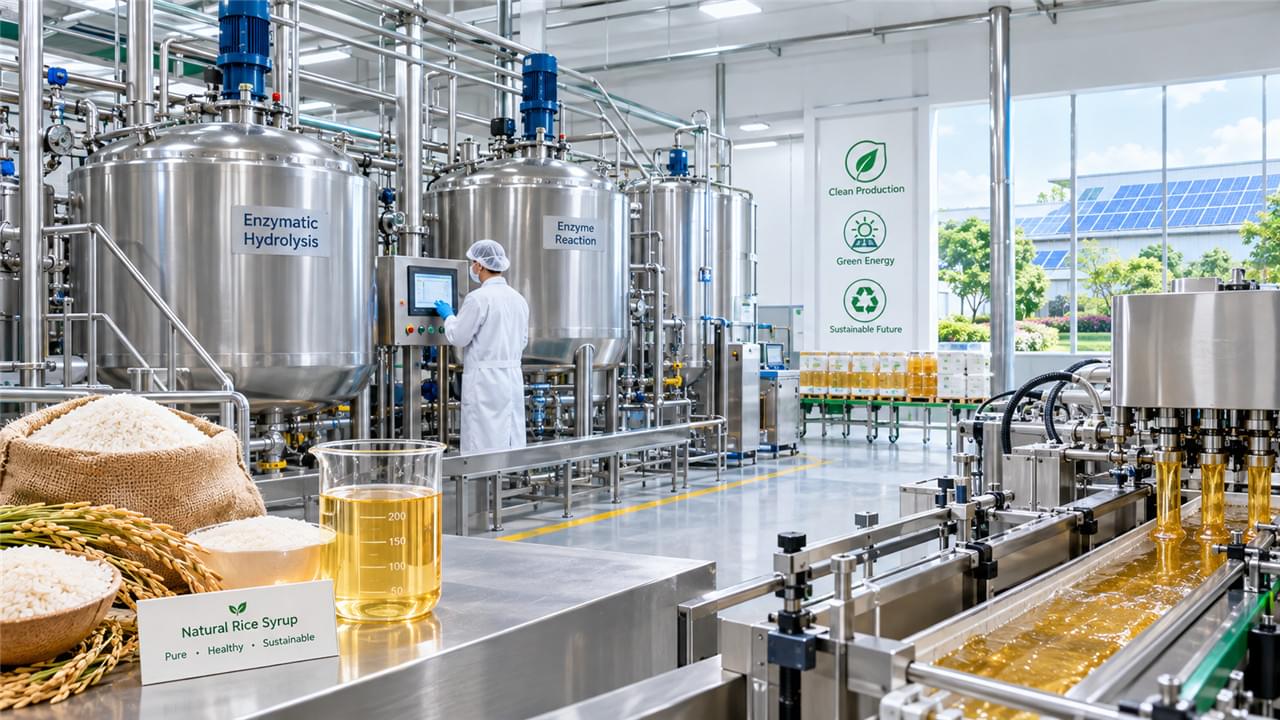
The Rice Syrup Quality Control and Testing Methods applied in-process include:
- Temperature control tracking
- pH monitoring
- Enzymatic reaction observation
- DE (Dextrose Equivalent) measurement
Real-time monitoring allows operators to make adjustments instantly, ensuring that the syrup meets target specifications.
Advanced automation systems improve the accuracy of the industrial syrup quality control process and reduce human error ⚙️.
4️⃣ Laboratory Testing Methods for Rice Syrup
Laboratory analysis is a core component of Rice Syrup Quality Control and Testing Methods.
Common rice syrup laboratory testing methods include:
🔬 DE value testing (sweetness level)
🔬 Viscosity measurement
🔬 Color analysis
🔬 Microbial testing
🔬 Moisture content analysis
These tests ensure that each batch meets both internal standards and international food safety regulations.
Consistent laboratory testing provides assurance for B2B buyers who require stable ingredient performance.
5️⃣ Final Product Inspection and Certification
Before shipment, final inspection ensures that the product meets all required specifications.
The Rice Syrup Quality Control and Testing Methods at this stage include:
- Batch consistency verification
- Packaging integrity checks
- Label compliance review
- Export documentation preparation
Suppliers must also comply with international standards such as HACCP and ISO systems.
At Wuhu Deli Foods, every batch undergoes strict final inspection to ensure it meets global export requirements 🌍.
6️⃣ Traceability and Data Management
Traceability is becoming increasingly important in global food supply chains.
Modern Rice Syrup Quality Control and Testing Methods include:
✔ Batch tracking systems
✔ Digital production records
✔ Supplier traceability documentation
These systems allow manufacturers to trace any product back to its raw materials and production conditions.
For B2B buyers, traceability enhances transparency and supports regulatory compliance in international markets.
🌍 Why Quality Control Matters for B2B Buyers
Understanding Rice Syrup Quality Control and Testing Methods helps buyers evaluate supplier reliability.
Strong quality systems provide:
✔ Consistent product performance
✔ Reduced production risks
✔ Compliance with food safety regulations
✔ Confidence in long-term supply
For manufacturers, working with a supplier that prioritizes quality control means fewer formulation issues and more stable production outcomes.
To explore the full production process, read our pillar article:
👉 https://www.delisyrup.com/rice-syrup-production-technology-guide
For global food safety standards, visit:
👉 https://www.fao.org/fao-who-codexalimentarius/en/
Rice Syrup Quality Control and Testing Methods are the backbone of reliable food ingredient manufacturing.
From raw material inspection to laboratory testing and final product verification, each step plays a critical role in ensuring consistency and safety.
For B2B buyers, choosing a supplier with advanced quality control systems—such as Wuhu Deli Foods—means securing a dependable partner capable of delivering high-quality rice syrup at scale 🤝.

 English
 Deutsch
 Español
 العربية
 Français
 Русский
 Bahasa Indonesia
 한국어
한국어 日本語
日本語 Polski
 Português
 Bahasa Melayu