
Apabila industri makanan global terus berkembang, Standard Kualiti Sirap Beras telah menjadi faktor kritikal bagi pengeluar, pengedar, dan pembeli antarabangsa. Sama ada anda mendapatkan sirap beras untuk minuman, konfeksi, nutrisi bayi, atau makanan diproses, memenuhi keperluan peraturan bukan lagi pilihan—ia adalah penting untuk akses pasaran, kepercayaan pengguna, dan kejayaan perniagaan jangka panjang.
🌍 Setiap pasaran destinasi mengaplikasikan rangka kerja undang-undang sendiri untuk keselamatan makanan, pelabelan, had pencemaran, dan amalan pengeluaran. Pada masa yang sama, pensijilan yang diiktiraf antarabangsa memberikan jaminan tambahan bahawa pembekal mengekalkan pengurusan kualiti dan kawalan pembuatan yang konsisten.
Panduan ini menerangkan standard kualiti utama yang mengawal sirap beras di seluruh dunia, termasuk peraturan di Amerika Syarikat, Kesatuan Eropah, China, dan Jepun. Anda juga akan mempelajari pensijilan mana yang biasa diminta oleh pembeli, dokumentasi yang diperlukan untuk perdagangan antarabangsa, dan cadangan praktikal untuk menilai pembekal dengan yakin.
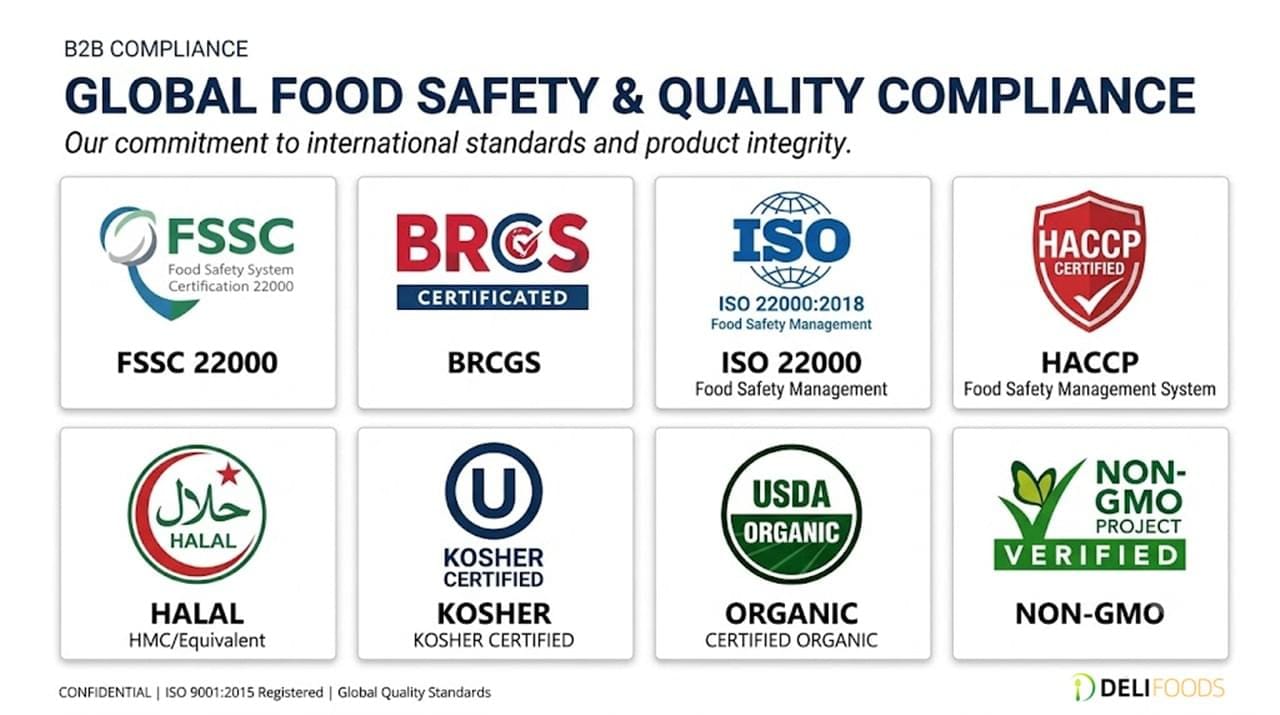
🌍 Memahami Rangka Kerja Global untuk Standard Kualiti Sirap Beras
Walaupun peraturan makanan berbeza dari satu negara ke negara lain, kebanyakan pihak berkuasa berkongsi objektif yang sama: melindungi pengguna dengan memastikan bahan makanan selamat, dilabel dengan tepat, dan dihasilkan secara konsisten.
Bagi pembekal sirap beras, pematuhan biasanya melangkaui satu peraturan. Syarikat mesti menunjukkan kesesuaian dengan pelbagai peringkat keperluan, termasuk:
- ✅ Prinsip keselamatan makanan antarabangsa
- ✅ Undang-undang makanan negara
- ✅ Sijil pembuatan
- ✅ Piawaian ujian produk
- ✅ Spesifikasi kualiti khusus pelanggan
Memahami bagaimana rangka kerja ini berfungsi bersama membantu perniagaan mengurangkan risiko peraturan sambil meningkatkan kebolehpercayaan rantaian bekalan.
🌎 Codex Alimentarius: Penanda Aras Antarabangsa
Salah satu rujukan yang paling dikenali untuk keselamatan makanan global ialah Codex Alimentarius, yang ditubuhkan bersama oleh Pertubuhan Makanan dan Pertanian (FAO) dan Pertubuhan Kesihatan Sedunia (WHO). Piawaian Codex tidak mengikat secara sah dengan sendirinya, tetapi ia sangat mempengaruhi peraturan makanan dan dasar perdagangan antarabangsa di seluruh dunia.
Bagi pengeluar sirap beras, beberapa dokumen Codex memberikan panduan berharga.
✅ Standard Codex yang Berkaitan dengan Sirap Beras
- Codex STAN 212-1999 — Meliputi sirap glukosa dan pemanis yang berasal dari kanji.
- Codex STAN 1-1985 — Mendefinisikan keperluan pelabelan umum untuk makanan pra-bungkus.
- CAC/RCP 1-1969 — Menetapkan Amalan Kebersihan Baik (Good Hygiene Practices) dan prinsip HACCP yang diterima di peringkat antarabangsa.
Banyak pihak berkuasa negara menggunakan dokumen ini sebagai rujukan semasa membangunkan peraturan makanan mereka sendiri, menjadikan pematuhan Codex sebagai pertimbangan penting bagi pengeksport.
💡 Anda boleh meneroka pangkalan data Codex yang lengkap di sini:
https://www.fao.org/fao-who-codexalimentarius/
🏭 Sistem Pengurusan Keselamatan Makanan ISO
Walaupun peraturan kerajaan menentukan keperluan undang-undang, piawaian pensijilan membantu pengeluar menunjukkan bahawa keperluan tersebut dilaksanakan secara konsisten.
Antara sistem yang paling diiktiraf ialah ISO 22000:2018, yang mengintegrasikan pengurusan keselamatan makanan dengan Analisis Bahaya dan Titik Kawalan Kritikal (HACCP). Daripada hanya menumpukan pada ujian produk, ISO 22000 menekankan pengurusan risiko pencegahan sepanjang pengeluaran.
Faedah utama termasuk:
- ✔ Kebolehkesanan yang lebih baik sepanjang pembuatan
- ✔ Prosedur penilaian risiko yang dipertingkatkan
- ✔ Pengurusan pembekal yang lebih kukuh
- ✔ Peningkatan kualiti berterusan
- ✔ Keyakinan yang lebih besar untuk pelanggan antarabangsa
Bagi pembeli yang menilai pelbagai pembekal, pensijilan ISO sering berfungsi sebagai penunjuk penting kematangan operasi dan konsistensi kualiti.
🏆 Mengapa FSSC 22000 Penting
Banyak syarikat makanan multinasional memerlukan pembekal memegang pensijilan FSSC 22000 kerana ia melangkaui ISO 22000 dengan kawalan keselamatan makanan tambahan yang diiktiraf oleh Inisiatif Keselamatan Makanan Global (GFSI).
Berbanding dengan pensijilan pengurusan standard, FSSC 22000 menawarkan jaminan yang lebih besar bahawa kemudahan pengeluaran mengekalkan amalan keselamatan makanan yang diterima di peringkat antarabangsa.
Faedah-faedah termasuk:
- 🌍 Pengiktirafan di seluruh pasaran antarabangsa utama
- 🏭 Penerimaan kukuh dalam kalangan jenama makanan global
- 📋 Sistem pengurusan risiko yang dipertingkatkan
- 🔍 Audit pihak ketiga yang bebas
- 🤝 Peningkatan keyakinan semasa kelayakan pembekal
Bagi perniagaan yang mengeksport sirap beras ke pelbagai negara, FSSC 22000 boleh memudahkan proses kelulusan pelanggan dengan ketara.
🇺🇸 Standard Kualiti Sirap Beras di Amerika Syarikat
Amerika Syarikat kekal sebagai salah satu pasaran bahan makanan terbesar di dunia, dengan pengawasan peraturan terutamanya disediakan oleh Pentadbiran Makanan dan Ubat Amerika Syarikat (FDA).
Syarikat yang mengeksport sirap beras ke AS harus memahami bukan sahaja keperluan keselamatan bahan tetapi juga pendaftaran kemudahan, kawalan pencegahan, dan kewajipan pelabelan.
✅ Status GRAS dan Keselamatan Makanan
Sirap beras yang dihasilkan melalui hidrolisis enzimatik kanji beras secara amnya dianggap Umumnya Diiktiraf Selamat (GRAS) apabila dihasilkan menggunakan kaedah pemprosesan makanan yang diterima.
Walau bagaimanapun, status GRAS tidak menghapuskan tanggungjawab peraturan. Pengeluar masih dijangka melaksanakan sistem keselamatan makanan pencegahan di bawah Akta Pemodenan Keselamatan Makanan (FSMA) dan menyimpan rekod pengeluaran yang komprehensif.
Kemudahan yang mengeksport bahan makanan ke Amerika Syarikat juga mesti mendaftar dengan FDA sebelum menghantar produk.
Maklumat lanjut boleh didapati daripada laman web rasmi FDA:
https://www.fda.gov/
🏷️ Keperluan Pelabelan FDA
Pelabelan yang betul adalah penting untuk pematuhan peraturan dan kelancaran pelepasan kastam.
Di bawah peraturan pelabelan FDA, sirap beras harus:
- ✅ Dinyatakan menggunakan nama umum atau biasa, seperti “Rice Syrup” atau “Brown Rice Syrup.”
- ✅ Muncul dalam senarai ramuan mengikut berat.
- ✅ Memenuhi keperluan pelabelan nutrisi yang berkenaan.
- ✅ Menyokong sebarang tuntutan organik dengan pensijilan USDA Organic yang sah.
Pelabelan yang tepat bukan sahaja memenuhi kewajipan undang-undang tetapi juga membantu pembeli mengesahkan ketulenan produk dan mengekalkan rantaian bekalan yang telus.
⚠️ Pemantauan Logam Berat
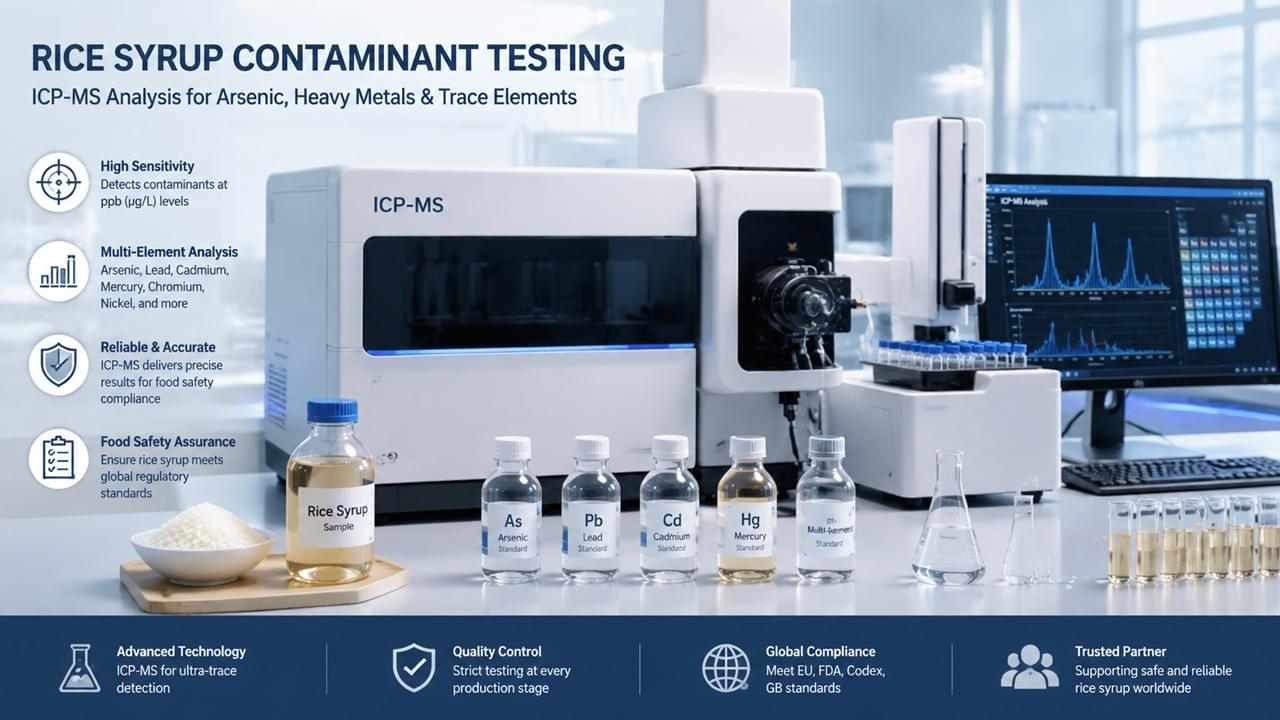
Kerana beras secara semula jadi menyerap mineral dari tanah dan air, pembeli antarabangsa semakin memberi perhatian kepada ujian logam berat.
Pengeluar yang bertanggungjawab secara rutin memantau:
- Arsenik
- memimpin
- Kadmium
- Merkuri
Kaedah analitik lanjutan seperti ICP-MS (Spektrometri Jisim Plasma Gandengan Induktif) menyediakan pengesanan pencemaran surih yang sangat tepat, membolehkan pengeluar mengesahkan pematuhan dengan had pasaran destinasi sebelum penghantaran.
Bagi produk yang bertujuan untuk nutrisi bayi atau aplikasi sensitif lain, kekerapan ujian selalunya lebih tinggi, dengan ramai pembeli meminta laporan analitik khusus kelompok berbanding ringkasan tahunan.
🇪🇺 Standard Kualiti Sirap Beras di Kesatuan Eropah
Kesatuan Eropah mengekalkan salah satu sistem keselamatan makanan paling komprehensif di dunia. Perniagaan yang mengeksport sirap beras ke negara anggota EU mesti mematuhi peraturan yang meliputi keselamatan ramuan, had pencemaran, ketertelusuran, pelabelan, dan amalan pengeluaran.
Tidak seperti sesetengah pasaran yang menumpukan terutamanya pada ujian produk siap, EU menekankan pengurusan keselamatan makanan pencegahan di seluruh rantaian bekalan. Akibatnya, pengeluar harus bersedia untuk menyediakan dokumentasi teknikal terperinci bersama laporan makmal.
🏷️ Keperluan Pelabelan EU
Pelabelan yang jelas dan tepat adalah penting untuk memasuki pasaran Eropah.
Bergantung pada formulasi produk, sirap beras boleh diisytiharkan sebagai:
- ✅ Sirap Beras
- ✅ Sirap Glukosa (dari Beras)
Apabila sirap dihasilkan secara eksklusif daripada beras, ia secara amnya tidak dianggap sebagai salah satu alergen yang disenaraikan di bawah Peraturan EU (EU) No. 1169/2011, menjadikannya sesuai untuk banyak formulasi yang peka terhadap alergen. Walau bagaimanapun, pengeluar harus sentiasa mengesahkan keperluan pelabelan berdasarkan produk akhir dan negara destinasi.
Bagi produk organik, pembekal juga mesti mematuhi Peraturan (EU) 2018/848, yang mengawal pengeluaran dan pensijilan organik di seluruh Kesatuan Eropah.
⚠️ Had Pencemaran dan Keselamatan Produk
Pihak berkuasa Eropah mengenakan had ketat ke atas pencemaran yang biasa dipantau dalam ramuan yang berasal dari bijirin.
Program kawalan kualiti biasa termasuk ujian untuk:
- memimpin
- Kadmium
- Merkuri
- Arsenik
- Mikotoksin seperti Ochratoxin A
Pengeluar yang membekalkan makanan bayi atau produk yang bertujuan untuk kumpulan pengguna yang terdedah biasanya dijangka memenuhi keperluan ketulenan yang lebih ketat dan mengekalkan kawalan pengeluaran yang dipertingkatkan.
Ujian makmal pihak ketiga yang kerap membantu menunjukkan pematuhan sambil mengukuhkan keyakinan pembeli semasa kelayakan pembekal.
🇨🇳 Standard GB China untuk Sirap Beras
Sistem keselamatan makanan negara China dibina di sekeliling Piawaian GB (Guobiao) , yang menetapkan keperluan mandatori untuk pengeluaran makanan, pemprosesan, pelabelan, dan kawalan pencemaran.
Bagi pengeluar sirap beras yang beroperasi di atau mengeksport dari China, pematuhan dengan piawaian GB yang berkenaan adalah keperluan asas untuk pengeluaran sah dan perdagangan antarabangsa.
📋 Standard GB Utama
Beberapa piawaian negara amat relevan dengan pengeluaran sirap beras.
✅ GB 2760 — Bahan Tambahan Makanan dan Bahan Pemprosesan
Piawaian ini menyatakan bahan pemprosesan mana yang boleh digunakan semasa pembuatan, termasuk enzim gred makanan, karbon teraktif, dan resin pertukaran ion.
Penggunaan bahan pemprosesan yang diluluskan membantu memastikan keselamatan produk dan pematuhan peraturan.
✅ GB 2762 — Had Pencemaran
GB 2762 menetapkan tahap maksimum yang dibenarkan untuk pencemaran seperti:
- Logam berat
- Arsenik
- memimpin
- Merkuri
- Kadmium
Pemantauan rutin memastikan produk kekal dalam had undang-undang sebelum memasuki pasaran domestik atau eksport.
✅ GB 7718 — Pelabelan Makanan
Sirap beras yang dijual di China mesti mengikut keperluan pelabelan China, termasuk nama produk standard, pengisytiharan ramuan, maklumat pengeluaran, dan elemen pelabelan mandatori lain.
Pelabelan yang tepat bukan sahaja menyokong pematuhan tetapi juga meningkatkan ketertelusuran produk di seluruh rantaian bekalan.
🇯🇵 Keperluan Kebersihan Makanan Jepun
Jepun diiktiraf kerana mengekalkan jangkaan keselamatan makanan yang sangat tinggi. Pengimport sering menjalankan penilaian pembekal terperinci sebelum meluluskan ramuan baharu.
Bagi sirap beras, pengeluar harus memberi perhatian teliti kepada:
- ✅ Ujian logam berat
- ✅ Kawalan kebersihan makanan
- ✅ Ketertelusuran produk
- ✅ Pelabelan Jepun yang betul
- ✅ Dokumentasi kualiti yang konsisten
Walaupun Pensijilan Piawaian Pertanian Jepun (JAS) adalah sukarela untuk banyak produk, mendapatkan pensijilan yang diiktiraf boleh mengukuhkan daya saing pasaran dan menunjukkan komitmen terhadap kualiti.
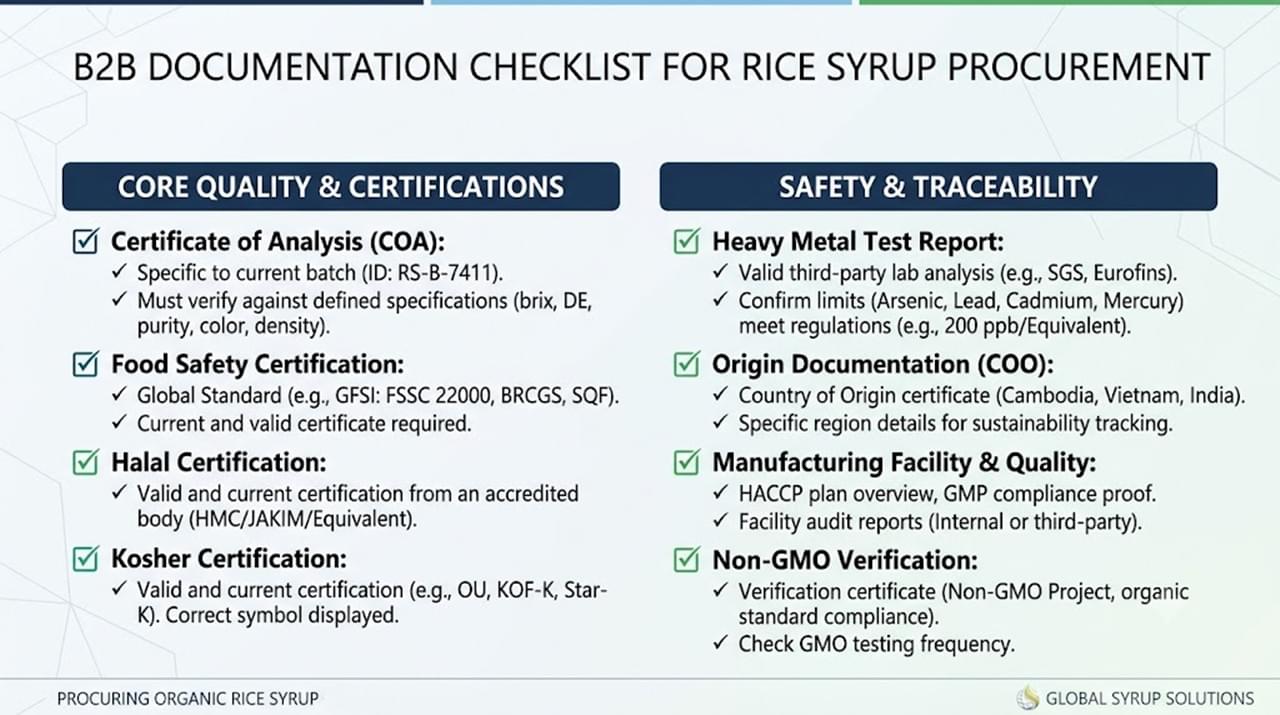
🏅 Pensijilan Industri yang Paling Dihargai oleh Pembeli
Di luar pematuhan undang-undang, pensijilan yang diiktiraf di peringkat antarabangsa sering memainkan peranan penting dalam pemilihan pembekal.
Pengeluar makanan besar dan jenama global sering memerlukan pembekal untuk mengekalkan pensijilan yang mengesahkan sistem pengurusan keselamatan makanan yang mantap.
Pensijilan yang biasa diminta termasuk:
| Pensijilan | Tujuan Utama | Pengiktirafan Pasaran |
|---|---|---|
| FSSC 22000 | Pengurusan Keselamatan Makanan | Cemerlang |
| ISO 22000 | Sistem Keselamatan Makanan | Cemerlang |
| BRCGS Makanan | Pematuhan Pembuatan | Sangat Tinggi |
| SQF | Keselamatan & Kualiti Makanan | Sangat Tinggi |
| IFS Food | Bekalan Runcit Eropah | Tinggi |
Memegang satu atau lebih pensijilan ini menunjukkan bahawa pengeluar mengikut amalan yang diterima di peringkat antarabangsa, menjalani audit pihak ketiga secara berkala, dan mengekalkan program penambahbaikan berterusan.
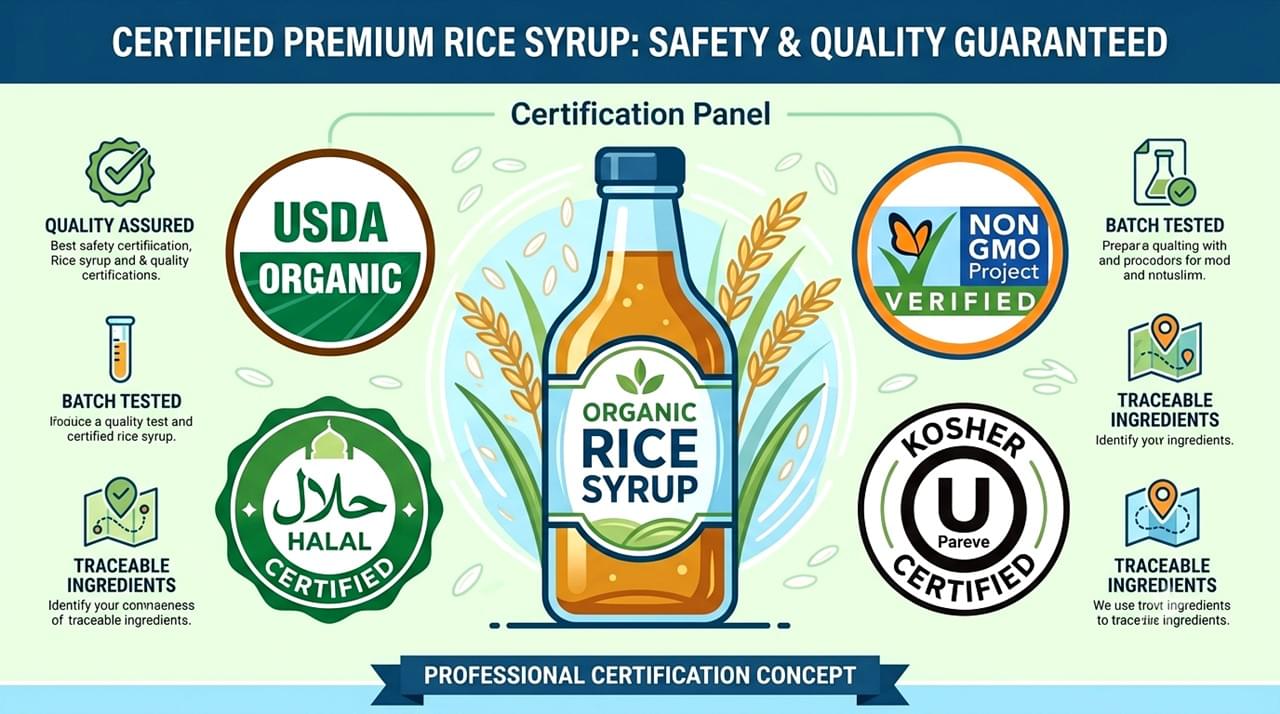
🌍 Pensijilan Halal dan Kosher
Bagi syarikat yang melayani pasaran global, pensijilan agama boleh meluaskan peluang perniagaan dengan ketara.
☪️ Pensijilan Halal
Pensijilan Halal sering diperlukan apabila mengeksport ke negara majoriti Muslim atau membekalkan pengeluar makanan yang menghasilkan produk yang diperakui Halal.
Pensijilan mengesahkan bahawa bahan mentah, kaedah pemprosesan, dan persekitaran pembuatan mematuhi keperluan diet Islam.
✡️ Pensijilan Kosher
Pensijilan Kosher diiktiraf secara meluas di luar komuniti Yahudi dan sering diminta oleh syarikat makanan multinasional kerana ia mencerminkan pengesahan ramuan yang ketat dan kawalan pengeluaran.
Mengekalkan sijil Halal dan Kosher semasa boleh membantu pembekal mengakses asas pelanggan antarabangsa yang lebih luas sambil memudahkan kelulusan perolehan.
📊 Rangka Kerja Spesifikasi Kualiti yang Disyorkan
Walaupun keperluan peraturan menetapkan piawaian undang-undang minimum, pembeli berpengalaman sering membangunkan spesifikasi teknikal mereka sendiri untuk memastikan prestasi produk yang konsisten.
Spesifikasi sirap beras yang komprehensif biasanya termasuk kategori berikut.
🔬 Sifat Fizikal
- Rupa: Jernih hingga ambar muda
- Tiada bahan asing kelihatan
- Pepejal larut (Brix): 78–82°
- Kelikatan sesuai untuk nilai DE yang dinyatakan
⚗️ Ciri-ciri Kimia
- Nilai DE terkawal dalam toleransi yang dipersetujui
- pH antara 4.0 dan 5.5
- Nilai warna yang konsisten
- Kandungan protein dan abu yang rendah mengikut gred produk
Parameter ini membantu mengekalkan kemanisan, tekstur, dan prestasi pemprosesan yang stabil merentasi aplikasi makanan yang berbeza.
🛡️ Keperluan Mikrobiologi dan Keselamatan
Ujian rutin hendaklah merangkumi:
- Jumlah Kiraan Plat
- Ragi dan Acuan
- Salmonella
- Escherichia coli O157:H7
- Logam berat
Kawalan mikrobiologi yang konsisten membantu melindungi kualiti produk sepanjang penyimpanan dan pengangkutan sambil mengurangkan risiko keselamatan makanan.
📄 Dokumentasi Penting untuk Bekalan B2B Antarabangsa
Dokumentasi yang boleh dipercayai adalah sama pentingnya dengan kualiti produk itu sendiri. Sebelum meluluskan pembekal, pembeli biasanya meminta pakej pematuhan lengkap yang mengesahkan kesesuaian peraturan dan piawaian pembuatan.
Dokumen utama yang biasa diperlukan termasuk:
- 📑 Sijil Analisis (COA) untuk setiap kelompok pengeluaran
- 🏭 Sijil keselamatan makanan ISO 22000 atau yang diiktiraf GFSI yang sah
- ☪️ Sijil Halal (jika berkenaan)
- ✡️ Sijil Kosher (jika berkenaan)
- 🌱 Sijil Organik untuk gred organik yang diperakui
- 🧪 Laporan ujian logam berat
- 🌍 Sijil Asal dan dokumentasi eksport
Menyediakan dokumen ini dengan segera membantu memperkemas perolehan, pelepasan kastam, dan audit pelanggan sambil mengukuhkan keyakinan terhadap sistem pengurusan kualiti pembekal.
💡 Petua Pakar untuk Memilih Pembekal Sirap Beras yang Boleh Dipercayai
Memenuhi keperluan peraturan hanyalah satu aspek penilaian pembekal. Pembeli berpengalaman juga mempertimbangkan kepakaran teknikal pengeluar, konsistensi pengeluaran, dan kebolehpercayaan jangka panjang.
Apabila membandingkan bakal pembekal, pertimbangkan soalan berikut:
- ✅ Adakah pembekal mengekalkan pensijilan yang diiktiraf di peringkat antarabangsa?
- ✅ Adakah laporan makmal tersedia untuk setiap kelompok pengeluaran?
- ✅ Bolehkah pembekal menyokong keperluan peraturan khusus negara?
- ✅ Adakah terdapat sistem kebolehkesanan yang jelas daripada bahan mentah kepada produk siap?
- ✅ Adakah pembekal menyediakan sokongan teknikal dan dokumentasi yang responsif?
Pembekal yang boleh menjawab soalan ini dengan yakin biasanya berada pada kedudukan yang lebih baik untuk menyokong perkongsian perniagaan yang stabil dan jangka panjang serta mengurangkan risiko pematuhan.
📌 Fikiran Akhir
Menavigasi Standard Kualiti Sirap Beras memerlukan lebih daripada sekadar memenuhi keperluan undang-undang minimum. Pembekal antarabangsa yang berjaya menggabungkan pematuhan peraturan dengan sistem pengurusan kualiti yang mantap, dokumentasi yang telus, dan pengesahan produk yang berterusan.
Seiring dengan perkembangan peraturan keselamatan makanan yang berterusan, kekal dimaklumkan tentang keperluan FDA, perundangan EU, piawaian China GB, dan skim pensijilan yang diiktiraf di peringkat antarabangsa akan membantu perniagaan mengurangkan risiko dan mengukuhkan daya saing mereka dalam pasaran global.
Sama ada anda mendapatkan sirap beras untuk pembuatan makanan, produk label persendirian, atau pengedaran antarabangsa, memilih pembekal dengan keupayaan pematuhan yang terbukti adalah salah satu cara paling berkesan untuk melindungi kualiti produk dan memastikan kejayaan jangka panjang.
Untuk panduan tambahan tentang sistem pengurusan keselamatan makanan yang diiktiraf di peringkat antarabangsa, lawati rasmi ISO 22000 sumber:
https://www.iso.org/iso-22000-food-safety-management.html
📞 Minta Dokumentasi Kepatuhan Lengkap
Jika anda memerlukan maklumat teknikal terperinci untuk projek perolehan anda, pasukan kami boleh menyediakan dokumentasi komprehensif untuk menyokong kelayakan pembekal, penilaian produk dan semakan kawal selia.
Pakej pematuhan kami tersedia atas permintaan dan mungkin termasuk:
- 📄 Sijil Analisis (COA) khusus kelompok
- 🏅 Dokumen pensijilan keselamatan makanan
- 🧪 Laporan ujian logam berat
- 🌱 Sijil Organik, Halal, dan Kosher (jika berkenaan)
- 🌍 Dokumentasi Negara Asal
- 📋 Spesifikasi teknikal dan helaian data produk
👉 Minta Dokumentasi Pematuhan Penuh daripada Wuhu Deli Foods →
https://www.delisyrup.com/contact/
Untuk mengetahui lebih lanjut tentang program pensijilan kami, lawati Pensijilan Keselamatan Makanan Sirap Beras panduan kami.
Untuk maklumat terperinci tentang analisis kontaminan, lihat Panduan Ujian Arsenik & Logam Berat kami.
 English
 Deutsch
 Español
 العربية
 Français
 Русский
 Bahasa Indonesia
 한국어
한국어 日本語
日本語 Polski
 Português
 Bahasa Melayu