
Aplicações da bebida com xarope de arroz Estão se expandindo rapidamente à medida que as marcas de bebidas buscam rótulos mais limpos, doçura mais suave e alternativas mais amigáveis ao consumidor em relação aos adoçantes tradicionais. Da nutrição esportiva às bebidas à base de plantas, o xarope de arroz oferece um perfil de sabor equilibrado, excelente solubilidade e desempenho confiável no processamento, características cada vez mais valorizadas pelos formuladores modernos.
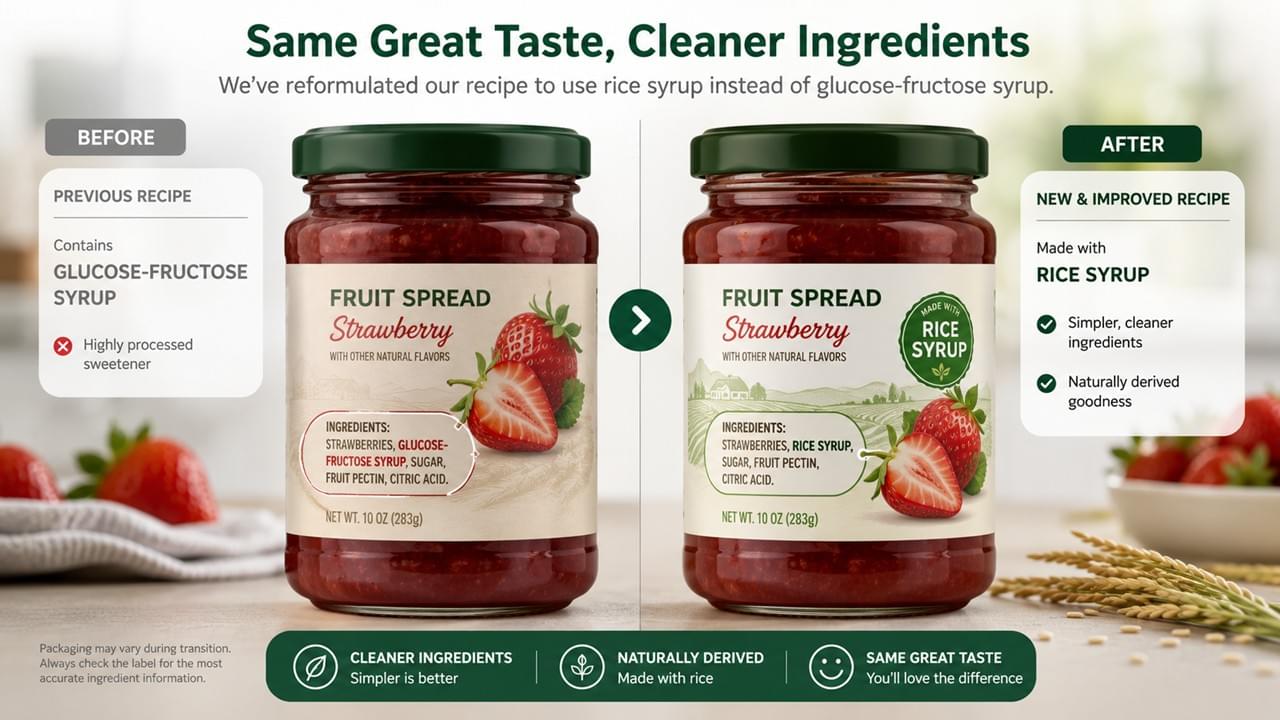
Os consumidores de hoje leem atentamente os rótulos dos ingredientes. Muitos evitam ativamente adoçantes artificiais e xarope de milho rico em frutose, o que leva os fabricantes a buscarem soluções naturais de carboidratos que ainda ofereçam excelente funcionalidade. O xarope de arroz tornou-se uma das respostas mais práticas para a inovação em bebidas, pois combina estabilidade técnica com uma imagem limpa e acessível. 🌾
Para fabricantes de bebidas que exploram soluções mais abrangentes para xaropes, a visão geral completa da aplicação está disponível em [inserir link aqui]. Soluções de xarope de arroz para alimentos de delicatessen Fornece informações adicionais sobre formulação em diversos setores.
🌟 Por que as aplicações de bebidas à base de xarope de arroz continuam a crescer
As bebidas modernas exigem muito mais do que apenas doçura. Um adoçante eficaz para bebidas deve apresentar desempenho consistente durante a produção, o armazenamento, o transporte e o consumo.
Principais vantagens funcionais
- ✅ Excelente solubilidade em água
- ✅ Perfil de doçura neutro
- ✅ Baixa interferência de sabor
- ✅ Estável em condições padrão de Brix para bebidas
- ✅ Posicionamento de ingredientes de rótulo limpo
- ✅ Adequado para processamento a quente e a frio
Em comparação com alguns xaropes de glicose, o xarope de arroz proporciona uma curva de doçura mais suave, sem picos de doçura excessivamente acentuados. Isso o torna especialmente valioso em bebidas premium, onde a complexidade dos sabores é importante.
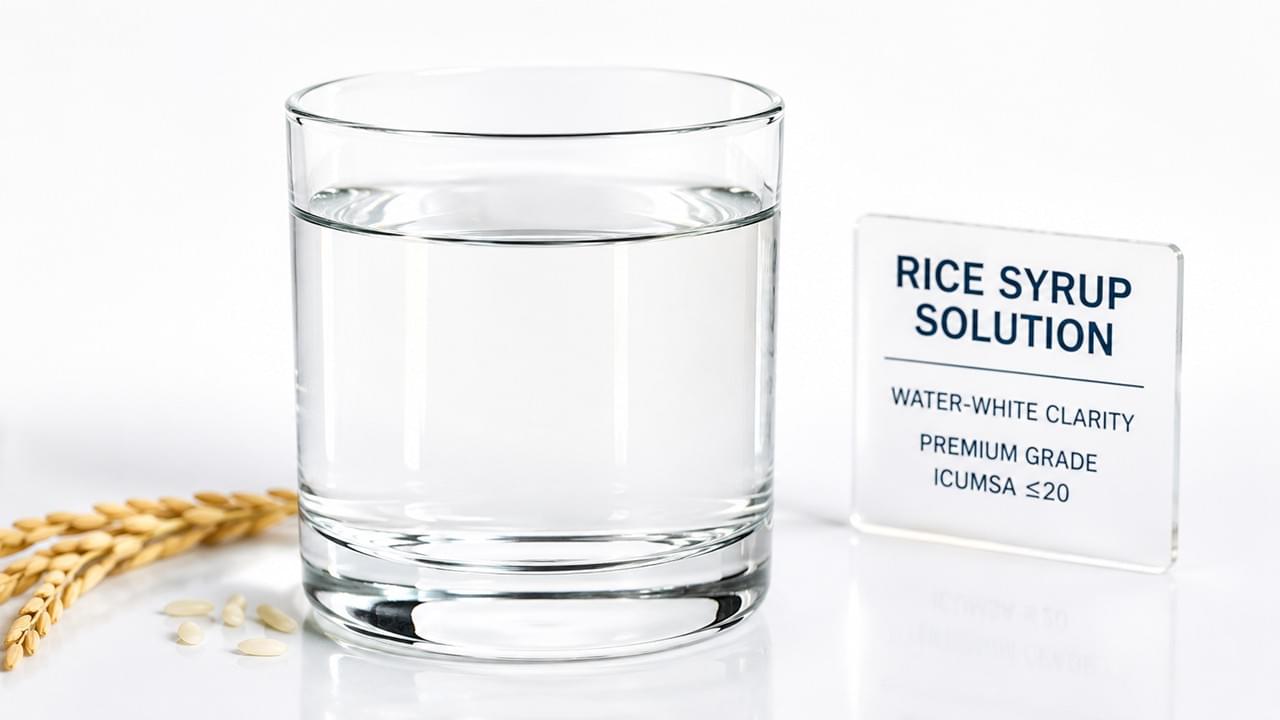
O xarope de arroz de alta qualidade também proporciona uma transparência excepcional, o que é fundamental para bebidas transparentes como chá pronto para beber, bebidas gaseificadas e bebidas esportivas.
🥤 Aplicações do xarope de arroz em bebidas carbonatadas
Uma das que crescem mais rapidamente aplicações da bebida com xarope de arroz São refrigerantes carbonatados. As marcas de bebidas que substituem o xarope de milho rico em frutose frequentemente precisam de um ingrediente que mantenha a consistência do dulçor sem alterar a sensação na boca ou a transparência.
O xarope de arroz com alto DE (DE 58–65) tem um desempenho especialmente bom em bebidas gaseificadas porque se dissolve rapidamente e permanece estável durante todo o prazo de validade.
Por que as marcas de bebidas preferem xarope de arroz?
- Aparência cristalina para bebidas premium.
- Risco mínimo de sedimentação
- Doçura suave sem sabor residual persistente.
- Compatível com sistemas de sabor cítrico, de frutos silvestres e tropicais.
Fórmula típica de bebida carbonatada
| Ingrediente | Nível de utilização |
| Xarope de arroz (DE 60–65) | 8–12% |
| Ácido cítrico | Conforme necessário |
| Sistema de sabor | Conforme necessário |
| Carbonatação | 2,5–4,0 volumes de CO₂ |
Muitos fabricantes de bebidas que estão abandonando o xarope de milho rico em frutose estão agora avaliando... substituto do xarope de arroz com alto teor de frutose Estratégias para melhorar a transparência dos ingredientes, mantendo a eficiência do processamento.
Para obter mais informações sobre as tendências de adoçantes com rótulo limpo, consulte o Conselho Internacional de Informação Alimentar Publica regularmente pesquisas sobre preferências de ingredientes por parte dos consumidores.
⚡ Aplicações do xarope de arroz em bebidas esportivas e energéticas
As bebidas esportivas exigem fornecimento rápido de energia, osmolalidade estável e interação de sabor neutro. É aqui que entra o fator principal. formulação de bebida esportiva com xarope de arroz torna-se particularmente eficaz.
O xarope de arroz contém naturalmente glicose e maltose, o que o torna uma fonte eficiente de carboidratos para a rápida reposição de glicogênio durante o exercício e a recuperação.
Benefícios da nutrição esportiva
- ⚡ Absorção rápida de carboidratos
- 💧 Compatível com sistemas de bebidas isotônicas
- 🥤 Sabor suave, compatível com eletrólitos
- 🔬 Estabilidade de fabricação confiável
Exemplo de fórmula de bebida esportiva
| Ingrediente | Nível de utilização |
| Xarope de arroz (DE 60–65) | 6–8% |
| Eletrólitos | Conforme as especificações |
| Sabor natural | 0,1–0,3% |
| Água | Equilíbrio |
A osmolalidade alvo normalmente varia de 270 a 330 mOsm/kg para o desempenho de bebidas isotônicas.
As marcas que desenvolvem produtos de hidratação funcional também podem explorar os recursos de ingredientes para bebidas disponíveis em Notícias do setor alimentício para tendências de formulação mais amplas.
🍵 Aplicações do xarope de arroz em bebidas prontas para consumo, como chá e café
O equilíbrio de sabores é crucial em bebidas prontas para consumo. Formulações de chá e café exigem um dulçor que complemente as notas de sabor delicadas, em vez de as sobrepor.
É por isso aplicações da bebida com xarope de arroz são cada vez mais comuns em categorias premium de bebidas prontas para consumo.
Por que o xarope de arroz funciona bem em bebidas prontas para consumo?
- Perfil de doçura suave
- Redução da mascaragem de sabores
- Excelente compatibilidade com os polifenóis do chá.
- Desempenho estável durante a pasteurização
Chá verde, chá preto, chá oolong e café gelado se beneficiam do perfil de doçura mais suave do xarope de arroz em comparação com adoçantes altamente refinados.
Exemplo de fórmula de chá pronto para beber
| Ingrediente | Nível de utilização |
| Concentrado de chá | 30–40% |
| Xarope de arroz (DE 52–60) | 6–10% |
| Água | Equilíbrio |
| Ácido cítrico e aroma | Conforme necessário |
Para empresas que desenvolvem portfólios de bebidas premium, o guia detalhado em oferece referências de formulação mais abrangentes.
🥛 Aplicações do xarope de arroz em bebidas à base de leites vegetais
O setor de bebidas à base de plantas continua a crescer em todo o mundo, especialmente nas categorias de aveia, amêndoa e soja. Nessas formulações, xarope de arroz, leite vegetal As soluções proporcionam tanto doçura quanto realce de textura.
Ao contrário de alguns adoçantes que deixam a boca com uma sensação aguada, o xarope de arroz com DE médio contribui com corpo e cremosidade, ajudando a imitar a textura dos laticínios.
Vantagens funcionais dos leites vegetais
- 🌾 Perfil de sabor compatível com grãos
- 🥛 Sensação na boca e viscosidade aprimoradas
- 🌱 Posicionamento de rótulo limpo
- 🚫 Sem preocupações com frutose para os consumidores
Exemplo de fórmula de leite de aveia
| Ingrediente | Nível de utilização |
| Base de Aveia | 10–15% |
| Xarope de arroz (DE 45–52) | 2–5% |
| Óleo de girassol | 1–2% |
| Sal | 0.1% |
A relação natural entre o leite de aveia e o xarope de arroz, grão a grão, também sustenta narrativas de marcas premium focadas na simplicidade e na familiaridade.
Fabricantes interessados em aplicações similares na indústria de laticínios também podem consultar estratégias de formulação mais abrangentes.
🧪 Aplicações do xarope de arroz em bebidas fermentadas
Bebidas fermentadas como kombucha e bebidas probióticas requerem fontes controladas de açúcar fermentável. O xarope de arroz oferece um teor equilibrado de glicose e maltose que favorece a atividade microbiana sem excesso de doçura.
Benefícios das bebidas fermentadas
- Favorece a fermentação controlada.
- Aumenta a complexidade do sabor
- Garante disponibilidade estável de açúcar.
- Compatível com sistemas de bebidas probióticas
Os valores de DE recomendados geralmente variam de 42 a 52 para bebidas com foco em fermentação.
Com o aumento da demanda global por bebidas funcionais, muitos fabricantes estão combinando xarope de arroz com ingredientes botânicos, probióticos e extratos naturais para criar produtos de bem-estar diferenciados.
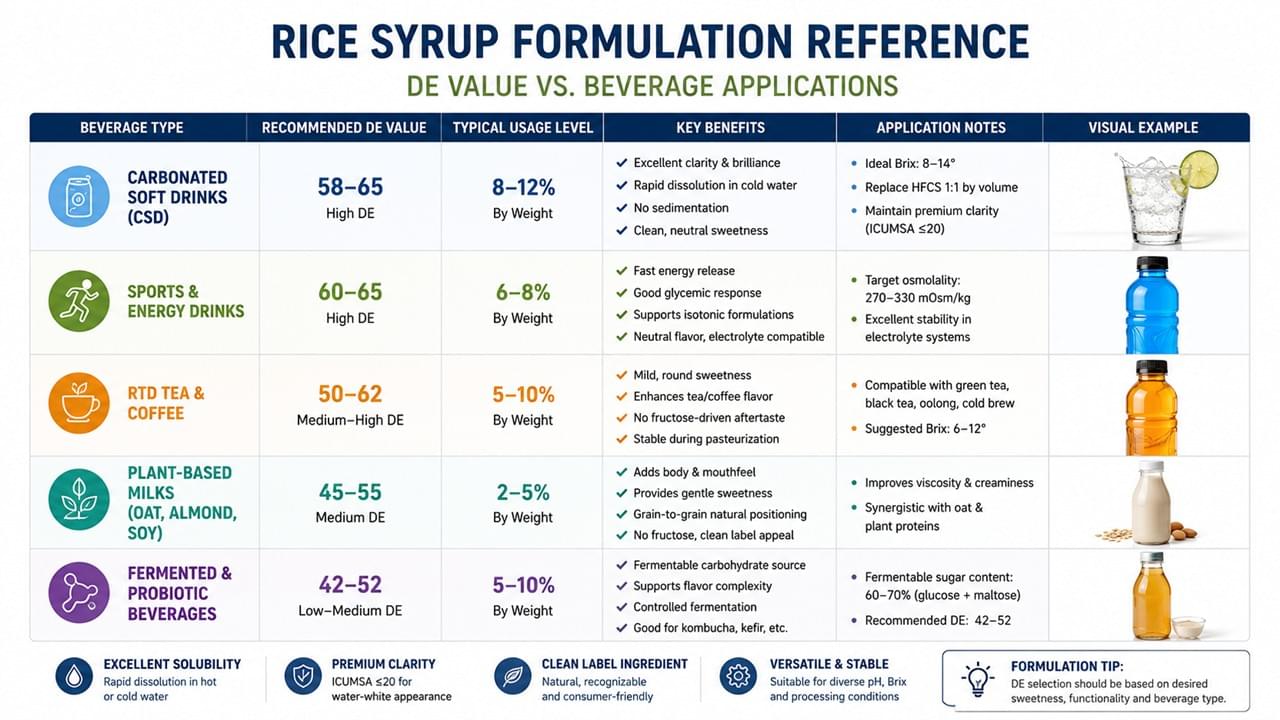
📊 Guia de Referência Rápida: Aplicações de Xarope de Arroz em Bebidas por Categoria
| Tipo de bebida | DE recomendado | Nível de utilização | Principal benefício |
| Bebidas carbonatadas | 58–65 | 8–12% | Clareza e solubilidade |
| Bebidas esportivas | 60–65 | 6–8% | Fornecimento rápido de energia |
| Chá/Café pronto para beber | 50–62 | 5–10% | Equilíbrio de sabores |
| Leite à base de plantas | 45–55 | 2–5% | Melhoria da sensação na boca |
| Bebidas Fermentadas | 42–52 | 5–10% | Suporte à fermentação |
🚀 O futuro das aplicações de xarope de arroz em bebidas
À medida que as marcas de bebidas continuam a avançar em direção à inovação com rótulos limpos, aplicações da bebida com xarope de arroz Provavelmente se expandirá para bebidas funcionais, bebidas premium voltadas para o bem-estar e nutrição à base de plantas.
A capacidade de combinar funcionalidade técnica com um posicionamento favorável ao consumidor confere aos fabricantes uma vantagem valiosa em mercados de bebidas cada vez mais competitivos.
Seja em bebidas gaseificadas, bebidas esportivas, chás prontos para beber ou alternativas ao leite, o xarope de arroz oferece um equilíbrio prático entre doçura, estabilidade e flexibilidade de formulação, alinhando-se perfeitamente às expectativas do consumidor moderno.
👉 Fabricantes de bebidas que buscam especificações personalizadas de xarope e suporte na formulação de bebidas podem entrar em contato Alimentos Deli Wuhu Para amostras e assistência técnica.
 English
 Deutsch
 Español
 العربية
 Français
 Русский
 Bahasa Indonesia
 한국어
한국어 日本語
日本語 Polski
 Português
 Bahasa Melayu