
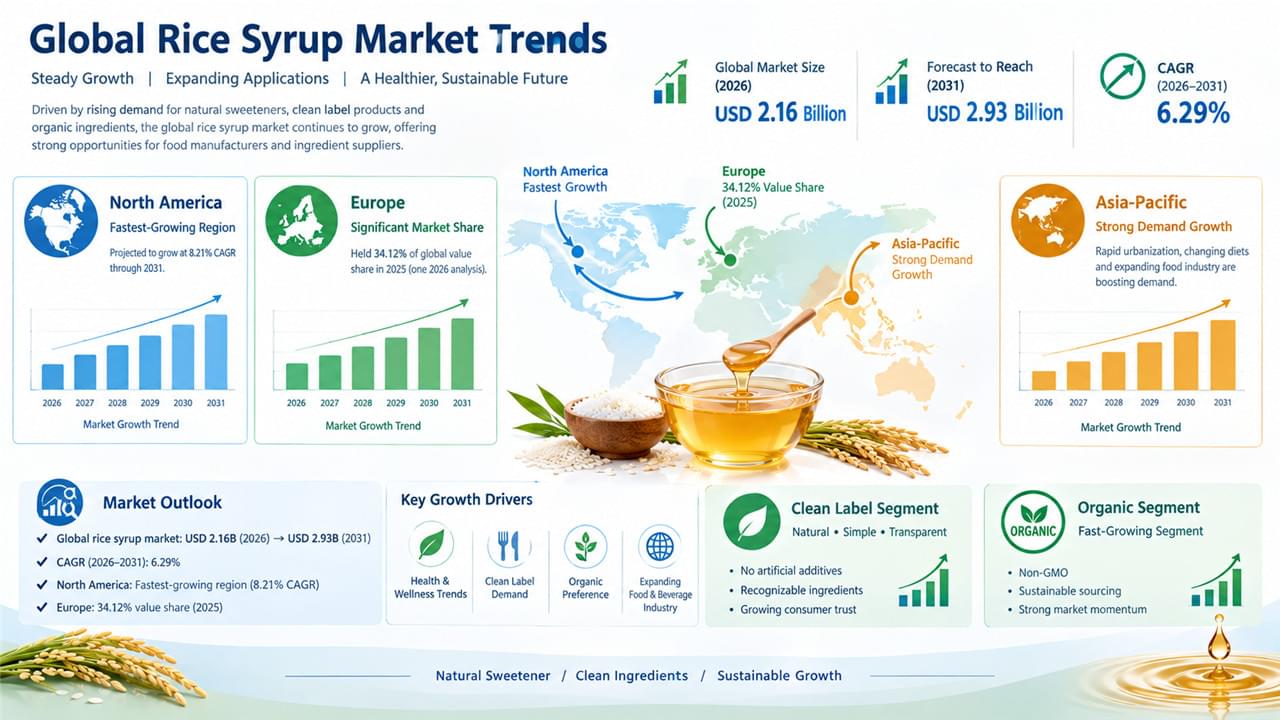
Rice syrup market trends tell the story of a sweetener riding its most consequential makeover in decades. As shoppers scrutinize ingredient labels and demand transparency, the global landscape is shifting decisively toward natural, minimally processed sweeteners. For food manufacturers, understanding where the rice syrup market is heading — and why — is now a competitive necessity, not a nice-to-have.
This guide examines the forces driving rice syrup adoption and the rice syrup market trends shaping 2026 sourcing decisions — from application innovation to sustainability expectations and what it all means for your formulation strategy.
🧼 The Clean Label Revolution Driving Demand
Rice Syrup Market Trends: The Clean Label Engine
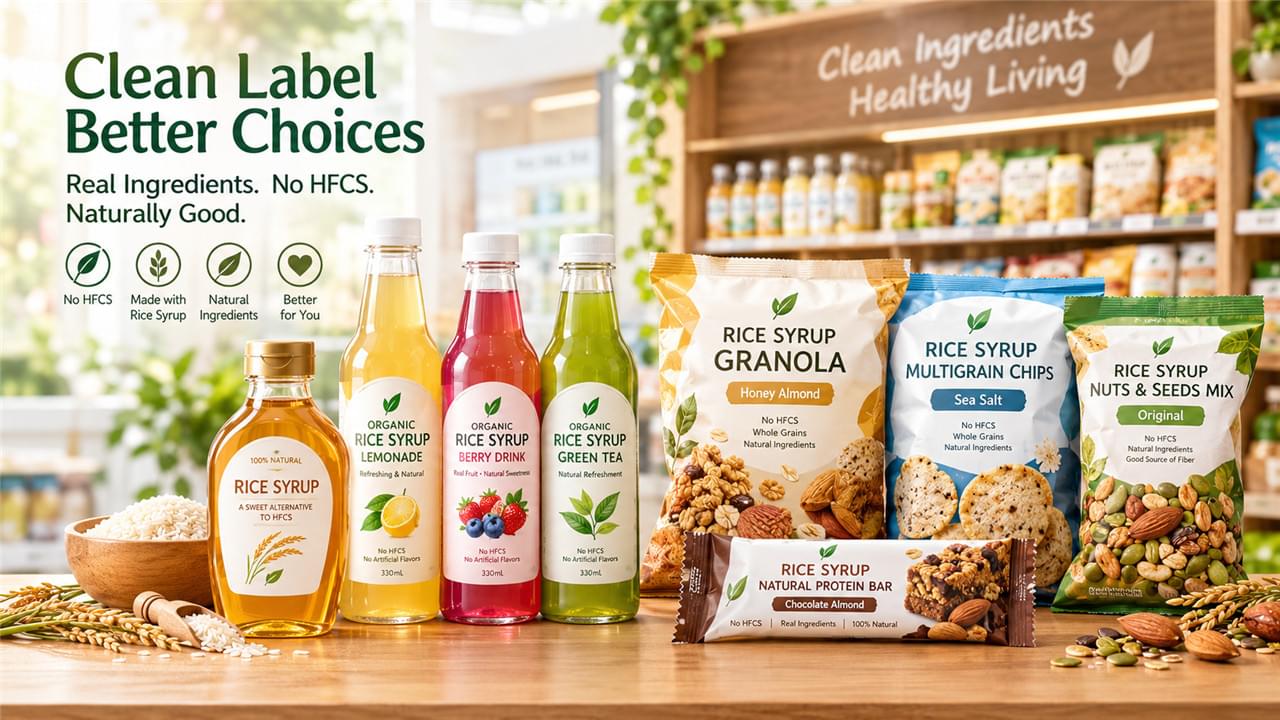
The clean label movement has fundamentally rewritten consumer purchasing behavior. Study after study shows a majority of food buyers actively seek products with recognizable, pronounceable ingredients — and clean label sweetener trends keep pointing the same direction. Rice syrup benefits from this shift for several compelling reasons.
Unlike HFCS or artificial sweeteners that trigger instant skepticism, rice syrup occupies an inherently credible position: it’s made from rice, processed enzymatically, and contains no synthetic additives. That narrative resonates across North America, Europe, and Asia-Pacific alike.
Key clean label drivers for rice syrup adoption:
- Allergen-free positioning: With top-9 allergen avoidance increasingly important, rice syrup’s wheat-free, soy-free, dairy-free status creates real formulation advantages
- Non-GMO credentials: Rice is not a commercially approved GMO crop, enabling straightforward non-GMO certification without expensive testing protocols
- Recognizable ingredient declaration: “Rice syrup” or “brown rice syrup” communicates simplicity and naturalness on packaging
The global clean label food and beverage market is projected to grow substantially through 2028, and current rice syrup market trends position the ingredient as a primary beneficiary of this structural shift.
🌱 Sustainability Imperatives Reshaping Sweetener Sourcing
Environmental sustainability has evolved from a marketing differentiator into a genuine procurement criterion for major food companies — and rice syrup sustainability compares favorably with competing sweeteners on several dimensions.
Water efficiency: Modern rice syrup production facilities have made significant advances in water recycling and wastewater treatment. At Wuhu Deli Foods, closed-loop water systems cut freshwater consumption per ton of syrup produced.
Agricultural sustainability: Rice cultivation in China — particularly in regions using integrated pest management and reduced synthetic input programs — keeps making incremental gains. Rice straw utilization for energy recovery is reducing waste at the farm level.
Supply chain traceability: As brands face scrutiny over supply chain ethics, rice syrup’s straightforward agricultural chain — rice grain to syrup — offers traceability advantages over complex multi-origin sweetener blends.
Carbon footprint considerations: Life cycle assessments (LCAs) of rice syrup production are enabling manufacturers to make science-based sustainability claims and feed corporate net-zero programs with hard numbers.
Taken together, these rice syrup market trends signal that sustainability documentation is no longer optional for sweetener suppliers — it’s becoming the entry ticket.
🚀 Emerging Application Innovation: Beyond Traditional Uses
Confectionery and bakery remain rice syrup’s traditional strongholds, but the most interesting part of the story is where it’s heading next.
Rice Syrup Market Trends: Sports Nutrition Takes Off
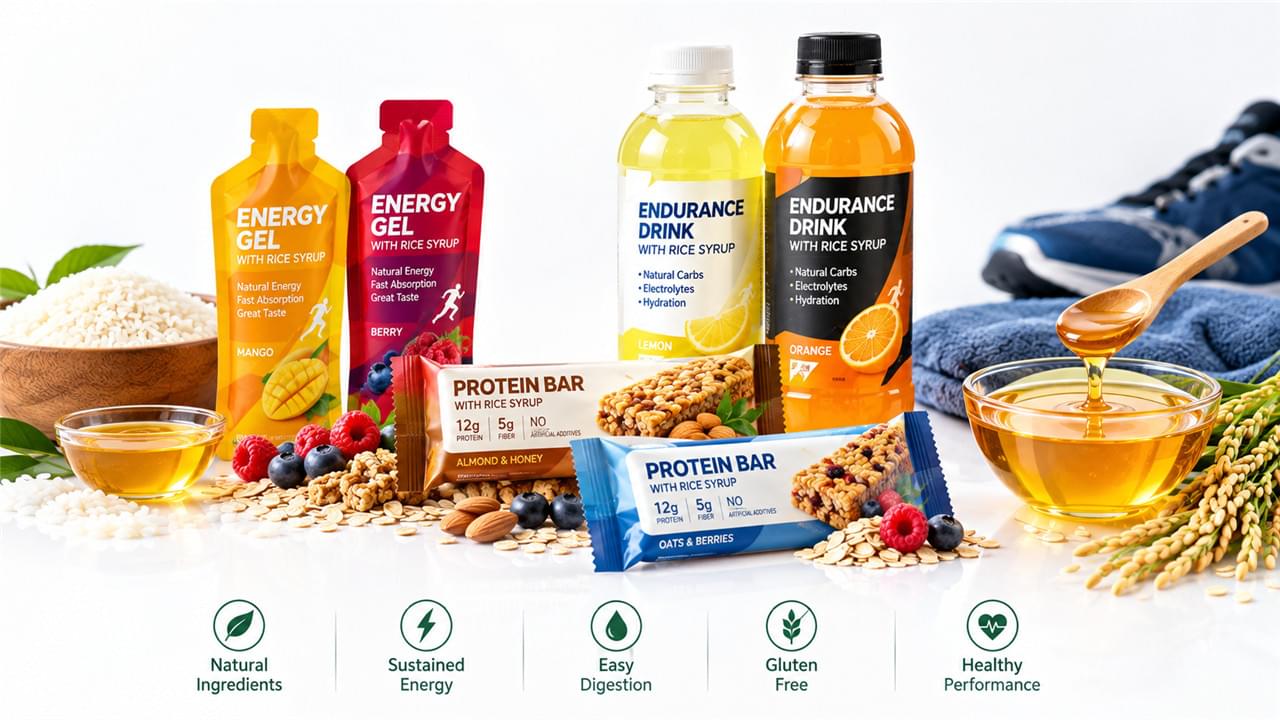
The sports nutrition segment is one of the fastest-growing channels for rice syrup adoption. Athletes and active consumers want rapid, sustained energy from natural sources free of refined sugars. Rice syrup’s carbohydrate profile — glucose polymers of varying chain lengths — delivers both quick glycogen replenishment and extended energy availability.
Energy gels, chews, bars, and drink powders increasingly formulate with rice syrup as the primary carbohydrate source. Hitting high carbohydrate density in small serving sizes without crystallization is a genuinely valuable trick in this category — and it’s one of the clearest rice syrup market trends of 2026: performance products are going natural.
Infant and Toddler Foods
Infant nutrition demands the highest standards of purity, traceability, and safety. Rice syrup’s natural positioning — combined with the ability to meet stringent heavy metal testing standards when properly sourced and tested — makes it a preferred carbohydrate source in organic and natural infant lines. Stage 2 and Stage 3 baby foods, toddler puffs, and developmental snacks are among the fastest-growing applications for specially produced, low-arsenic certified rice syrup.
Functional and Fortified Foods
The intersection of sweetening function and health positioning is creating new opportunities — another current where rice syrup market trends and product development overlap. Rice syrup serves as an ideal carrier matrix for:
- Vitamin and mineral fortification programs
- Prebiotic fiber additions (partially hydrolyzed guar gum, inulin)
- Adaptogen and botanical extract delivery
- Protein-enriched formulations needing clean-tasting carbohydrate bases
Plant-Based Food Systems
The explosive growth of plant-based meat, dairy, and egg alternatives has created substantial new demand. In plant-based foods, rice syrup provides:
- Color development in Maillard reaction-dependent products
- Binding functionality in formed products like burgers and nuggets
- Texture modification in plant-based dairy alternatives
- Neutral flavor that doesn’t compete with other natural flavors
Across all four categories, rice syrup market trends point the same way: functional demand is widening faster than traditional volume.
⚙️ Technology Innovation in Rice Syrup Production
Rice Syrup Market Trends: Technology Pushing the Limits
Natural sweetener innovation on the production side is advancing fast, and it’s expanding what formulators can ask for.
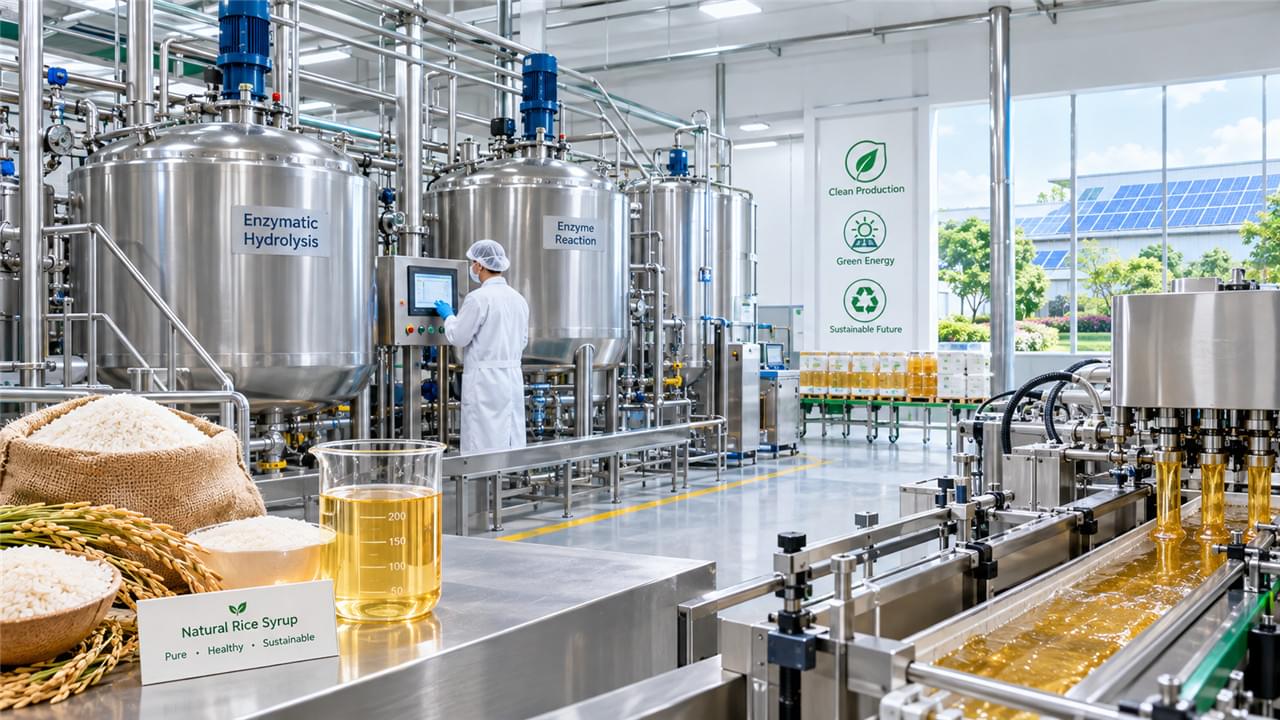
High-DE ultra-clear grades: New enzymatic hydrolysis and purification technologies now produce rice syrup grades with DE values above 60 while maintaining water-white clarity — opening premium beverage and pharmaceutical applications where color specifications are strict.
Organic certified production lines: Responding to premium demand, leading manufacturers including Wuhu Deli Foods have invested in dedicated organic production lines — separate equipment, organic-certified cleaning protocols, and full chain-of-custody documentation.
Custom DE value engineering: Rather than standard DE ranges, advanced producers engineer specific DE values with tight tolerances (±2 DE) to match precise formulation requirements. For R&D teams replicating exact texture or sweetness profiles batch to batch, this is the difference between adjusting the formula and adjusting the supplier.
Membrane filtration advances: Improved ultrafiltration and nanofiltration membrane technology has boosted purification efficiency and selectivity. Modern membrane systems achieve higher protein removal rates, better color reduction, and lower operating costs than systems from five years ago.
🌍 Regional Market Dynamics
Rice syrup market trends look different depending on where you sell — and where you source.
Asia-Pacific remains the largest production region, with China accounting for the majority of global output. Domestic consumption is growing alongside export demand, powered by China’s own clean label movement and the rapid expansion of health-focused brands.
North America is the most sophisticated market for premium grades, with organic, non-GMO, and allergen-free segments commanding significant price premiums. The continuing drift away from HFCS keeps creating substitution opportunities.
Europe shows particularly strong demand for organic and sustainability-certified grades — a reflection of the EU’s Farm to Fork strategy and its influence on procurement policies. European brands increasingly require third-party sustainability assessments from sweetener suppliers.
Middle East and Southeast Asia are emerging growth markets, driven by Halal certification requirements, clean label trends, and expanding modern food manufacturing sectors.
📜 Regulatory and Labeling Trends
Regulatory developments are quietly steering rice syrup market trends in important ways.
Sugar reduction mandates: Government pressure on added sugar — including sugar taxes in multiple jurisdictions — keeps driving reformulation activity where rice syrup plays a role in partial sugar replacement strategies.
Labeling clarity requirements: Regulatory guidance on distinguishing “rice syrup,” “brown rice syrup,” and “rice malt syrup” varies by jurisdiction. Multi-market product development demands careful navigation of these distinctions.
Arsenic testing standards: Rice-based ingredients face scrutiny for naturally occurring inorganic arsenic, but established testing protocols and responsible sourcing programs enable rice syrup to meet the most stringent global food safety standards. For certified suppliers, this is a point of differentiation, not a liability.
🎯 Rice Syrup Market Trends: The Sourcing Playbook
The convergence of clean label demand, sustainability imperatives, and application innovation makes a compelling case for building rice syrup into your long-term sourcing strategy. The latest rice syrup market trends distill into four practical moves for sourcing teams:
- Supplier qualification: Not all rice syrup suppliers have equivalent capabilities. Evaluate technical competency, certification portfolio, and production transparency carefully.
- Specification flexibility: Work with suppliers capable of custom DE values and specialty grades to future-proof your formulations.
- Sustainability documentation: Request life cycle assessment data, water use metrics, and agricultural sourcing information to support your own reporting.
- Regulatory compliance support: Partner with suppliers who proactively monitor regulatory changes and provide documentation support for market access.
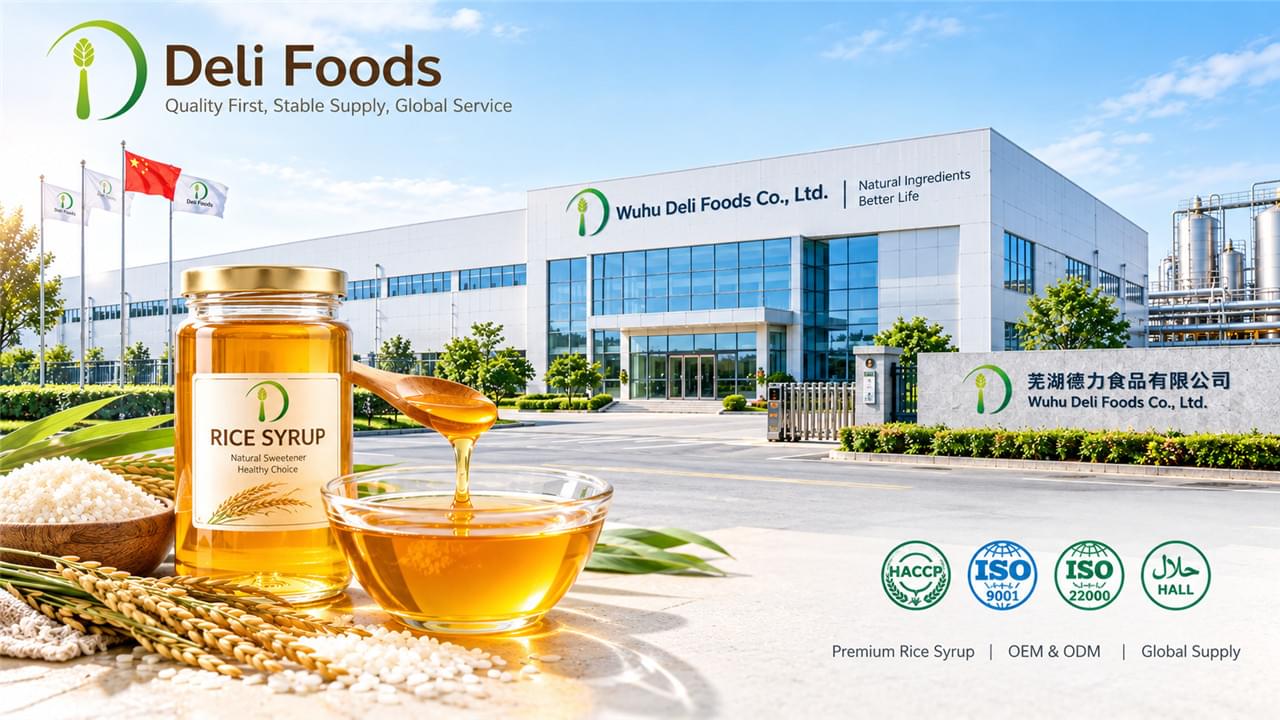
Wuhu Deli Foods combines 20+ years of rice syrup production expertise with continuous investment in technology, sustainability programs, and quality systems — making us a preferred partner for manufacturers navigating the evolving natural sweetener landscape.
✅ Заключение
Rice Syrup Market Trends: The Bottom Line
Rice syrup market trends in 2026 describe a sweetener at an inflection point — increasingly favored for clean label positioning, allergen-free formulation, sustainable sourcing, and diverse functional applications. Manufacturers who build deep rice syrup competency now will be positioned to lead the next generation of natural food products.
Whether you’re reformulating existing products, developing clean label innovations, or building a more sustainable supply chain, rice syrup deserves a prominent place in your sweetener strategy.
Свяжитесь с Wuhu Deli Foods to discuss your rice syrup sourcing strategy.

 English
 Deutsch
 Español
 العربية
 Français
 Русский
 Bahasa Indonesia
 한국어
한국어 日本語
日本語 Polski
 Português
 Bahasa Melayu