
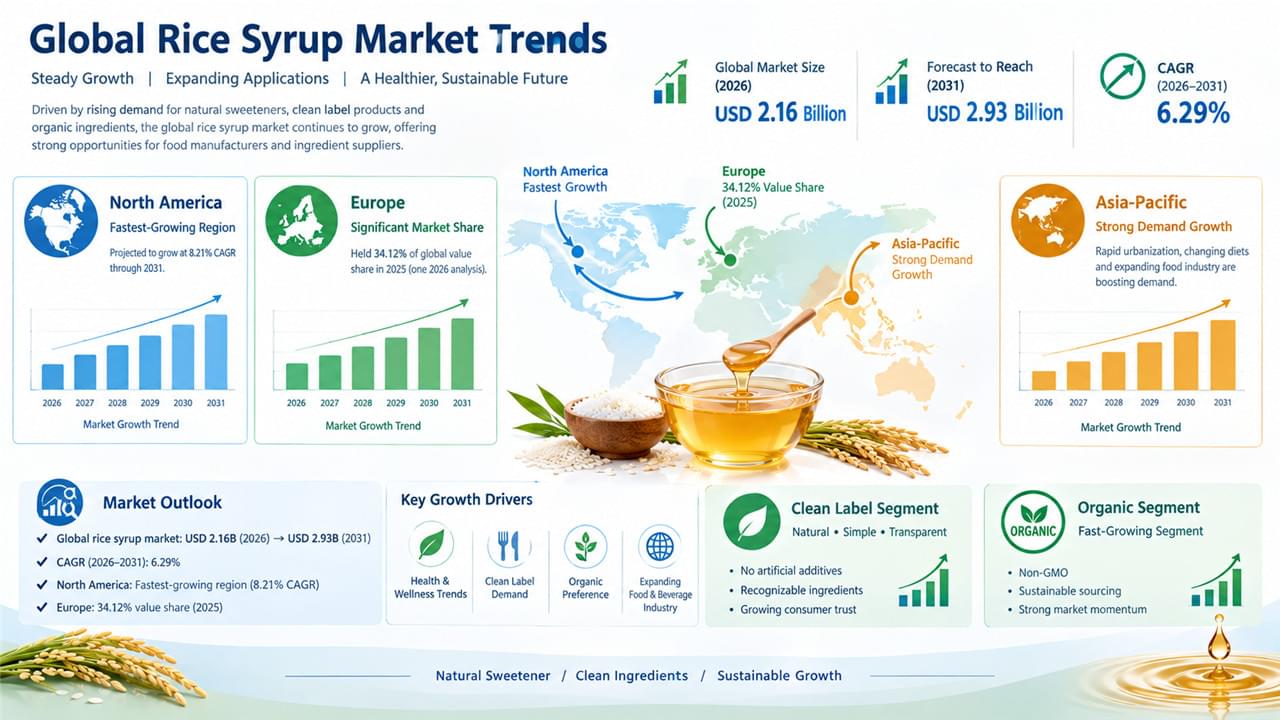
米飴市場のトレンドは、数十年来で最も重要な変革を遂げている甘味料の物語を語っています。消費者が原材料表示を精査し、透明性を求める中、グローバルな状況は自然で最小限の加工が施された甘味料へと決定的にシフトしています。食品メーカーにとって、米飴市場の動向とその理由を理解することは、もはや「あれば嬉しい」ものではなく、競争上の必須事項となっています。.
このガイドでは、米飴の採用を推進する要因と、2026年の調達決定を形成する米飴市場のトレンドを、用途革新から持続可能性への期待、そしてそれが配合戦略に与える影響までを検証します。.
🧼 クリーンラベル革命が需要を牽引
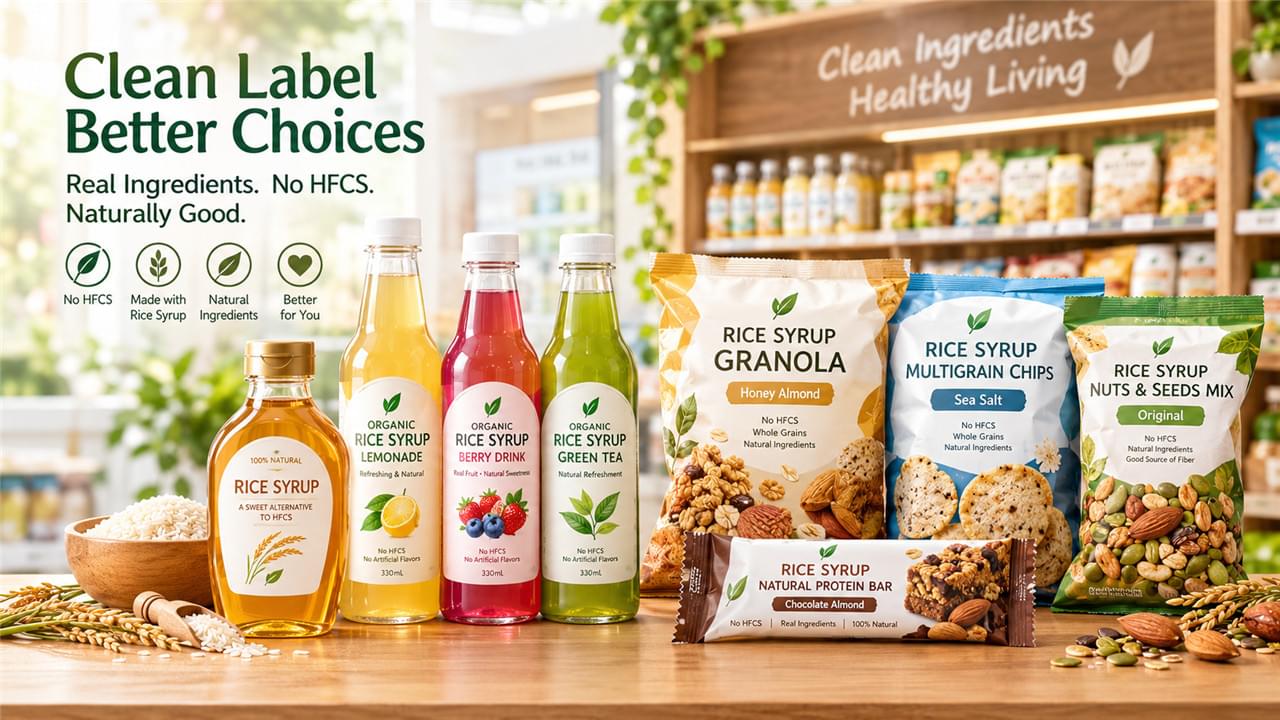
米飴市場のトレンド:クリーンラベルの推進力
クリーンラベル運動は、消費者の購買行動を根本的に書き換えました。数々の調査が、食品購入者の大多数が認識可能で発音しやすい原材料を含む製品を積極的に求めていることを示しており、クリーンラベル甘味料のトレンドも同じ方向を指し続けています。米飴は、いくつかの説得力のある理由から、このシフトの恩恵を受けています。.
HFCSや人工甘味料のように即座に疑念を抱かせるものとは異なり、米飴は本質的に信頼性の高い位置を占めています。米から作られ、酵素的に加工され、合成添加物は含まれていません。このストーリーは、北米、ヨーロッパ、アジア太平洋地域で同様に共鳴しています。.
米飴採用における主要なクリーンラベル推進要因:
- アレルゲンフリーのポジショニング: トップ9アレルゲン回避がますます重要になる中、米飴の小麦・大豆・乳製品フリーというステータスは、実際の配合上の利点をもたらします。
- 非GMO認証: 米は商業的に承認されたGMO作物ではないため、高価な検査手順なしで、容易に非GMO認証を取得できます。
- 認識しやすい原材料表示: “「米飴」または「玄米飴」は、パッケージ上でシンプルさと自然さを伝えます。
グローバルなクリーンラベル食品・飲料市場は2028年まで大幅な成長が見込まれており、現在の米飴市場のトレンドは、この構造的シフトの主要な受益者としてこの原料を位置付けています。.
🌱 持続可能性の要請が甘味料調達を再構築
環境持続可能性は、マーケティング上の差別化要因から、大手食品企業にとって真の調達基準へと進化しました。そして、米飴の持続可能性は、いくつかの側面で競合する甘味料と比較して有利です。.
水効率: 最新の米飴製造施設では、水の再利用と廃水処理において大幅な進歩を遂げています。無錫徳利食品では、クローズドループ水システムにより、生産トンあたりの真水消費量を削減しています。.
農業の持続可能性: 中国における米の栽培、特に統合的病害虫管理や合成投入プログラム削減を利用している地域では、着実に進歩を続けています。エネルギー回収のための米わらの利用は、農場レベルでの廃棄物を削減しています。.
サプライチェーンのトレーサビリティ: ブランドがサプライチェーンの倫理に関する精査に直面する中、米飴の米粒から飴への単純な農業チェーンは、複雑な複数産地の甘味料ブレンドよりもトレーサビリティ上の利点を提供します。.
カーボンフットプリントへの配慮: 米飴製造のライフサイクルアセスメント(LCA)により、メーカーは科学的根拠に基づいた持続可能性の主張を行い、企業のネットゼロプログラムに確かな数値を提供できます。.
これらを総合すると、これらの米飴市場のトレンドは、持続可能性の文書化がもはや甘味料サプライヤーにとってオプションではなく、参入資格になりつつあることを示しています。.
🚀 新たな用途革新:伝統的用途を超えて
菓子類とベーカリーは依然として米飴の伝統的な牙城ですが、この物語の最も興味深い部分は、次にどこへ向かうかです。.
米飴市場のトレンド:スポーツ栄養が急成長
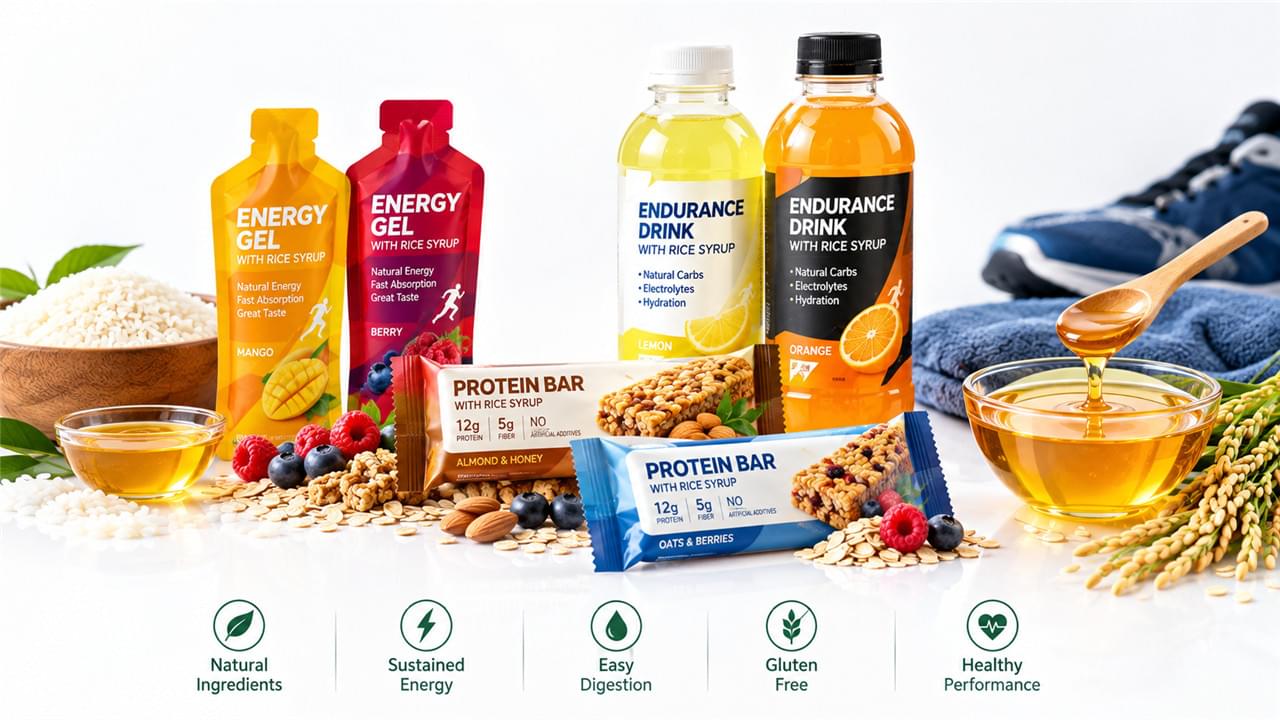
スポーツ栄養セグメントは、米飴採用の最も急速に成長しているチャネルの1つです。アスリートやアクティブな消費者は、精製糖を含まない天然ソースからの迅速かつ持続的なエネルギーを求めています。米飴の炭水化物プロファイル(様々な鎖長のグルコースポリマー)は、迅速なグリコーゲン補充と持続的なエネルギー供給の両方を提供します。.
エナジージェル、チュー、バー、ドリンクパウダーは、米飴を主要な炭水化物源として配合することが増えています。結晶化せずに少量で高い炭水化物密度を達成することは、このカテゴリーにおける真に価値のあるトリックであり、2026年の最も明確な米飴市場トレンドの1つです。パフォーマンス製品は自然志向になっています。.
乳幼児用食品
乳幼児栄養は、最高の純度、トレーサビリティ、安全性の基準を要求します。米飴の自然なポジショニングは、適切に調達・検査された場合に厳格な重金属検査基準を満たす能力と組み合わさることで、オーガニックおよびナチュラル乳幼児製品ラインにおける好ましい炭水化物源となっています。ステージ2およびステージ3のベビーフード、幼児用パフ、発達段階のスナックは、特別に製造された低ヒ素認証米飴の最も急速に成長している用途の一部です。.
機能性食品・強化食品
甘味機能と健康ポジショニングの交差点が新たな機会を生み出しています。これは、米飴市場のトレンドと製品開発が重なるもう一つの流れです。米飴は、以下のための理想的なキャリアマトリックスとして機能します:
- ビタミンおよびミネラル強化プログラム
- 食物繊維(部分加水分解グアーガム、イヌリン)の添加
- アダプトゲンおよび植物エキスデリバリー
- クリーンな風味の炭水化物ベースを必要とするタンパク質強化配合
植物ベース食品システム
植物ベースの肉、乳製品、卵代替品の爆発的な成長が、大幅な新たな需要を生み出しました。植物ベース食品において、米飴は以下を提供します:
- メイラード反応依存性製品における色調開発
- ハンバーガーやナゲットのような成形製品における結合機能
- 植物ベース乳製品代替品におけるテクスチャー改良
- 他の天然フレーバーと競合しないニュートラルな風味
Across all four categories, rice syrup market trends point the same way: functional demand is widening faster than traditional volume.
⚙️ 米飴製造における技術革新
米飴市場のトレンド:限界を押し広げる技術
Natural sweetener innovation on the production side is advancing fast, and it’s expanding what formulators can ask for.
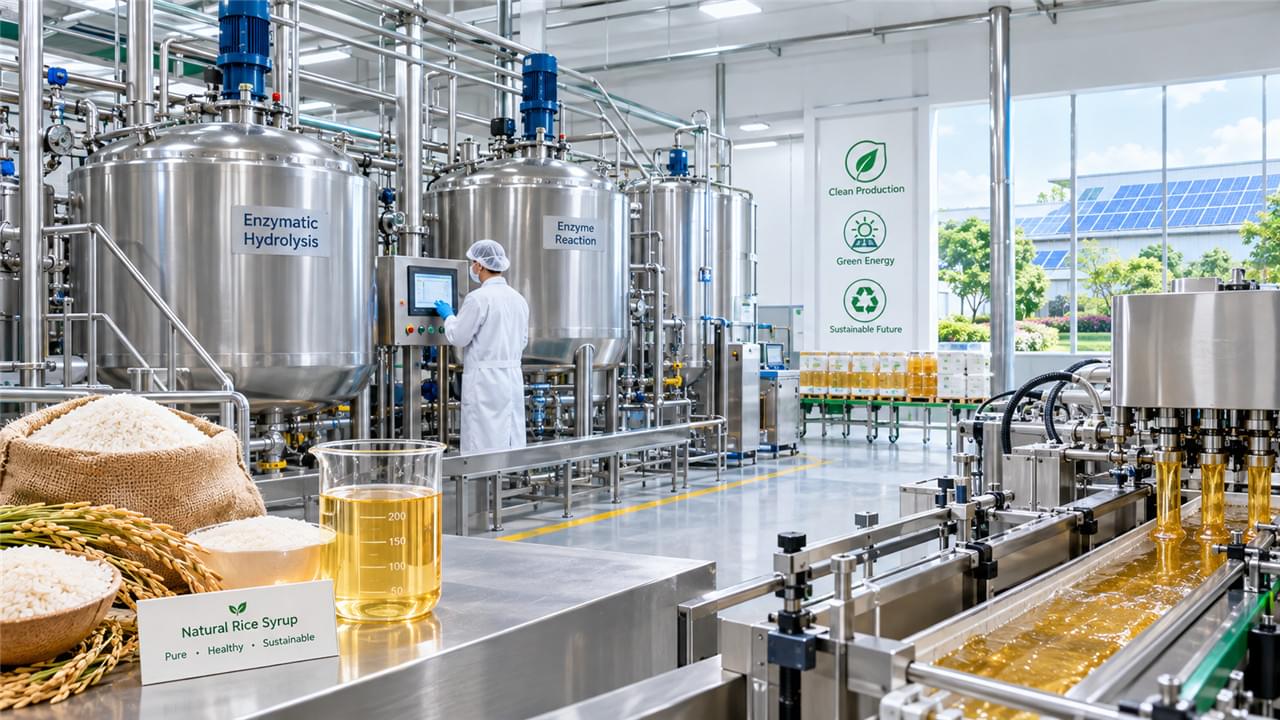
High-DE ultra-clear grades: New enzymatic hydrolysis and purification technologies now produce rice syrup grades with DE values above 60 while maintaining water-white clarity — opening premium beverage and pharmaceutical applications where color specifications are strict.
Organic certified production lines: Responding to premium demand, leading manufacturers including Wuhu Deli Foods have invested in dedicated organic production lines — separate equipment, organic-certified cleaning protocols, and full chain-of-custody documentation.
Custom DE value engineering: Rather than standard DE ranges, advanced producers engineer specific DE values with tight tolerances (±2 DE) to match precise formulation requirements. For R&D teams replicating exact texture or sweetness profiles batch to batch, this is the difference between adjusting the formula and adjusting the supplier.
Membrane filtration advances: Improved ultrafiltration and nanofiltration membrane technology has boosted purification efficiency and selectivity. Modern membrane systems achieve higher protein removal rates, better color reduction, and lower operating costs than systems from five years ago.
🌍 地域市場の動向
Rice syrup market trends look different depending on where you sell — and where you source.
Asia-Pacific remains the largest production region, with China accounting for the majority of global output. Domestic consumption is growing alongside export demand, powered by China’s own clean label movement and the rapid expansion of health-focused brands.
North America is the most sophisticated market for premium grades, with organic, non-GMO, and allergen-free segments commanding significant price premiums. The continuing drift away from HFCS keeps creating substitution opportunities.
Europe shows particularly strong demand for organic and sustainability-certified grades — a reflection of the EU’s Farm to Fork strategy and its influence on procurement policies. European brands increasingly require third-party sustainability assessments from sweetener suppliers.
Middle East and Southeast Asia are emerging growth markets, driven by Halal certification requirements, clean label trends, and expanding modern food manufacturing sectors.
📜 規制および表示トレンド
Regulatory developments are quietly steering rice syrup market trends in important ways.
Sugar reduction mandates: Government pressure on added sugar — including sugar taxes in multiple jurisdictions — keeps driving reformulation activity where rice syrup plays a role in partial sugar replacement strategies.
Labeling clarity requirements: Regulatory guidance on distinguishing “rice syrup,” “brown rice syrup,” and “rice malt syrup” varies by jurisdiction. Multi-market product development demands careful navigation of these distinctions.
Arsenic testing standards: Rice-based ingredients face scrutiny for naturally occurring inorganic arsenic, but established testing protocols and responsible sourcing programs enable rice syrup to meet the most stringent global food safety standards. For certified suppliers, this is a point of differentiation, not a liability.
🎯 米飴市場のトレンド:調達戦略
The convergence of clean label demand, sustainability imperatives, and application innovation makes a compelling case for building rice syrup into your long-term sourcing strategy. The latest rice syrup market trends distill into four practical moves for sourcing teams:
- Supplier qualification: Not all rice syrup suppliers have equivalent capabilities. Evaluate technical competency, certification portfolio, and production transparency carefully.
- Specification flexibility: Work with suppliers capable of custom DE values and specialty grades to future-proof your formulations.
- Sustainability documentation: Request life cycle assessment data, water use metrics, and agricultural sourcing information to support your own reporting.
- Regulatory compliance support: Partner with suppliers who proactively monitor regulatory changes and provide documentation support for market access.
Wuhu Deli Foods combines 20+ years of rice syrup production expertise with continuous investment in technology, sustainability programs, and quality systems — making us a preferred partner for manufacturers navigating the evolving natural sweetener landscape.
結論
米飴市場のトレンド:結論
Rice syrup market trends in 2026 describe a sweetener at an inflection point — increasingly favored for clean label positioning, allergen-free formulation, sustainable sourcing, and diverse functional applications. Manufacturers who build deep rice syrup competency now will be positioned to lead the next generation of natural food products.
Whether you’re reformulating existing products, developing clean label innovations, or building a more sustainable supply chain, rice syrup deserves a prominent place in your sweetener strategy.
蕪湖デリフーズへのお問い合わせ to discuss your rice syrup sourcing strategy.

 English
 Deutsch
 Español
 العربية
 Français
 Русский
 Bahasa Indonesia
 한국어
한국어 日本語
日本語 Polski
 Português
 Bahasa Melayu