
Sports nutrition formulation keeps getting more demanding: athletes and active consumers want cleaner, more natural energy sources, and they read labels like scientists. Rice syrup delivers precisely the carbohydrate profile performance nutrition requires — which is why it keeps winning space in gels, bars, drinks, and recovery blends. Here’s how to formulate with it across the major product formats.
⚡ Why Rice Syrup Is Built for Sports Nutrition Formulation
Rice syrup’s carbohydrate composition gives it a genuine edge in athletic applications:
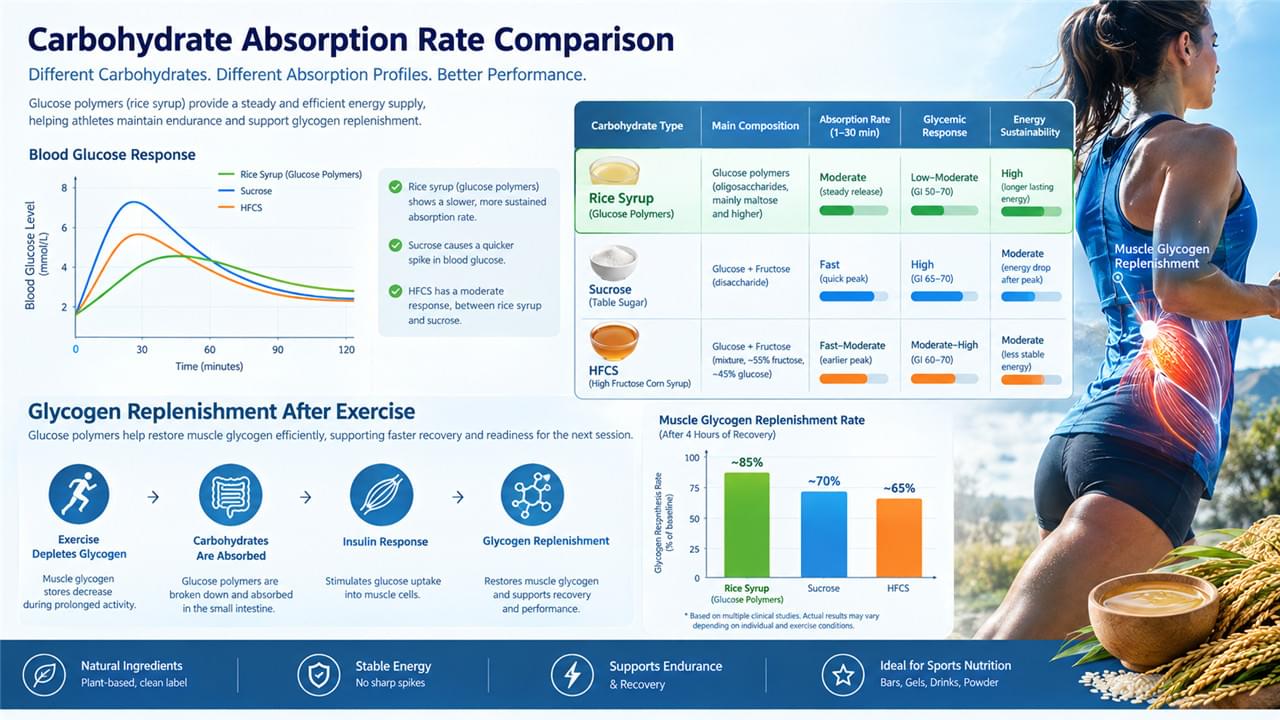
Glucose polymer profile: Unlike sucrose (50% fructose) or HFCS (42–55% fructose), rice syrup is almost entirely glucose-based — glucose monomers, maltose, maltotriose, and longer glucose polymers. That matters because fructose must queue at the liver before it can reach blood glucose, while glucose polymers go straight to work on glycogen synthesis.
Dual energy delivery: Short-chain sugars absorb quickly for immediate energy; maltotriose and oligomers contribute more slowly — a two-speed release that mirrors what endurance nutrition asks for. The glycemic response behind this behavior is well documented for glucose-rich ingredients.
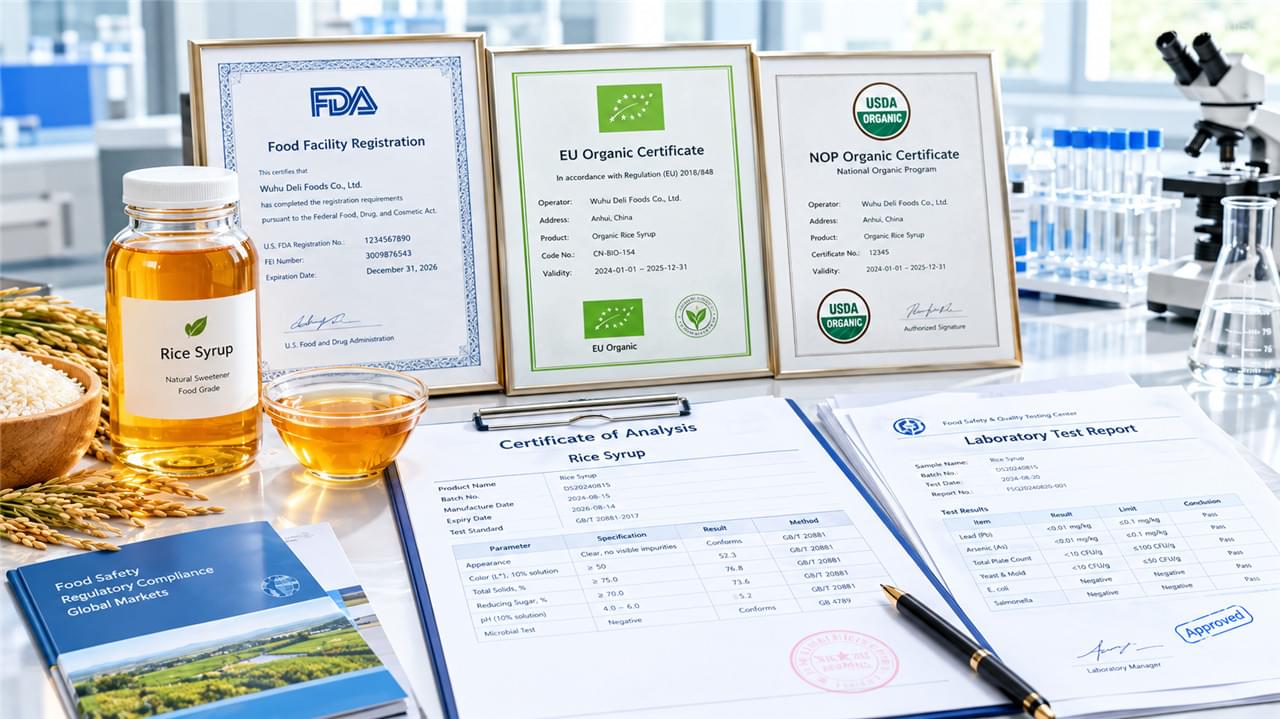
Clean label credentials: Performance consumers are label-obsessed. A recognizable name, non-GMO status, and freedom from the top-9 allergens make clean label sports nutrition claims easy to earn.
High carbohydrate density: At 75–80 Brix, rice syrup packs serious carbohydrate into small servings — exactly what portable formats like gels and chews demand.
What Buyers Notice First in a Sports Nutrition Formulation
In practice, buyers land on three things: the fructose-free carb profile, the allergen-free declaration, and a DE range flexible enough to tune energy release by format.
🥄 Rice Syrup Energy Gel: The Flagship Application
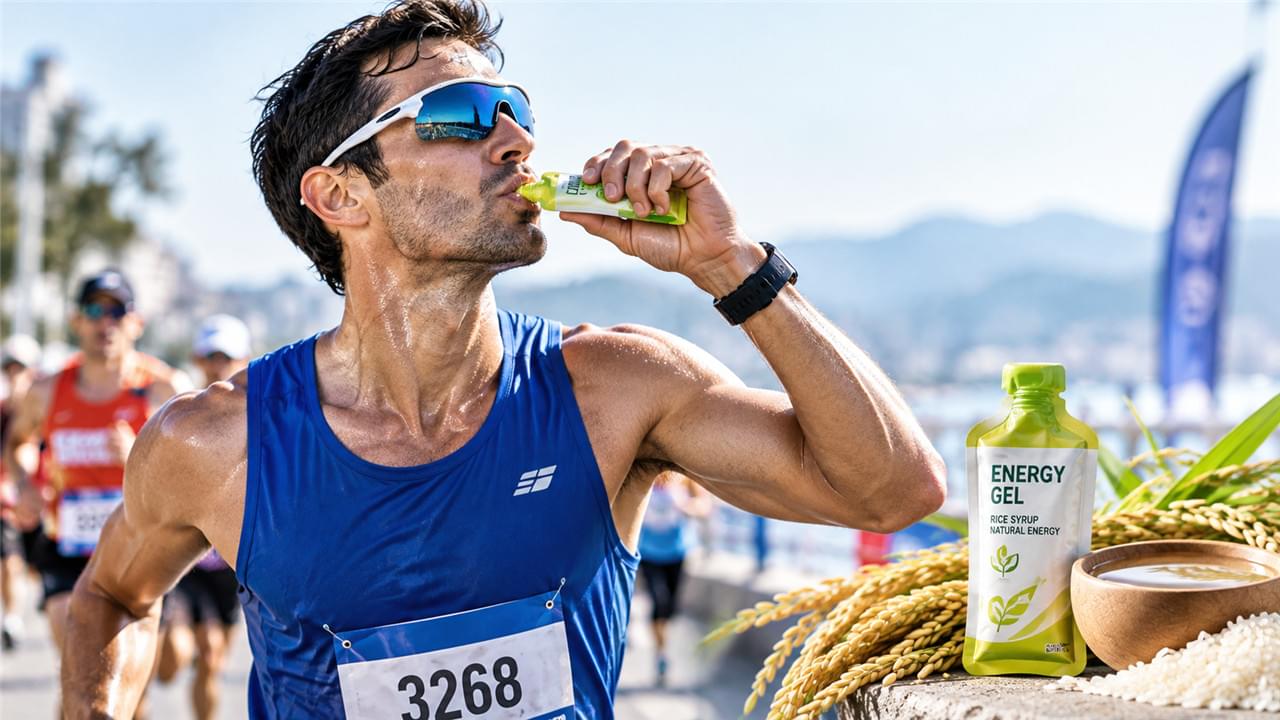
Energy gels remain the most established use case. A typical rice syrup energy gel base formula (per 32g serving):
- Rice syrup (DE 42–48): 20–22g (~16–18g carbohydrates)
- Water: 6–8g
- Sodium chloride: 50–100mg (electrolyte replacement)
- Natural flavor: 0.5–1.0g
- Citric acid: 0.3–0.5g (pH adjustment, flavor)
- Optional: caffeine 25–75mg (performance blend)
Sports Nutrition Formulation Notes: Viscosity & DE Selection
Technical considerations:
- Target water activity: 0.65–0.72 (shelf stability without preservatives)
- pH: 3.8–4.2 (preservation and flavor)
- Packaging: laminated foil pouches with tear notch
Rice syrup DE 42–48 provides the right viscosity — thick enough to stay in the pouch, fluid enough to swallow at race pace without water. Higher DE values (52+) run thinner; lower DE can get too viscous.
🍫 Energy Bars: One Ingredient, Four Jobs
In solid and semi-solid bars, rice syrup works multiple angles at once:
Energy Bars in Sports Nutrition Formulation: Four Jobs at Once
Binding: its viscous, sticky character pulls oats, nuts, seeds, and dried fruit into cohesive bars — no synthetic binders needed.
Moisture retention: hygroscopic by nature, it slows moisture migration across the 12–18 month shelf life.
Browning and flavor: controlled Maillard browning brings appealing color and toasted notes to granola and baked bars.
Typical inclusion: 15–30% by weight, depending on sweetness, texture, and carbohydrate targets.
Category applications: endurance training bars (higher DE for faster energy), recovery bars (paired with protein), organic and natural bars, and keto-friendly variants (lower inclusion, combined with fiber).
🥤 Isotonic Sports Drink Formulation
In liquid formats, sports nutrition formulation calls for isotonic carbohydrate solutions suited to intra-workout and endurance hydration:
Isotonic base (6–8% carbohydrate):
- Rice syrup (DE 55–65): 75–105g/liter
- Sodium: 400–600mg/liter
- Potassium: 100–200mg/liter
- Magnesium: 10–20mg/liter
- Citric acid, natural flavor, color: to taste
Higher DE syrup (55–65) is preferred for any isotonic sports drink — it hits the desired sweetness at isotonic concentrations while avoiding the starchy notes lower DE syrups can carry at high use levels.
🔄 Recovery Products: The 4:1 Play
Post-exercise recovery needs rapid carbohydrate replenishment plus protein, and rice syrup pairs cleanly with rice, pea, and whey proteins:
Sports Nutrition Formulation for Recovery Products
- A 4:1 carbohydrate-to-protein ratio is a widely accepted recovery target, endorsed in ISSN position stands on nutrient timing
- Rice syrup restores glycogen fast while protein drives muscle repair
- The combination sidesteps the digestive discomfort high-fructose sources can cause in the post-exercise window
🏷️ Labeling Considerations for Sports Brands
- Supplement Facts panel: declare rice syrup carbohydrates correctly as total carbohydrates and sugars
- “Added sugars” declaration: rice syrup counts as an added sugar under FDA rules — a factor for sugar-reduction positioning
- Clean label positioning: “brown rice syrup” or “organic rice syrup” on front-of-pack positively differentiates from corn syrup alternatives
✅ Conclusion: A Performance Ingredient Earning Its Place
Sports nutrition formulation is moving toward cleaner, more natural performance ingredients — and rice syrup’s carbohydrate profile, label credentials, and functional versatility make it an outstanding choice across gels, bars, drinks, and recovery products.
Contact Wuhu Deli Foods to discuss specialized DE specifications and organic grades for your sports nutrition formulation project.


 English
 Deutsch
 Español
 العربية
 Français
 Русский
 Bahasa Indonesia
 한국어
한국어 日本語
日本語 Polski
 Português
 Bahasa Melayu