
Table of Contents
ToggleI. An Overview of Rice Protein Powder
Rice protein powder, a significant byproduct of rice processing, exhibits unique value across various sectors. Composed primarily of albumin, globulin, prolamin, and glutelin, it is categorized into four types based on Osborne’s method: albumin (2%-5%), soluble in water; globulin (2%-10%), soluble in a 0.5M NaCl solution; glutelin (over 80%), soluble in dilute acid or base; and prolamin (1%-5%), soluble in a 70%-80% ethanol solution. Glutelin and prolamin are storage proteins and the main constituents of rice protein, whereas albumin and globulin are present in lower amounts and are physiologically active proteins in rice.
Rice protein is rich in lysine, offering a nutritional advantage over other cereal proteins due to its high content of essential amino acids. It boasts a high biological value (BV) of up to 77 and a protein efficiency ratio (PER) of 2.2, surpassing wheat’s 1.5 and corn’s 1.1. This makes rice protein powder a promising candidate for infant food and high-end food products due to its high nutritional value and low allergenicity.
II. Composition and Characteristics of Rice Protein Powder
(1) Main Components
Rice protein is primarily composed of albumin, globulin, prolamin, and glutelin. Albumin, accounting for 2%-5% of the total, is water-soluble and plays a crucial role during the germination of rice grains. Globulin, making up 2%-10%, is soluble in a 0.5M NaCl solution and is rich in basic amino acids. Glutelin, the predominant storage protein in rice, constitutes over 80% of the total and is soluble in dilute acid or base. Prolamin, present at 1%-5%, is soluble in a 70%-80% ethanol solution and is characterized by disulfide bonds linking peptide chains, with a molecular weight ranging from 7 to 12.6 kDa.
(2) Nutritional Superiority
Rice protein powder is notably high in lysine and has a well-balanced amino acid profile, closely aligning with the World Health Organization’s optimal pattern for protein amino acid composition. This makes it easily digestible and absorbable by the human body. For instance, every 100 grams of rice protein powder contains essential amino acids such as isoleucine, leucine, and phenylalanine, which are vital for protein synthesis, tissue repair, and cellular function regulation.
(3) Challenges of Low Extraction Rates and High Costs
The extraction of rice protein powder is complex and energy-intensive, with methods such as alkali extraction and enzymatic extraction requiring substantial energy and chemical reagents, leading to high production costs. The extraction rate is typically between 30%-50% due to the presence of large glutelin molecules that are interconnected through disulfide bonds, making them difficult to extract.
III. Comparison of Rice Protein Powder with Other Protein Powders
(1) Comparison with Whey Protein Powder
Whey protein powder, derived from milk, contains 70%-80% protein and is easily digestible with rapid absorption. It is rich in branched-chain amino acids, particularly leucine, which promotes muscle synthesis and protein utilization, making it ideal for fitness enthusiasts.
In terms of nutritional content, rice protein powder has a higher lysine content and a more rational amino acid composition than whey protein powder, making it suitable for sensitive individuals. Whey protein powder, on the other hand, has a higher content of branched-chain amino acids, which are effective for muscle synthesis.
(2) Comparison with Casein Powder
Casein powder, also extracted from milk, is a slow-release protein source that is difficult to digest and provides a strong sense of fullness, making it ideal for consumption before bed to prevent muscle breakdown.
IV. The Role and Usage Methods of Rice Protein Powder
(1) Promoting Muscle Growth and Health
Rice protein powder plays a significant role in muscle enhancement by providing essential nutrients for muscle growth. It is rich in high-quality protein that can be effectively absorbed and utilized by the body, promoting muscle fiber repair and growth.
(2) Various Usage Scenarios
Rice protein powder can be mixed with water or juice for a simple and direct consumption method. It can also be consumed before or after exercise to provide energy and aid muscle recovery. Additionally, it can replace protein intake in a meal, making it a convenient option for those looking to control their diet or lacking protein sources.
V. Market Prospects and Outlook for Rice Protein Powder
(1) Broad Market Prospects
Rice protein powder has broad market prospects in the food, pharmaceutical, and beverage industries due to its low allergenicity, high nutritional value, and balanced amino acid composition.
(2) Challenges
Despite the promising market prospects, challenges such as low extraction rates, high production costs, and low consumer awareness exist.
(3) Huge Potential
Despite challenges, the market potential for rice protein powder is enormous, with increasing demand for healthy foods and improved recognition of its nutritional value.
VI. Wuhu Deli Foods’ Rice Protein and Rice Syrup Products
(1) Long-standing Company History
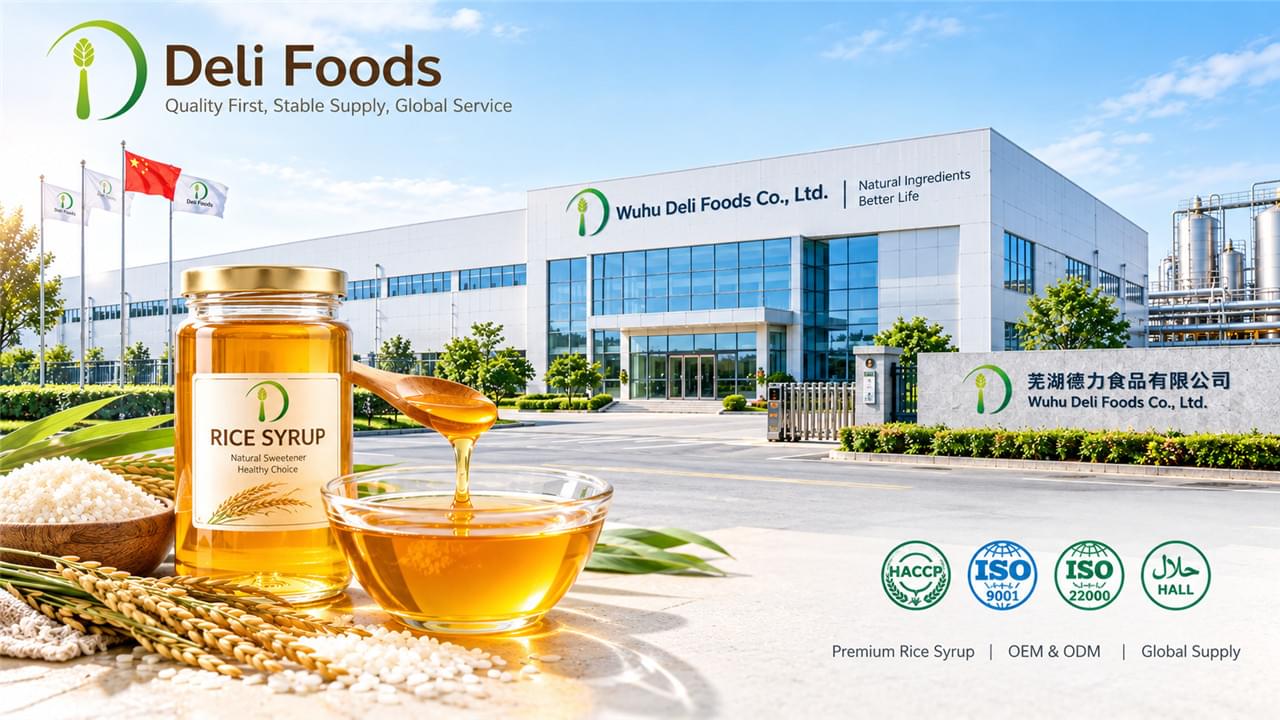
Wuhu Deli Foods Co., Ltd. is a professional food manufacturer and exporter with over 20 years of experience in China.
(2) Distinct Advantages
The company offers a professional team, small MOQ orders, free OEM and ODM services, fast delivery, and one-stop service.
(3) Rich Product Range and Quality Service
Deli Foods provides a wide range of products, including rice protein, rice syrup, honey products, and more, with a focus on quality and customer service.

 English
 Deutsch
 Español
 العربية
 Français
 Русский
 Bahasa Indonesia
 한국어
한국어 日本語
日本語 Polski
 Português
 Bahasa Melayu