
High Maltose Rice Syrup Production Methods are essential for producing stable, mild-sweet syrups widely used in confectionery, baking, beverages, and processed foods. For global B2B buyers, understanding how these syrups are produced helps evaluate supplier capability, product consistency, and application suitability.
Compared with traditional glucose syrups, high maltose syrups contain significantly higher maltose levels, typically between 50% and 70%, providing controlled sweetness and improved moisture retention.
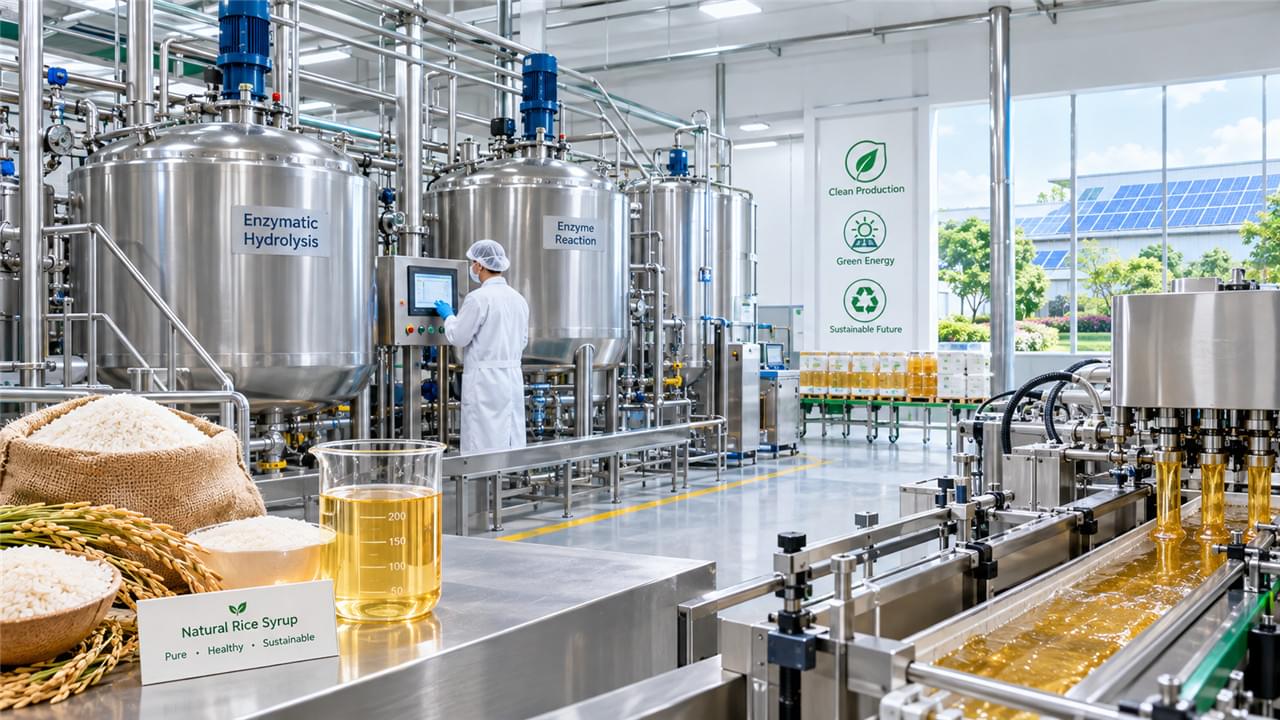
At Wuhu Deli Foods, advanced enzymatic rice syrup manufacturing process technologies ensure precise maltose content control, helping international food manufacturers maintain stable product performance.
Table of Contents
Toggle1️⃣ Raw Material Selection in High Maltose Rice Syrup Production Methods
Every efficient High Maltose Rice Syrup Production Methods process begins with selecting high-quality rice starch.
Rice is an ideal carbohydrate source because it offers:
✔ Neutral flavor
✔ Low allergen risk
✔ Clean-label compatibility
Purified rice starch allows enzymes to interact efficiently with starch molecules during the hydrolysis stages.
Stable raw material quality directly supports industrial high maltose rice syrup production, ensuring consistent sugar conversion and predictable sweetness profiles.
Many global food brands now prefer rice-based sweeteners because they align with clean-label product development trends 🌾.
You may also explore global food ingredient standards from Codex Alimentarius:
👉 https://www.fao.org/fao-who-codexalimentarius/en/
2️⃣ Liquefaction Stage in High Maltose Rice Syrup Production Methods
The liquefaction phase prepares starch molecules for further enzymatic conversion.
During this stage:
- Rice starch slurry is heated
- Alpha-amylase enzymes are introduced
- Long starch chains break into dextrins
This step is critical in High Maltose Rice Syrup Production Methods because incomplete liquefaction reduces maltose yield later in the process.
Automated temperature control systems help maintain stable reaction conditions, ensuring efficient starch breakdown within the enzymatic rice syrup manufacturing process.
Large-scale factories like Wuhu Deli Foods rely on digital monitoring systems to maintain consistent liquefaction results across production batches ⚙️.
3️⃣ Saccharification: The Core of High Maltose Rice Syrup Production Methods
Saccharification is the most important step in High Maltose Rice Syrup Production Methods.
In this stage:
- Beta-amylase converts dextrins into maltose
- Limited glucoamylase regulates glucose formation
- Reaction time determines final sugar composition
The goal is to maximize maltose formation while minimizing excessive glucose production.
Effective rice syrup maltose content control requires precise management of:
- Enzyme ratio
- Reaction temperature
- Hydrolysis duration
When properly controlled, saccharification enables industrial high maltose rice syrup production with consistent sweetness and viscosity.
This stability is essential for bakery fillings, hard candy production, and brewing applications 🍬.
4️⃣ Filtration and Purification in High Maltose Rice Syrup Production Methods
After enzymatic conversion, the syrup undergoes purification to remove insoluble particles and protein residues.
Typical filtration steps include:
- Fine filtration
- Activated carbon treatment
- Ion exchange purification
These steps improve clarity, color stability, and flavor neutrality.
High-quality purification is a key component of High Maltose Rice Syrup Production Methods, particularly for export markets with strict food safety standards.
Facilities such as Wuhu Deli Foods implement multi-stage purification systems to deliver food-grade syrups suitable for international beverage and confectionery manufacturers.
5️⃣ Concentration and Quality Control
The final stage in High Maltose Rice Syrup Production Methods involves concentration through vacuum evaporation.
This process increases solids content while preserving the syrup’s delicate carbohydrate structure.
During this stage, quality control focuses on:
🔬 Maltose percentage
🔬 Viscosity level
🔬 Moisture content
🔬 Microbial safety
Advanced laboratories monitor every production batch to ensure consistent rice syrup maltose content control and stable shelf life.
This attention to detail supports long-term B2B partnerships and reliable supply chains.
🌍 Why High Maltose Rice Syrup Is Valuable for Food Manufacturers
Understanding High Maltose Rice Syrup Production Methods helps food manufacturers choose the right ingredient for their formulations.
High maltose rice syrup offers several advantages:
✔ Mild sweetness with reduced sugar intensity
✔ Excellent moisture retention in baked goods
✔ Reduced crystallization in confectionery
✔ Stable fermentation performance in brewing
Because of these properties, high maltose syrups are widely used across multiple food industries.
Food manufacturers looking for large-scale ingredient supply often rely on specialized producers such as Wuhu Deli Foods, which integrates advanced enzymatic rice syrup manufacturing process technologies with strict international quality standards.
High Maltose Rice Syrup Production Methods combine enzyme science, process control, and modern industrial technology to deliver reliable sweetener solutions.
For B2B buyers in baking, confectionery, beverages, and fermentation industries, understanding these production methods helps ensure ingredient consistency and product quality.
With advanced production facilities and strict quality monitoring systems, suppliers like Wuhu Deli Foods provide stable, export-ready high maltose rice syrups that support global food manufacturing.


 English
 Deutsch
 Español
 العربية
 Français
 Русский
 Bahasa Indonesia
 한국어
한국어 日本語
日本語 Polski
 Português
 Bahasa Melayu