
Rice Syrup Food Safety: FSMA, HACCP & GMP
Rice Syrup Food Safety is no longer just a regulatory requirement—it has become a competitive advantage for manufacturers serving international markets. As demand for clean-label sweeteners continues to grow, food producers are expected to demonstrate not only consistent product quality but also complete compliance with increasingly stringent food safety regulations.
For rice syrup manufacturers exporting worldwide, meeting multiple regulatory standards can be challenging. Different countries impose different expectations, making a structured compliance system essential. This guide explores the three most important frameworks—FSMA, HACCP, and GMP—and explains how they work together to help manufacturers produce safe, compliant products while strengthening customer confidence and simplifying global trade.
💡 For a comprehensive overview of the U.S. Food Safety Modernization Act, visit the official FDA resource:
https://www.fda.gov/food/guidance-regulation-food-and-dietary-supplements/food-safety-modernization-act-fsma
🌍 Rice Syrup Food Safety Under FSMA
What Is FSMA?
The U.S. Food Safety Modernization Act (FSMA), enacted in 2011, transformed food safety regulation by shifting the focus from responding to contamination toward preventing it before it occurs. For manufacturers exporting rice syrup to the United States, compliance with FSMA is essential for maintaining uninterrupted market access and building long-term customer trust.
Among the various regulations within FSMA, two rules have the greatest impact on rice syrup manufacturers.
📋 Preventive Controls for Human Food (21 CFR Part 117)
This regulation requires manufacturers to establish and maintain a comprehensive Food Safety Plan that identifies, evaluates, and controls food safety hazards throughout the production process.
A compliant Food Safety Plan typically includes:
- ✅ A documented hazard analysis
- ✅ Preventive controls for identified risks
- ✅ Supply-chain management procedures
- ✅ Recall and corrective action plans
- ✅ Verification and recordkeeping procedures
⚠️ Key Hazards in Rice Syrup Production
An effective hazard analysis evaluates three primary categories of risks.
Biological Hazards
- Osmophilic yeast
- Salmonella
- Listeria monocytogenes
Chemical Hazards
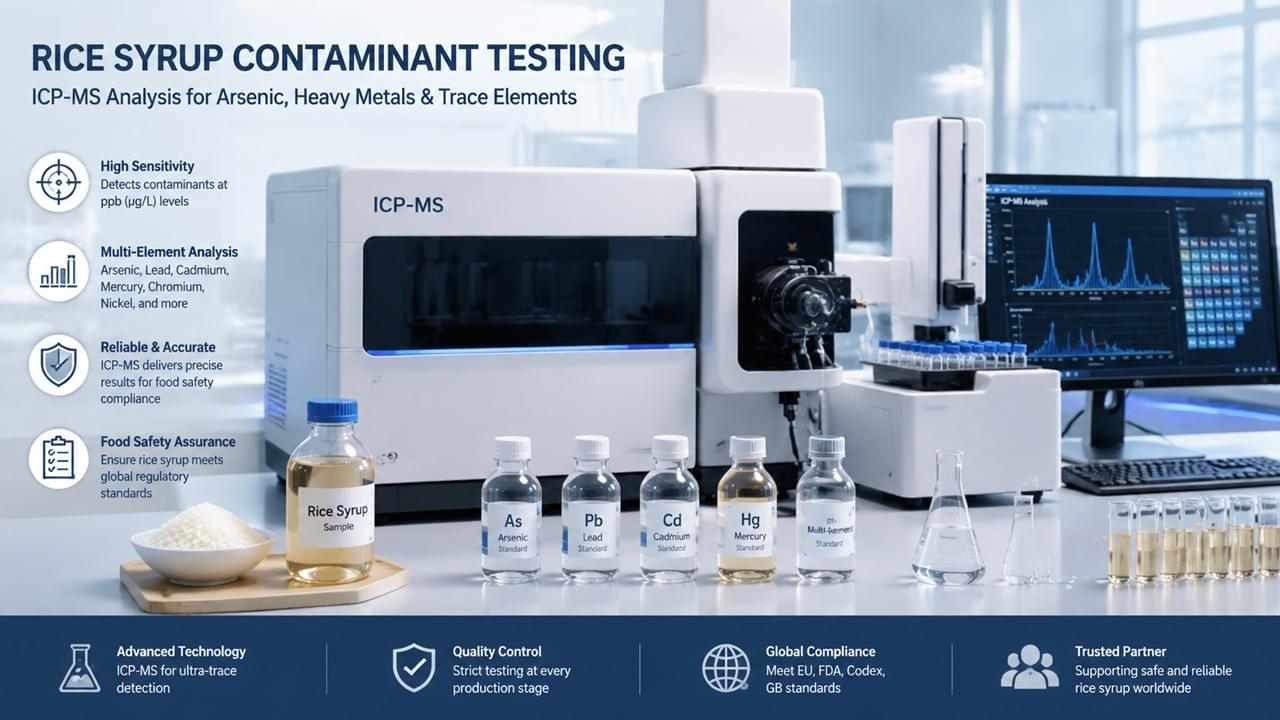
- Heavy metals such as arsenic and lead
- Agricultural pesticide residues
- Potential enzyme allergen contamination
Physical Hazards
- Metal fragments from processing equipment
- Foreign materials introduced during production or packaging
Identifying these risks early allows manufacturers to establish preventive controls before product quality is compromised.
🔍 Preventive Controls for Rice Syrup Food Safety
To reduce identified risks, manufacturers should implement preventive controls throughout production.
These commonly include:
- 🌡️ Process controls that monitor critical temperatures and processing times during starch conversion and enzyme inactivation.
- 🧼 Sanitation controls ensuring equipment is thoroughly cleaned and validated before production.
- 🚛 Supply-chain controls requiring approved suppliers and routine verification of incoming rice and processing aids.
- 🚫 Allergen management procedures to prevent cross-contact when facilities produce multiple food products.
Together, these controls establish a proactive food safety system instead of relying solely on finished-product testing.
👨🔬 Preventive Controls Qualified Individual (PCQI)
FSMA requires every Food Safety Plan to be developed or overseen by a Preventive Controls Qualified Individual (PCQI).
A qualified PCQI is responsible for:
- Preparing and maintaining the Food Safety Plan
- Validating preventive controls
- Reviewing monitoring records
- Ensuring corrective actions are properly implemented
- Verifying that the food safety system remains effective
Most PCQIs complete FDA-recognized training programs that provide the technical knowledge needed to manage preventive food safety systems.
🌍 Foreign Supplier Verification Program (FSVP)
Another important FSMA requirement is the Foreign Supplier Verification Program (FSVP), which applies to U.S. importers purchasing food from overseas suppliers.
Importers must verify that foreign manufacturers consistently meet U.S. food safety requirements by reviewing documentation such as:
- Hazard analyses
- Food Safety Plans
- Laboratory testing reports
- Third-party audit reports
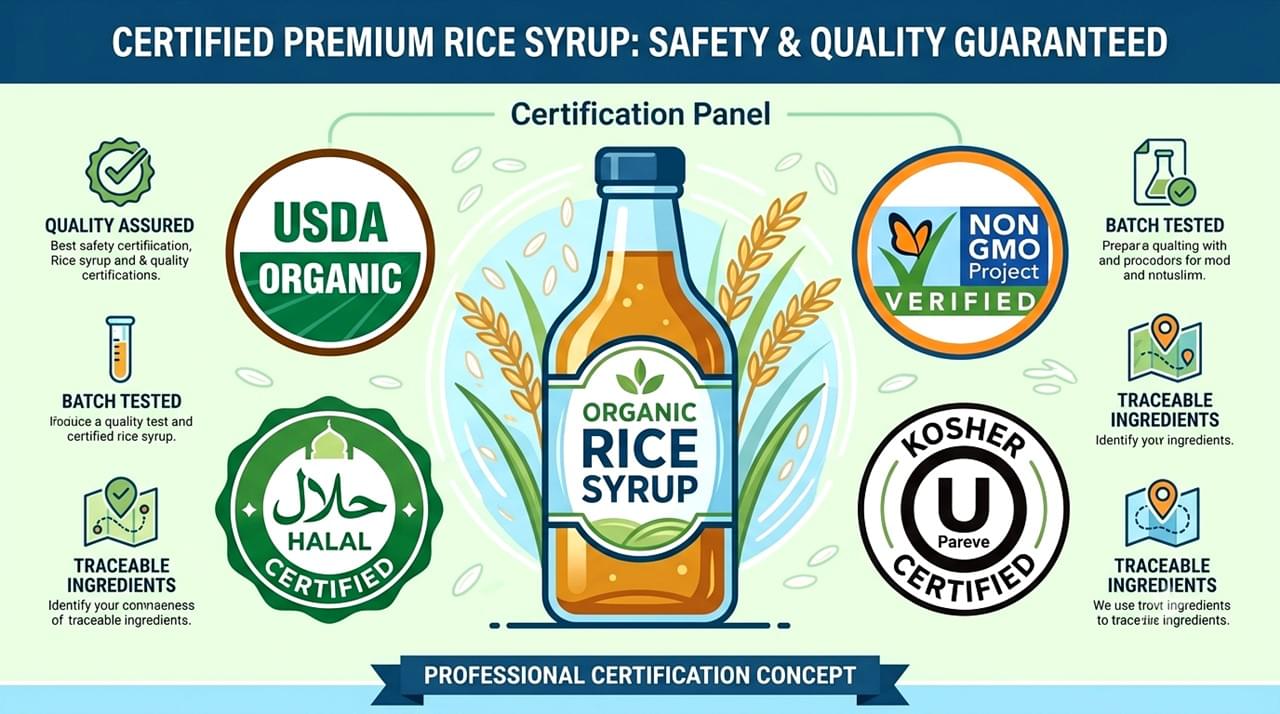
- Food safety certifications
To simplify this process, Wuhu Deli Foods provides customers with comprehensive FSVP documentation packages that include Food Safety Plan summaries, audit reports, laboratory testing data, and certification copies. These materials help customers complete supplier verification more efficiently while strengthening confidence in product safety.
🛡️ Rice Syrup Food Safety Through HACCP
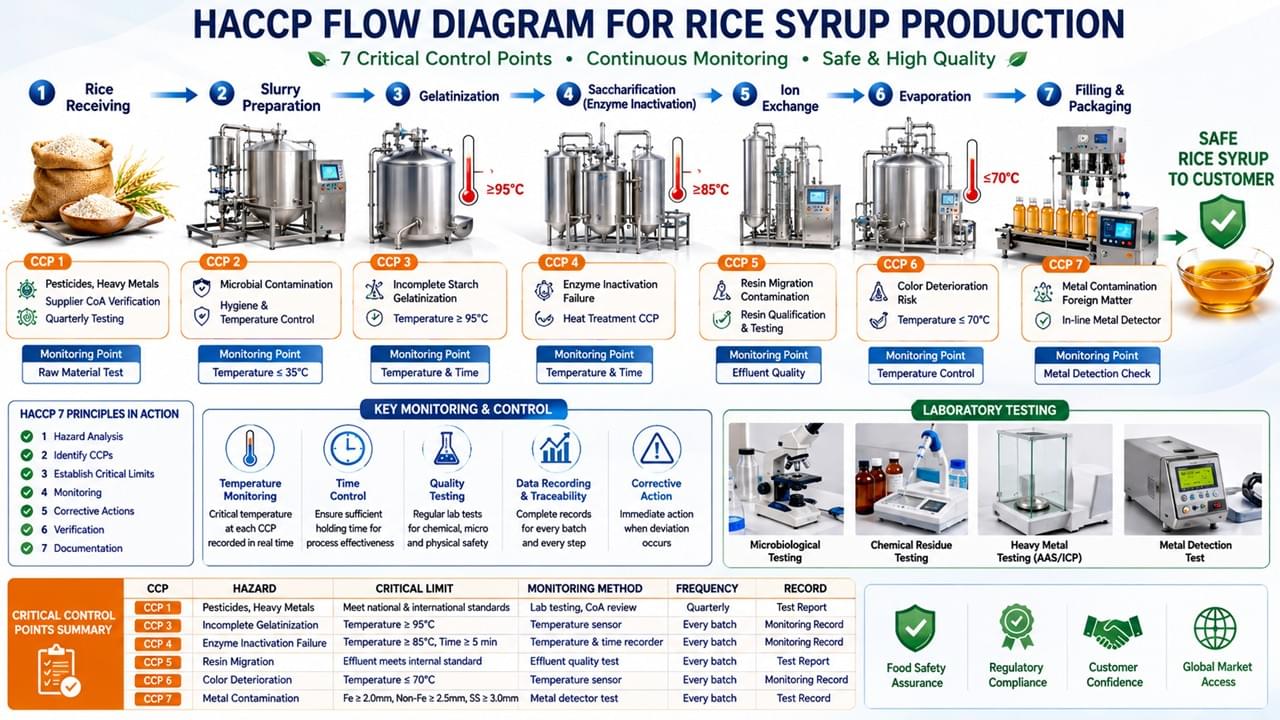
Understanding HACCP
HACCP (Hazard Analysis and Critical Control Points) is one of the world’s most widely accepted food safety management systems. Rather than relying solely on finished-product inspections, HACCP focuses on identifying potential hazards before they occur and establishing scientifically validated controls throughout production.
For rice syrup manufacturers, HACCP provides a structured framework that supports both regulatory compliance and continuous product quality improvement.
📊 Principle 1: Conduct Hazard Analysis
Every production step should be evaluated to determine possible biological, chemical, and physical hazards.
| Production Stage | Potential Hazard | Recommended Control |
|---|---|---|
| Rice Receiving | Heavy metals, pesticide residues | Supplier verification, CoA review, routine laboratory testing |
| Slurry Preparation | Microbial contamination | Hygiene procedures and temperature management |
| Gelatinization | Incomplete starch conversion | Temperature maintained above 95°C |
| Saccharification | Inadequate enzyme inactivation | Heat-treatment Critical Control Point |
| Ion Exchange | Resin contamination | Approved resin qualification and monitoring |
| Evaporation | Product color deterioration | Controlled evaporation temperatures below 70°C |
| Filling & Packaging | Metal contamination | In-line metal detection systems |
A thorough hazard analysis forms the foundation for every successful HACCP program.
✅ Principles 2–4: Critical Control Points, Critical Limits and Monitoring
Following hazard identification, manufacturers establish Critical Control Points (CCPs), define measurable critical limits, and implement continuous monitoring systems.
At Wuhu Deli Foods, seven CCPs are monitored throughout production using clearly defined operating limits and documented verification procedures. Continuous monitoring enables rapid corrective action whenever deviations occur, minimizing food safety risks while maintaining consistent product quality.
🔄 Principle 5: Corrective Actions
Every HACCP system should include documented procedures that explain how production teams respond when a CCP exceeds its established limit.
Typical corrective actions include:
- Reprocessing products when technically feasible
- Redirecting materials to alternative approved applications
- Disposing of products that cannot be safely recovered
- Investigating root causes
- Implementing preventive improvements to avoid recurrence
Clear documentation ensures traceability and demonstrates compliance during regulatory inspections.
📑 Principles 6–7: Verification and Documentation
Verification confirms that the HACCP system is functioning as intended.
Best practices include:
- Monthly HACCP performance reviews
- Annual comprehensive team evaluations
- Independent third-party audits
- Complete monitoring and corrective action records
- Routine internal verification activities
Accurate documentation not only supports regulatory inspections but also strengthens customer confidence throughout the global supply chain.
🔬 HACCP Validation
Scientific validation is essential to demonstrate that critical limits effectively control identified hazards.
Validation activities may include:
- Microbial challenge studies confirming enzyme inactivation temperatures
- Particle-count analysis verifying filtration efficiency
- Sensitivity testing for metal detection systems
- Laboratory validation of critical processing parameters
Evidence-based validation transforms HACCP from a documented system into a reliable food safety management program.
🏭 Rice Syrup Food Safety Through Good Manufacturing Practices (GMP)
Why GMP Matters
While HACCP focuses on identifying and controlling food safety hazards, Good Manufacturing Practices (GMP) establish the daily operational standards that make those controls effective. Together, HACCP and GMP create a comprehensive food safety management system that supports consistent production, regulatory compliance, and customer confidence.
For manufacturers committed to Rice Syrup Food Safety, GMP provides the operational discipline needed to ensure products are manufactured under hygienic and controlled conditions from raw material receiving through final packaging.
👨🏭 Personnel Hygiene
Employees play a critical role in maintaining product safety. A well-managed hygiene program helps minimize contamination risks throughout production.
Essential requirements include:
- 🧼 Mandatory handwashing and sanitizing before entering production areas
- 🤒 Immediate reporting of illness, with symptomatic employees restricted from food-contact duties
- 🥼 Appropriate protective clothing, including gloves, hairnets, masks, and clean uniforms
- 📚 Annual GMP training to reinforce food safety awareness and operational best practices
Regular refresher training helps ensure food safety procedures become part of everyday operations rather than occasional compliance exercises.
🏗️ Facility and Equipment Management
Production facilities should be designed for efficient cleaning, maintenance, and contamination prevention.
Key GMP practices include:
- ✅ Food-contact equipment manufactured from 316L stainless steel
- ✅ Smooth, corrosion-resistant, and easy-to-clean production surfaces
- ✅ Scheduled pest management with documented inspections
- ✅ Shatter-resistant lighting fixtures in processing areas
- ✅ Proper drainage systems that prevent standing water and microbial growth
Routine preventive maintenance also helps reduce unexpected equipment failures that could compromise production quality.
🧼 Cleaning and Sanitation
Cleaning programs should be systematic, documented, and verified rather than performed only when contamination becomes visible.
A robust sanitation program generally includes:
- 📅 A detailed Master Sanitation Schedule (MSS)
- 🚿 Clean-in-Place (CIP) systems for tanks and pipelines
- 🧪 ATP testing and environmental microbiological monitoring
- 👀 Visual inspections before production resumes
Verification activities ensure sanitation procedures remain consistently effective and support continuous improvement.
💧 Water Quality Management
Because water is used throughout rice syrup processing, maintaining its quality is fundamental to food safety.
Recommended controls include:
- Annual comprehensive analysis of potable process water
- Independent cooling-water systems with regular Legionella risk assessments
- Culinary-grade steam wherever direct food contact occurs
Routine monitoring helps ensure water quality remains consistent across every production batch.
🌾 Allergen Management
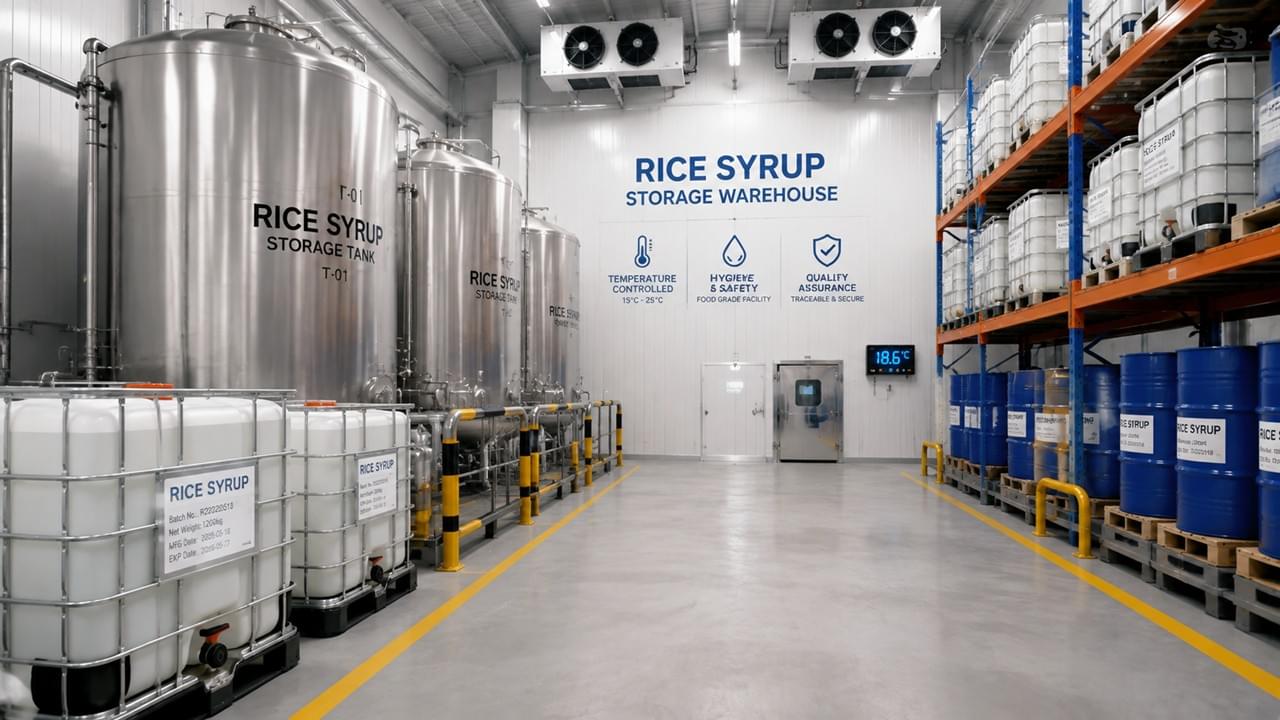
Rice syrup is naturally free from the major allergens identified under many international regulations, making it an attractive ingredient for a wide range of food applications.
However, manufacturers operating multi-product facilities should still establish comprehensive allergen management procedures, including:
- Dedicated storage practices
- Controlled production scheduling
- Validated cleaning procedures between production runs
- Appropriate labeling verification
Preventing cross-contact remains an important responsibility, even for products that are inherently allergen-free.
🐞 Pest Control
Effective pest management protects both food safety and regulatory compliance.
A preventive pest control program typically includes:
- Licensed pest control service providers
- Monthly documented inspections
- Corrective actions whenever activity is detected
- Continuous monitoring around production and warehouse areas
Zero pest activity should always be the objective within food production environments.
🔍 Regulatory Inspection Readiness for Rice Syrup Food Safety
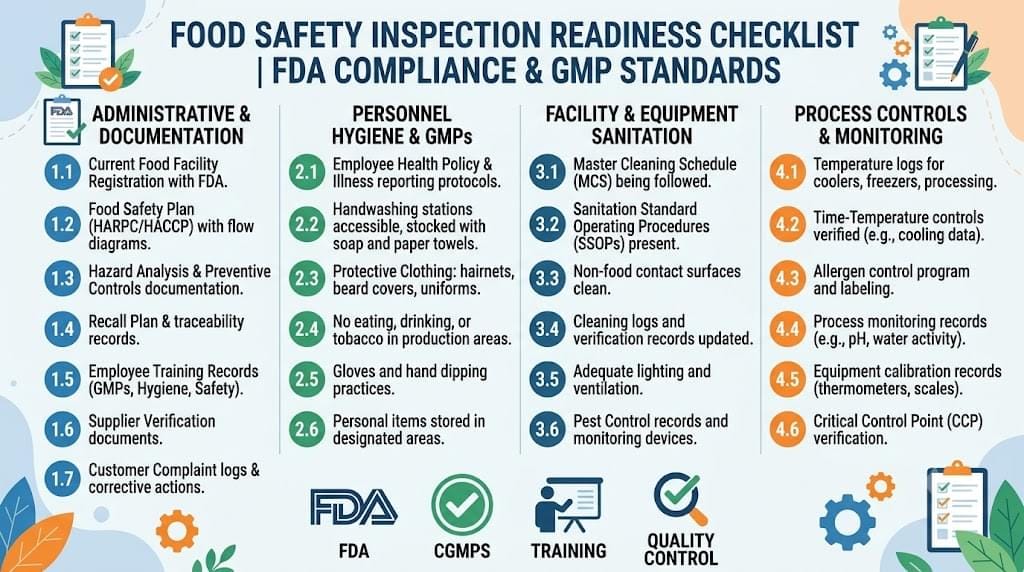
Preparing for FDA Inspections
Facilities exporting to the United States should maintain documentation that demonstrates ongoing compliance with FSMA requirements.
📋 A practical inspection checklist includes:
- ✅ Current FDA facility registration
- ✅ Updated Food Safety Plan
- ✅ HACCP documentation
- ✅ PCQI training certificates
- ✅ Master Sanitation Schedule
- ✅ Pest control records
- ✅ Environmental monitoring reports
- ✅ Batch production records
- ✅ Supplier qualification documentation
- ✅ Customer complaint and CAPA records
Well-organized documentation not only simplifies inspections but also demonstrates a company’s commitment to food safety and operational excellence.
Conducting annual mock inspections can further improve preparedness by identifying potential gaps before official regulatory visits.
🌍 Preparing for EU Regulatory Reviews
Manufacturers supplying European customers should also be prepared for inspections conducted by competent national authorities.
Important documentation includes:
- Product traceability records in accordance with EC 178/2002
- HACCP documentation aligned with Regulation (EC) 852/2004
- Laboratory testing reports
- Employee training records
- Supplier qualification documentation
Understanding regional regulatory expectations allows manufacturers to respond confidently during audits and maintain uninterrupted export operations.
💡 Manufacturers can also review internationally recognized HACCP guidance from the Codex Alimentarius Commission:
https://www.fao.org/fao-who-codexalimentarius/
📅 Compliance Calendar
Maintaining Rice Syrup Food Safety requires continuous monitoring rather than one-time certification. A structured compliance calendar helps ensure key activities are completed on schedule throughout the year.
| 📌 Activity | Frequency | Responsible Team |
|---|---|---|
| Internal GMP Audit | Monthly | QA Manager |
| HACCP Performance Review | Monthly | HACCP Team |
| Comprehensive HACCP Review | Annually | HACCP Team + External Experts |
| Third-Party Certification Audit | Annually | Certification Body |
| Pesticide Residue Testing | Every 6 Months | Accredited Laboratory |
| Heavy Metal Analysis | Every 6 Months | Accredited Laboratory |
| Mock Recall Exercise | Annually | QA & Operations |
| Pest Control Inspection | Monthly | Licensed Contractor |
| Environmental Monitoring | Weekly | QC Laboratory |
Following a structured schedule helps manufacturers maintain compliance, improve traceability, and identify opportunities for continuous improvement before issues arise.
✅ Conclusion
Achieving Rice Syrup Food Safety requires far more than meeting minimum regulatory requirements. It demands a proactive management system that integrates preventive controls, scientific hazard analysis, hygienic manufacturing practices, and comprehensive documentation.
By combining the preventive approach of FSMA, the structured methodology of HACCP, and the operational discipline of GMP, manufacturers can consistently produce safe, high-quality rice syrup while strengthening customer confidence and supporting long-term international growth.
🌟 Key Takeaways
- ✅ FSMA emphasizes preventive controls supported by qualified personnel and documented Food Safety Plans.
- ✅ HACCP relies on scientific hazard analysis, validated Critical Control Points, and continuous monitoring.
- ✅ GMP establishes the hygienic operational foundation necessary for consistent food safety performance.
- ✅ Inspection readiness depends on maintaining accurate, organized, and up-to-date documentation.
- ✅ A comprehensive compliance system not only protects consumers but also enhances global market access and strengthens long-term business partnerships.
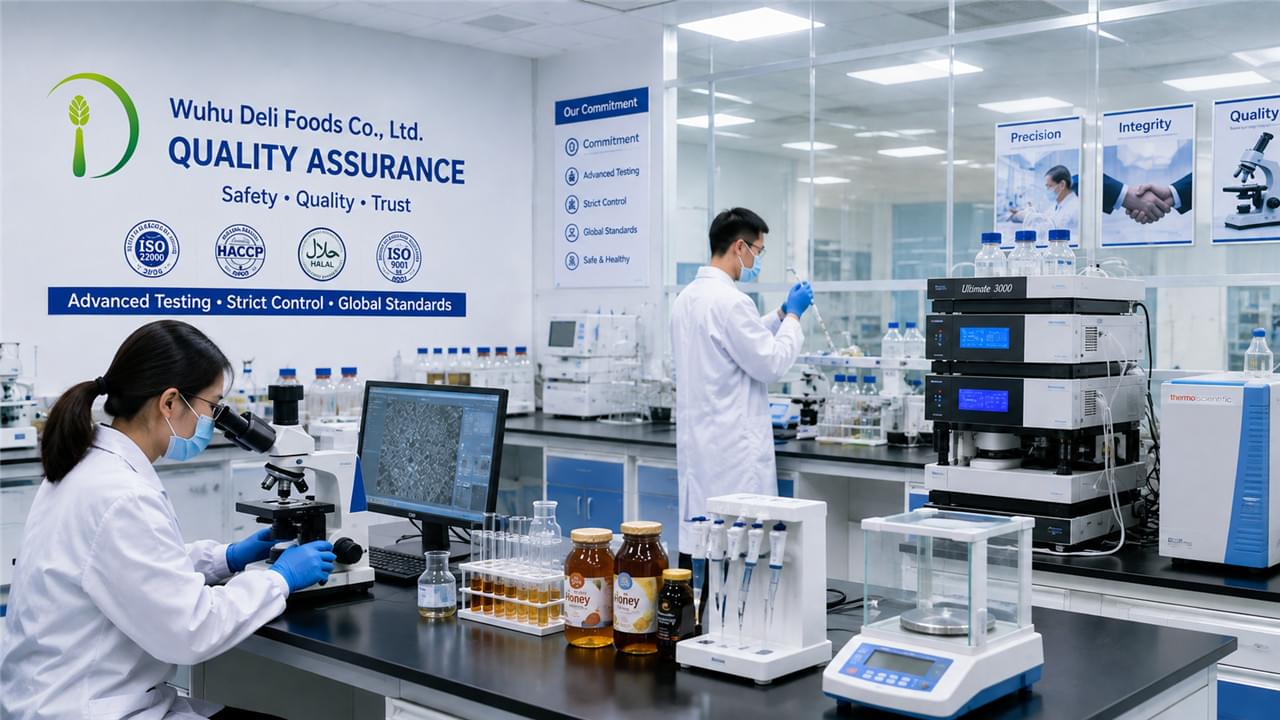
For manufacturers and importers seeking reliable regulatory documentation and internationally compliant rice syrup solutions, Wuhu Deli Foods provides comprehensive technical support, quality documentation, and FSVP-ready compliance packages to help customers streamline supplier verification and expand confidently into global markets.
👉 Contact us to learn more:
https://www.delisyrup.com/contact/
 English
 Deutsch
 Español
 العربية
 Français
 Русский
 Bahasa Indonesia
 한국어
한국어 日本語
日本語 Polski
 Português
 Bahasa Melayu