
Rice Syrup Production Technology is at the heart of consistent quality, sweetness control, and scalable supply for modern food manufacturers. For international B2B buyers, understanding how rice syrup is produced is more than technical curiosity—it directly affects product stability, labeling compliance, and cost efficiency.
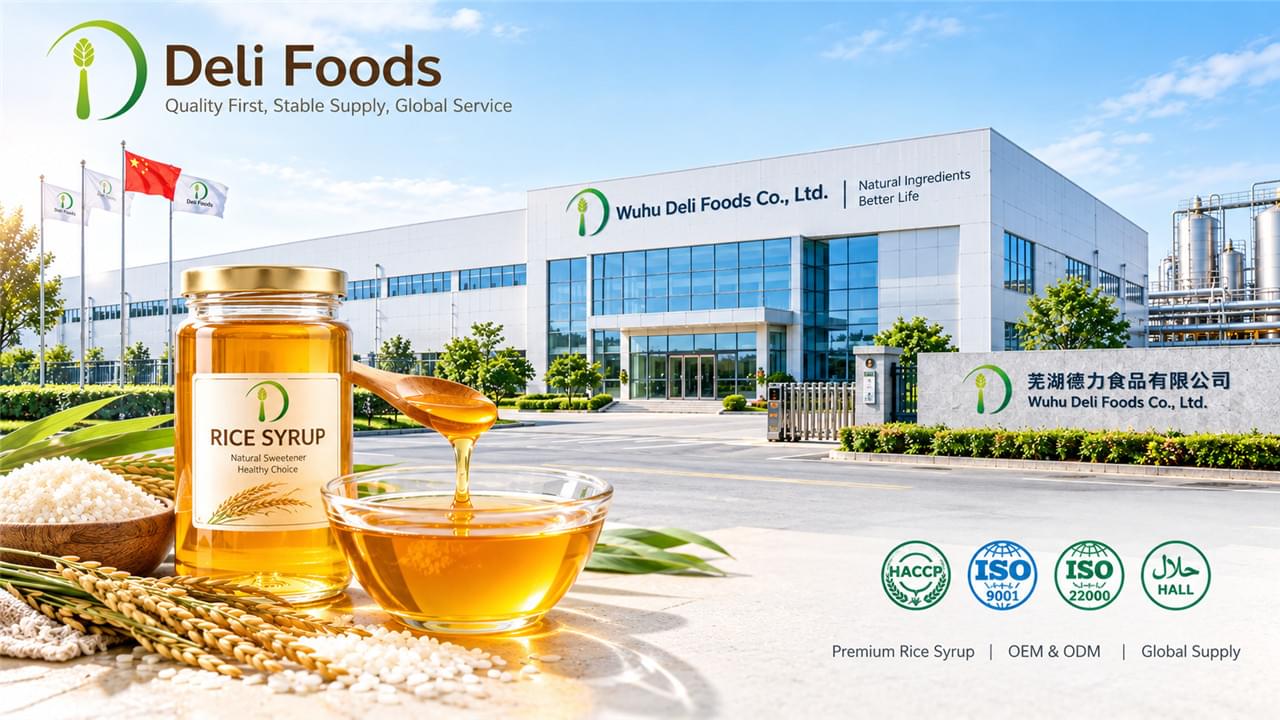
At Wuhu Deli Foods, decades of industrial experience and continuous equipment upgrades have refined a production system designed for reliability, purity, and global standards. This guide explains how professional production works and why it matters for your formulations.
1. What Defines Modern Rice Syrup Production Technology?
Modern Rice Syrup Production Technology integrates enzymatic science, automated control systems, and strict quality management. Unlike traditional starch conversion, today’s methods rely on precise enzyme applications to achieve specific dextrose equivalent (DE) values and carbohydrate profiles.
The goal is consistency. In an industrial rice syrup manufacturing process, even small deviations in temperature or pH can alter sweetness and viscosity. Advanced facilities use real-time monitoring systems to maintain stable conversion rates ⚙️.
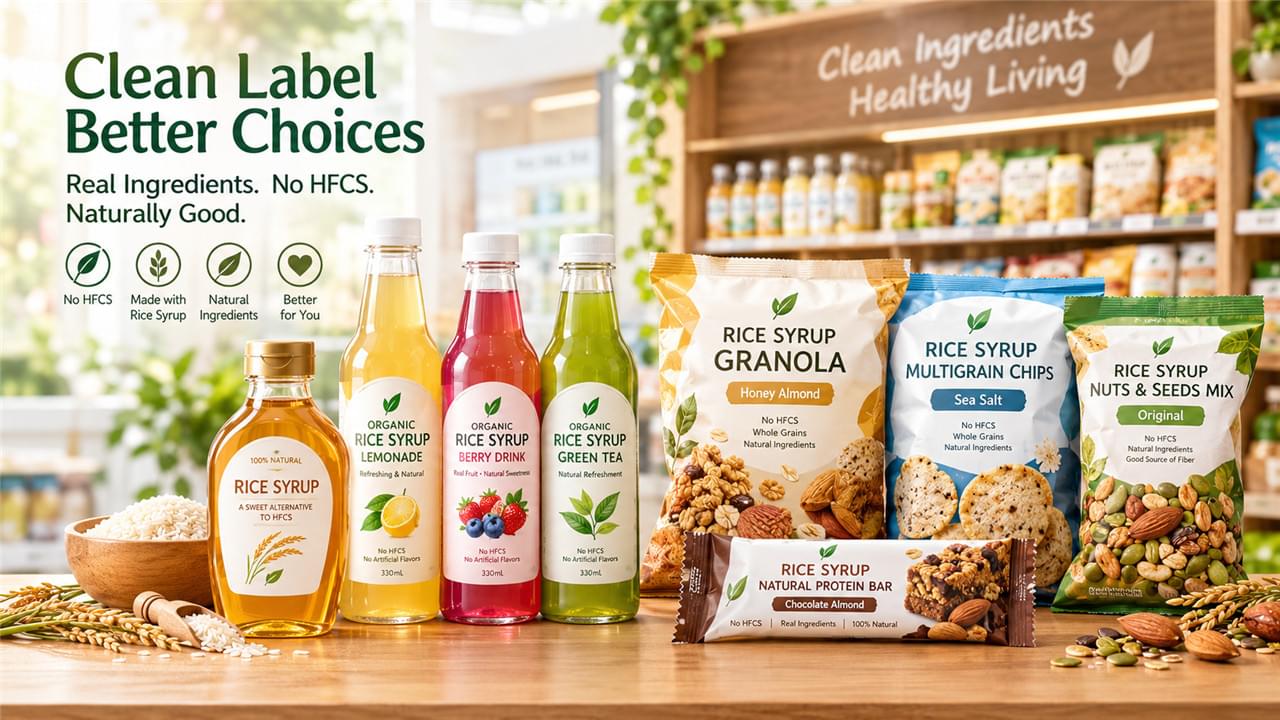
For B2B customers producing beverages, confectionery, dairy alternatives, or baked goods, this consistency ensures predictable texture and shelf stability.
2. Raw Material Selection in Rice Syrup Production Technology
High-quality rice is the foundation of effective Rice Syrup Production Technology. At Wuhu Deli Foods, carefully sourced non-GMO rice ensures low impurity levels and stable starch content.
Key selection criteria include:
- Uniform starch structure
- Low protein interference
- Minimal heavy metal residue
- Stable moisture content
Raw material control directly impacts filtration efficiency and final syrup clarity. For buyers targeting clean-label or infant-grade applications, traceability documentation is equally critical 📊.
A controlled supply chain reduces variability in the enzymatic hydrolysis process for rice syrup and supports consistent export quality.
3. Enzymatic Hydrolysis Process for Rice Syrup
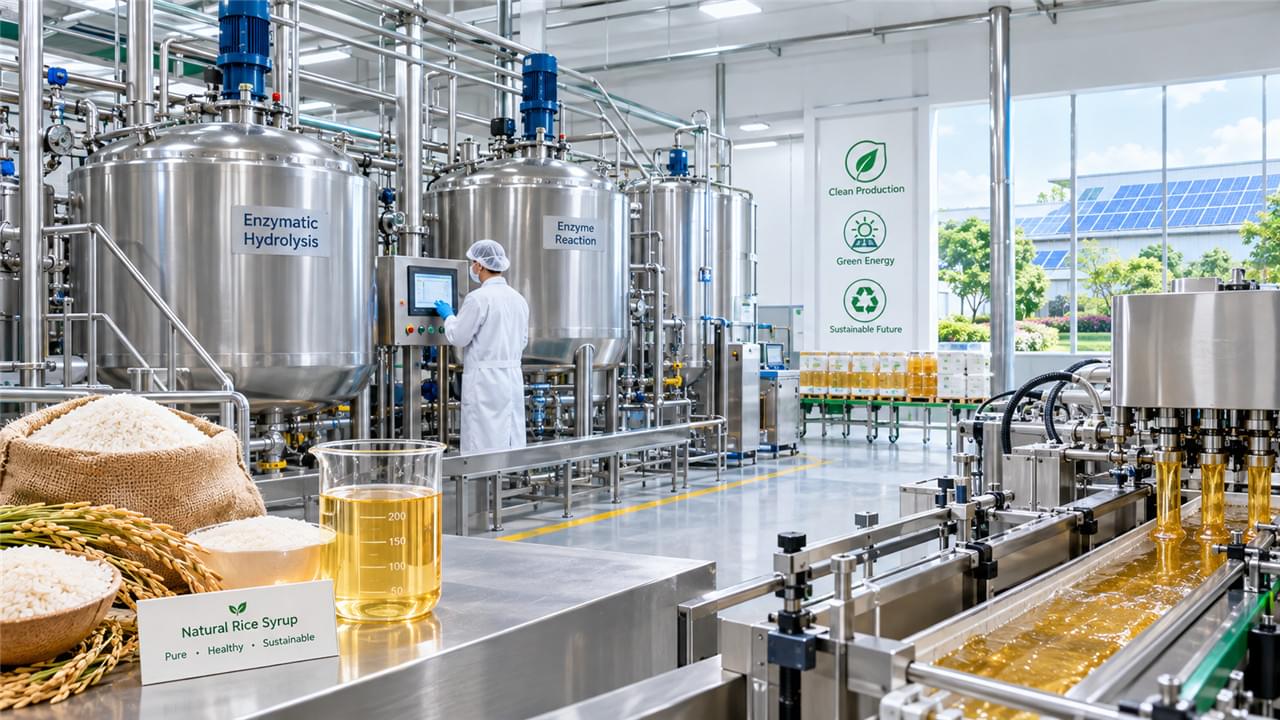
The core of Rice Syrup Production Technology lies in enzymatic conversion. The enzymatic hydrolysis process for rice syrup generally follows three stages:
Liquefaction:
Starch slurry is treated with alpha-amylase under controlled heat. This breaks long starch chains into shorter dextrins.
Saccharification:
Glucoamylase or beta-amylase converts dextrins into glucose and maltose. For high maltose rice syrup production, enzyme selection and reaction timing are precisely managed.
Enzyme Deactivation:
Heat treatment stops further conversion, locking in the desired sugar profile.
Advanced automation ensures consistent DE values. This is especially important for beverage manufacturers who require stable sweetness and low crystallization risk.
4. Filtration, Refining, and Concentration in Rice Syrup Production Technology
After enzymatic conversion, purification becomes the priority. In professional Rice Syrup Production Technology, multiple refining steps are used:
- Fine filtration to remove insoluble residues
- Activated carbon treatment for color reduction
- Ion exchange systems for impurity removal
- Vacuum evaporation for concentration
Wuhu Deli Foods employs multi-stage filtration and vacuum concentration systems to maintain low ash content and excellent clarity 🌱.
The industrial rice syrup manufacturing process must balance energy efficiency with purity. Controlled evaporation preserves flavor neutrality while achieving the desired solids content.
5. High Maltose Rice Syrup Production and Customization
High maltose rice syrup production requires tighter enzymatic control than standard syrup. Maltose content typically ranges between 50% and 80%, depending on application needs.
Why does this matter?
- Higher maltose improves moisture retention in baked goods
- It enhances chewiness in confectionery
- It reduces excessive browning during baking
Through adjustable enzyme ratios and reaction timing, Rice Syrup Production Technology allows tailored carbohydrate profiles. Wuhu Deli Foods offers customized specifications for different markets, supporting OEM and private label clients worldwide.
This flexibility helps manufacturers optimize cost-performance ratios without reformulating entire product lines.
6. Quality Control Systems in Rice Syrup Production Technology
In B2B trade, certifications are as important as taste. Advanced Rice Syrup Production Technology must align with global food safety standards.
Wuhu Deli Foods operates under strict quality frameworks including:
- HACCP management
- ISO-certified production systems
- Batch traceability protocols
- Laboratory DE and viscosity testing
Each production lot undergoes microbial and heavy metal testing before shipment. For exporters serving Europe, North America, and Southeast Asia, compliance ensures smoother customs clearance and reduced regulatory risk.
Reliable testing systems reduce downstream product recalls and protect brand reputation.

7. Sustainability and Efficiency in Modern Rice Syrup Production Technology
Sustainability increasingly influences procurement decisions. Modern Rice Syrup Production Technology incorporates:
- Energy-efficient evaporation systems
- Water recycling processes
- Reduced enzyme waste
- Optimized heat recovery systems
These improvements lower carbon footprint while maintaining output capacity.
For international buyers prioritizing ESG compliance, working with a manufacturer that integrates sustainable practices can strengthen supply chain credibility.
Why Production Expertise Matters for B2B Buyers
Choosing a supplier is not just about price. It is about technological stability, export experience, and long-term scalability.
With advanced Rice Syrup Production Technology, Wuhu Deli Foods delivers:
✅ Consistent DE and sweetness levels
✅ High maltose customization
✅ Large-scale production capacity
✅ Strict international compliance
✅ Stable global supply
For food manufacturers and ingredient distributors, this translates into predictable formulation results and reduced operational risk.
Final Thoughts
Understanding Rice Syrup Production Technology empowers buyers to make informed sourcing decisions. From the enzymatic hydrolysis process for rice syrup to refining and high maltose rice syrup production, every stage influences final product performance.
In today’s competitive ingredient market, technological precision, quality control, and sustainability are no longer optional—they are expected.
If you are exploring long-term supply partnerships, evaluating your supplier’s industrial rice syrup manufacturing process is a strategic first step toward stable growth.

 English
 Deutsch
 Español
 العربية
 Français
 Русский
 Bahasa Indonesia
 한국어
한국어 日本語
日本語 Polski
 Português
 Bahasa Melayu