
Rice syrup color grades decide more than most buyers give them credit for. Specify too dark, and a clear beverage turns hazy; specify lighter than you need, and you’re paying a premium for nothing. Color is one of the first things consumers notice about a finished product, which makes understanding rice syrup color grades — and the ICUMSA scale behind them — a genuine procurement skill. Here’s how to read the scale, pick the right grade, and protect that color all the way to your production line.
🎨 ICUMSA: The Standard Behind Rice Syrup Color Measurement
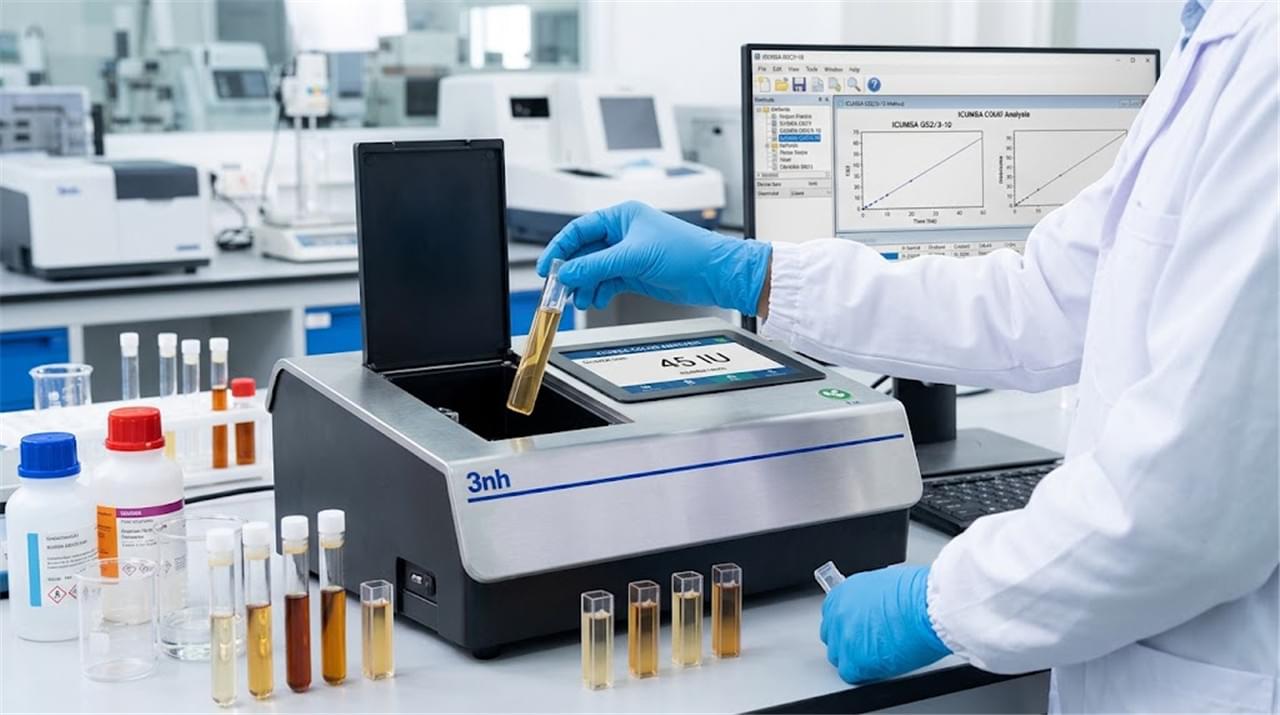
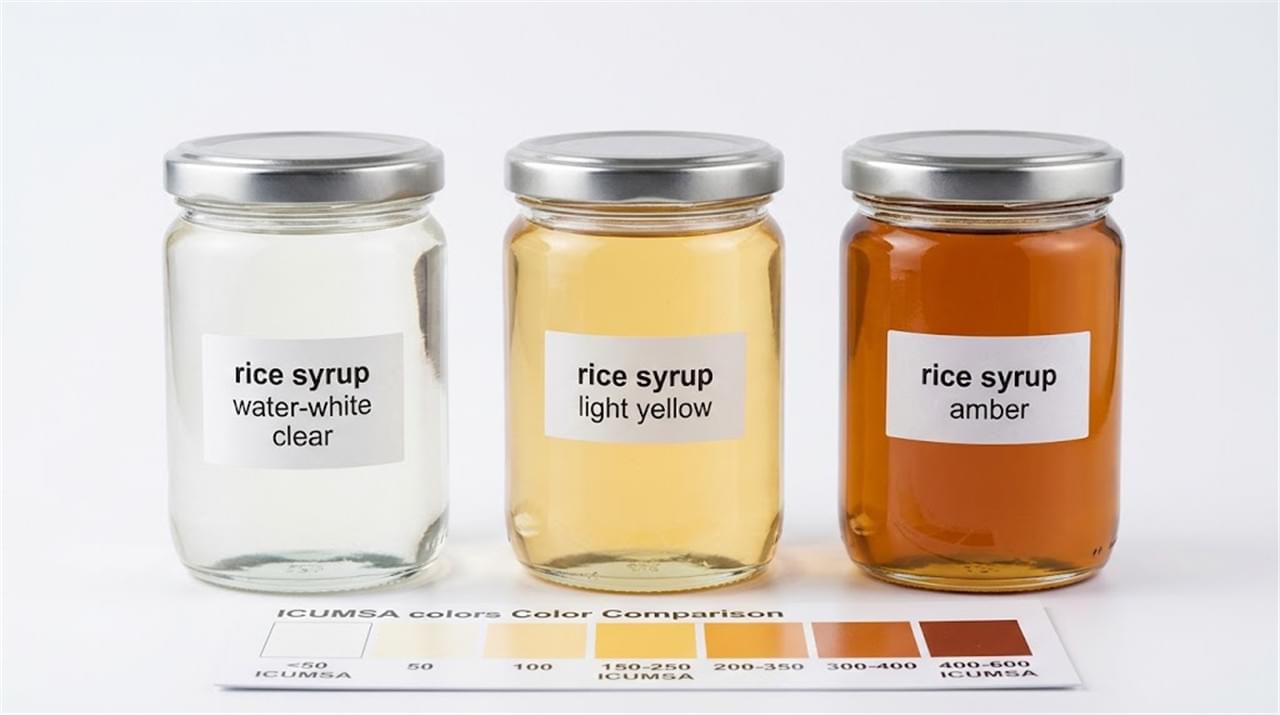
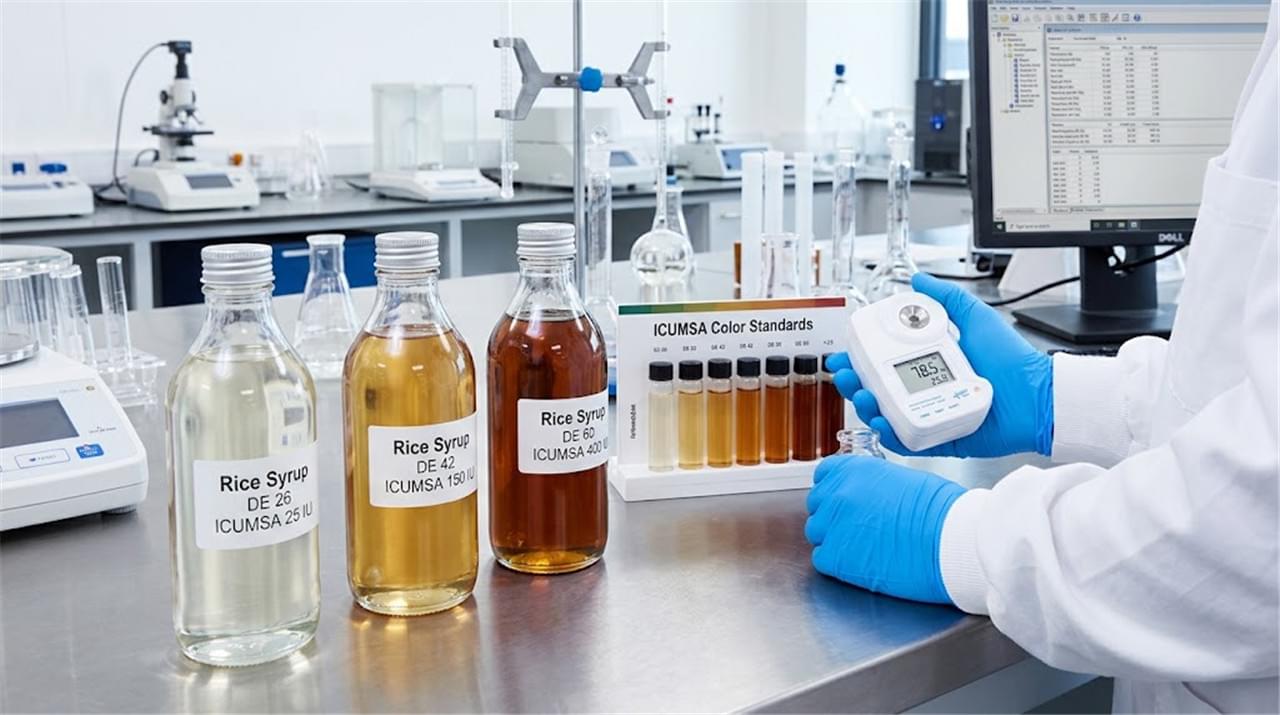
ICUMSA — the International Commission for Uniform Methods of Sugar Analysis — provides the globally standardized approach to sweetener color measurement. The method measures light absorbance at 420 nm and expresses the result in ICUMSA units (IU). The rule is simple: lower ICUMSA means a lighter, clearer product.
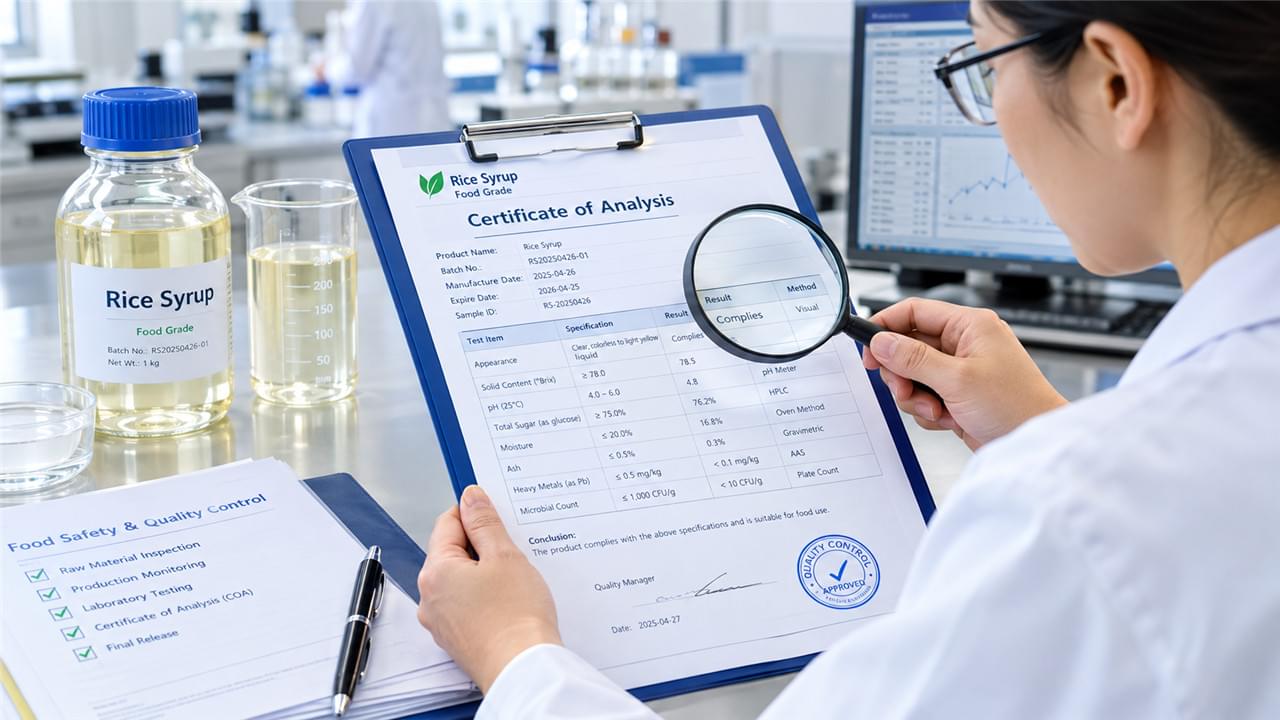
When you review rice syrup color measurement data on a COA, that number is what you’re looking at — one figure that compresses the whole visual story of a syrup into a single comparable value. Suppliers of ICUMSA rice syrup test every lot against it, which is what makes comparing rice syrup color grades across vendors and shipments actually possible.
The Four Rice Syrup Color Grades at a Glance
| Grade | ICUMSA | Description | Key Applications |
|---|---|---|---|
| Premium | <30 | Water-white | Clear beverages, transparent hard candy, pharmaceutical |
| Standard | 30–150 | Light yellow | Confectionery, bakery, sports nutrition, dairy |
| Economy | 150–300 | Yellow | Opaque confectionery, brown baked goods, fermentation |
| Technical | >300 | Amber | Industrial fermentation, animal nutrition |
Matching Rice Syrup Color Grades to Your Application
The application dictates the grade — not the other way around. A transparent hard candy or a premium clear beverage leaves no room for compromise: water-white rice syrup (ICUMSA <30) is the only honest starting point. Confectionery, bakery, and dairy applications sit comfortably in the standard range, where a light yellow tint disappears into the finished matrix. And where the end product is already brown or opaque — think brown baked goods or fermentation substrates — economy grades deliver the same functional performance at a friendlier price. Paying for water-white clarity in a chocolate brownie is money with nowhere to go.
🏭 Where Rice Syrup Color Grades Are Won in Production
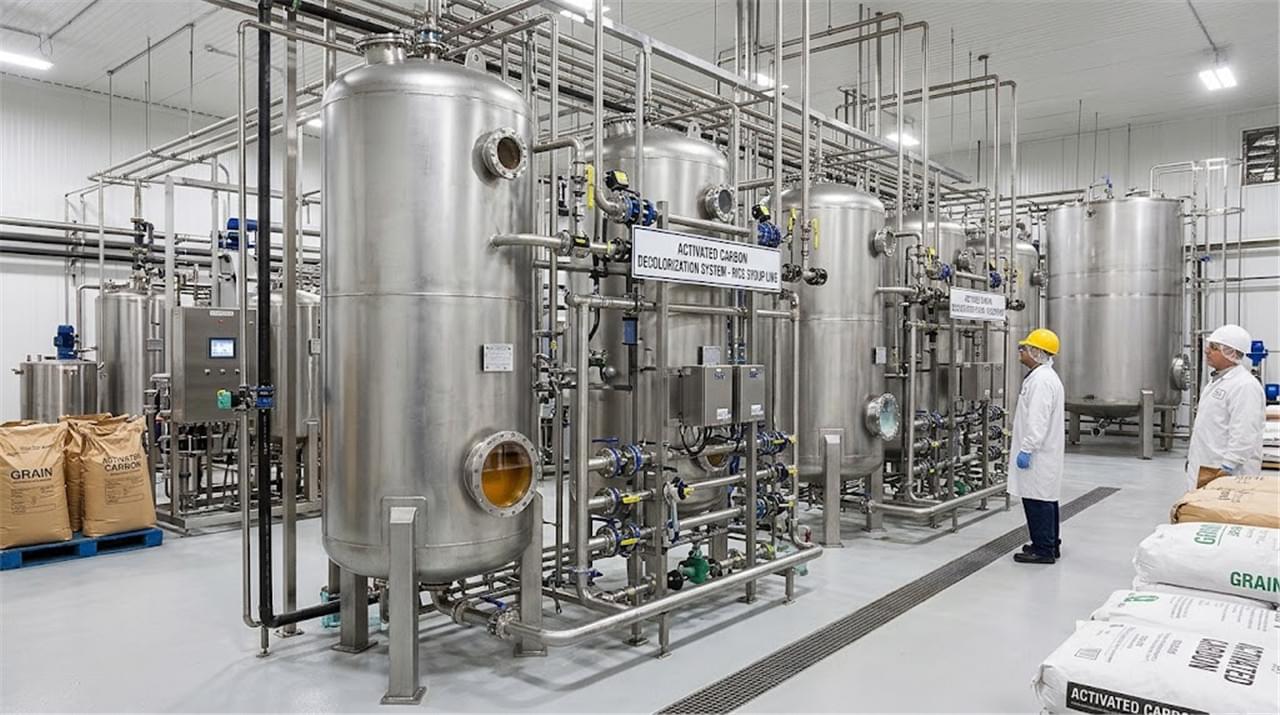
Color isn’t an accident; it’s the sum of every processing decision. Three factors set rice syrup color grades long before a lab ever runs a sample:
The Three Factors Behind Rice Syrup Color Grades
The Maillard reaction. Reducing sugars reacting with amino acids under heat form brown melanoidins — the same chemistry that browns a bread crust. High-temperature cooking steps are the primary reaction sites, and the longer or hotter they run, the darker the syrup drifts. The Maillard reaction is worth understanding if you want to hold a tight color spec, because it never fully switches off.
Caramelization. High-temperature concentration contributes its own yellow-brown tones. Multi-effect evaporators running at lower temperatures keep this firmly in check.
Activated carbon treatment. Treatment intensity directly determines final color. Combined with ion exchange, it achieves the cleanest results — this is where the gap between a <30 premium lot and a 150 economy lot gets engineered.
⏳ Keeping Rice Syrup Color Grades Stable on the Shelf
Here’s the part that catches buyers out: rice syrup color can darken during storage at ambient temperature. The grade you approved on delivery day isn’t guaranteed to be the grade in the tank twelve months later.
Protecting Rice Syrup Color Grades in Storage
Storage best practices:
- Store at 20–25°C; avoid anything above 30°C
- Use opaque tanks and containers to block light
- Apply nitrogen blanketing to reduce oxidative browning
Even handled well, premium grade (<30 ICUMSA) stored at 20°C may creep up by 20–50 ICUMSA units over 12 months. The practical takeaway: build a color stability margin into your specification rather than writing a spec the syrup can only meet on day one. A spec of <50 for a <30 syrup isn’t sloppy — it’s realistic.
✅ Conclusion
Specifying the right rice syrup color grade comes down to balancing application requirements against budget, then protecting the choice through sensible storage and honest specs. The ICUMSA scale makes the whole conversation objective — one number, comparable across every supplier and every lot, and the fastest way to compare rice syrup color grades without a sample in hand.
Wuhu Deli Foods produces all color grades from water-white (ICUMSA <30) to economy grades, with consistent lot-to-lot color control documented on every COA. Contact our technical team for color grade recommendations.

 English
 Deutsch
 Español
 العربية
 Français
 Русский
 Bahasa Indonesia
 한국어
 日本語
 Polski
 Português
 Bahasa Melayu