
Sustainable rice syrup production is now a non-negotiable line item in food ingredient procurement. As major brands commit to science-based targets, net-zero pathways, and responsible sourcing policies, their suppliers have to show credible environmental performance — not just promise it. The good news: this is an achievable, increasingly documented standard among leading manufacturers. Here are the five practices that separate the serious from the performative.
🌍 Practice 1: Map the Footprint Before Claiming It
Any credible story of sustainable rice syrup production starts with an honest map of environmental impacts across the lifecycle:
Raw material stage: Rice cultivation consumes water, land, and energy — and flooded paddies carry well-documented methane emissions. Responsible sourcing from growers using best agronomic practices (alternate wetting and drying, integrated pest management) cuts these impacts at the source.
Processing stage: Enzymatic hydrolysis, evaporation, filtration, and packaging. Energy use in concentration and wastewater generation are the two hotspots.
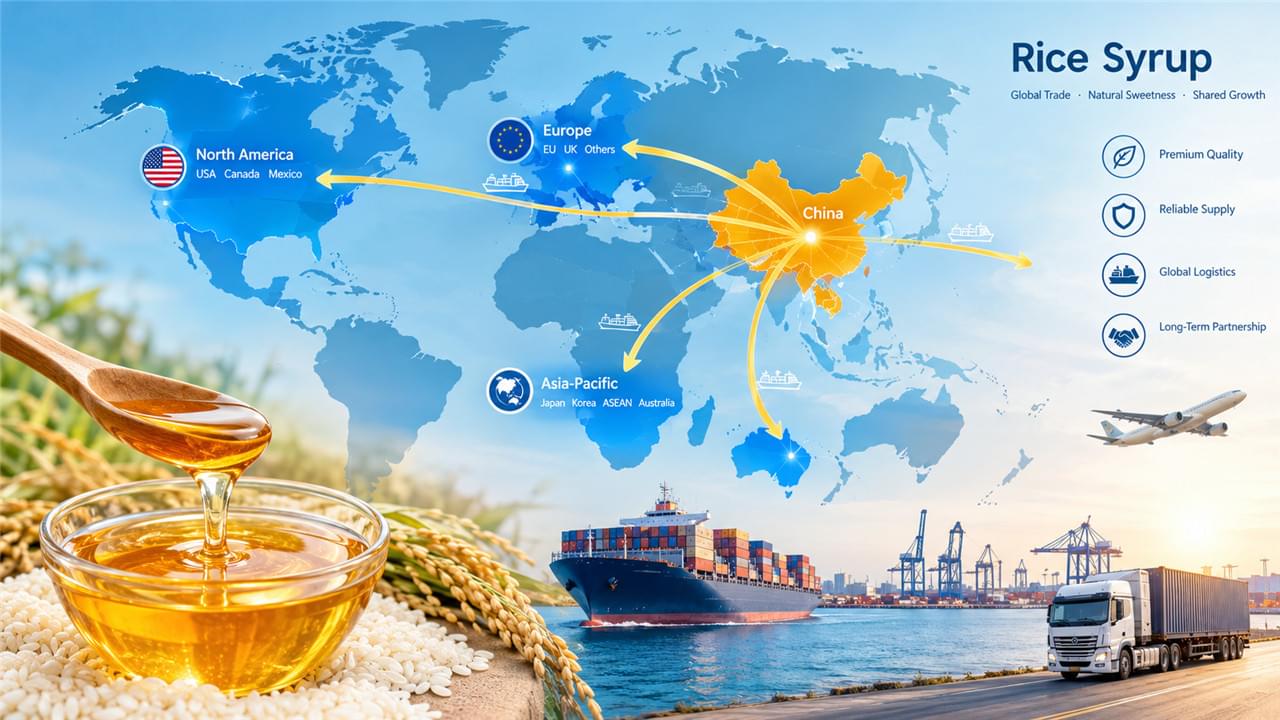
Logistics stage: Fuel combustion from plant to customer. Proximity to major food manufacturing hubs keeps this footprint small.
Where Sustainable Rice Syrup Production Earns Its Name
The difference between green manufacturing and greenwashing lives in this stage-by-stage accounting — knowing your numbers before anyone asks for them.
💧 Practice 2: Water Stewardship That Shows in the Numbers
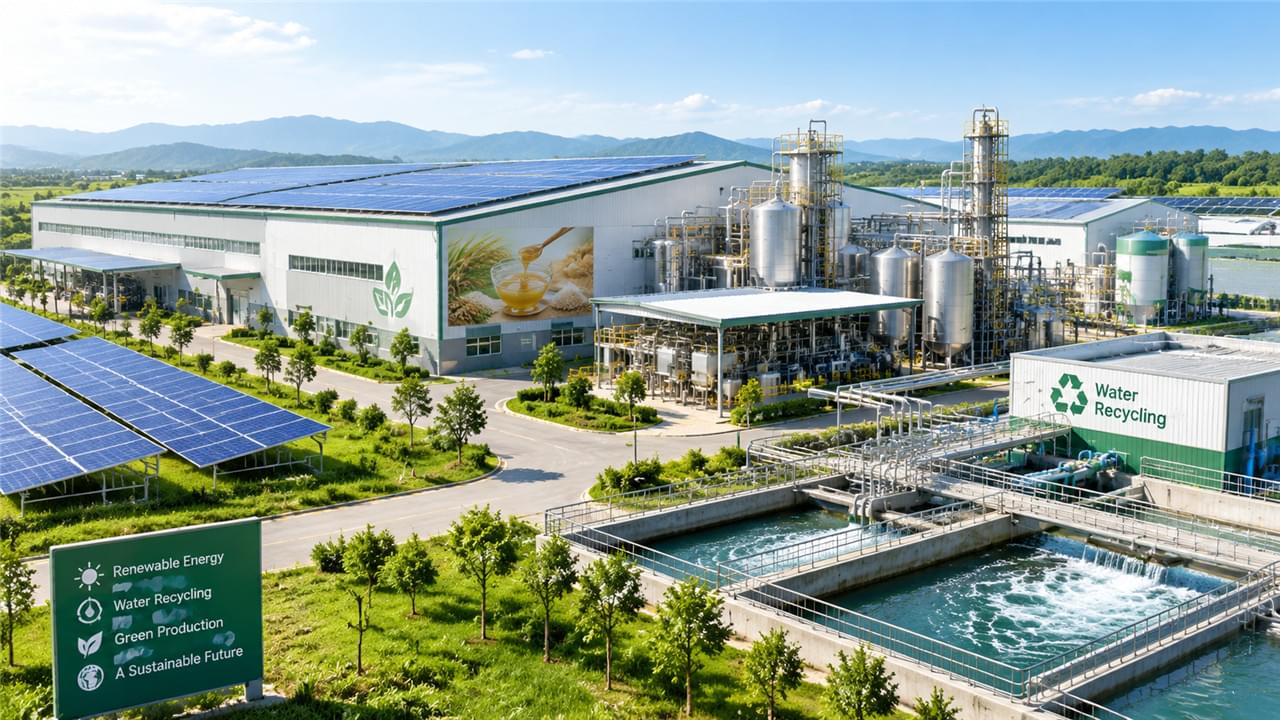
Water is the most significant direct resource in production, and water efficiency in food production has become a board-level metric. Sustainable operations run several strategies at once:
Water Stewardship in Sustainable Rice Syrup Production
Closed-loop cooling systems: recirculating cooling towers replace once-through cooling, slashing freshwater withdrawal for heat exchange.
Condensate recovery: steam condensate from evaporators and cooking systems gets captured and reused as process water — cutting both freshwater demand and wastewater volume.
Wastewater treatment and reuse: advanced biological treatment converts process wastewater into compliant discharge, with treated water reused for equipment exterior washing, grounds irrigation, and cooling tower makeup.
Water intensity tracking: responsible manufacturers track liters of water per ton of syrup as a core KPI in their environmental management systems.
⚡ Practice 3: Energy Efficiency and Renewable Integration
Evaporative concentration is the most energy-hungry step, and leading manufacturers have invested heavily:
Multi-effect evaporation: three or four effects in series reuse steam vapor energy multiple times — cutting steam consumption per ton by 60–75% versus single-effect systems.
Vapor recompression: mechanical (MVR) or thermal (TVR) recompression further reduces primary energy demand.
Heat integration: process integration analysis routes waste heat from one operation to feed another.
Renewable energy: solar photovoltaic installations and green power purchase agreements shrink or offset Scope 2 electricity emissions.
🌾 Practice 4: Responsible Agricultural Sourcing
The sustainability of rice syrup begins at the farm. Progressive sourcing programs:
- Prioritize rice from certified sustainable agriculture programs
- Work with farming cooperatives to improve agronomic practices
- Document rice grain origin for supply chain transparency
- Support grower transitions to organic farming
For organic grades, certified organic practices are a certification requirement — documenting zero synthetic pesticides, synthetic fertilizers, or GMO varieties.
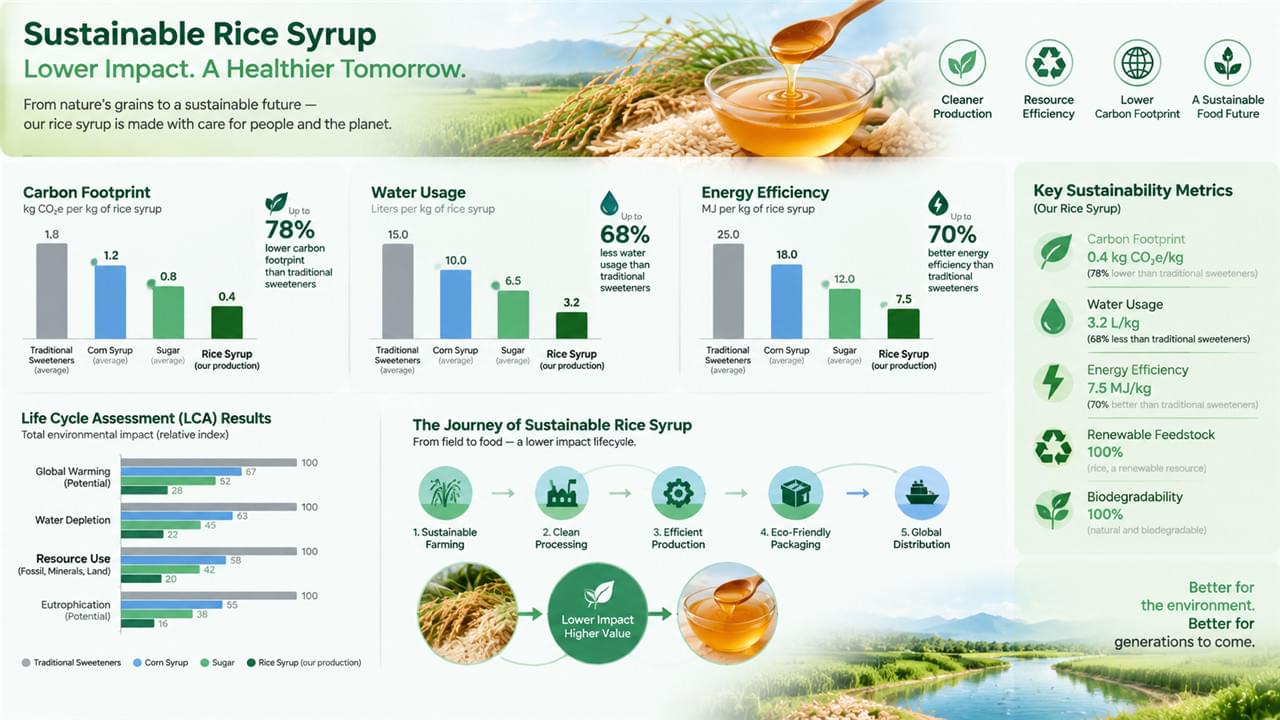
📊 Practice 5: Prove It with LCA and Carbon Footprint Data
Measuring Sustainable Rice Syrup Production with LCA Data
Life cycle assessment (LCA) provides the scientific backbone for credible environmental claims. Progressive manufacturers commission third-party LCAs that quantify:
- Global warming potential (kg CO₂ equivalent per ton)
- Water consumption (liters per ton)
- Land use (square meter-years per ton)
- Eutrophication potential (phosphorus equivalent per ton)
That rice syrup carbon footprint data lets manufacturers benchmark against industry baselines, target the highest-priority improvements, feed customers’ Scope 3 reporting, and support Environmental Product Declarations (EPDs).
♻️ Packaging Sustainability Built In
Packaging is the quiet corner of sustainable rice syrup production — and liquid bulk formats (IBC containers, drums, tankers) carry inherent advantages over small retail packaging: high product-to-packaging ratios and reusable container options. Sustainability-focused manufacturers are:
- Running reusable IBC container programs
- Moving from conventional plastic drums to recycled-content containers
- Optimizing fill weights and container design to minimize material
🏅 Third-Party Certifications That Close the Loop
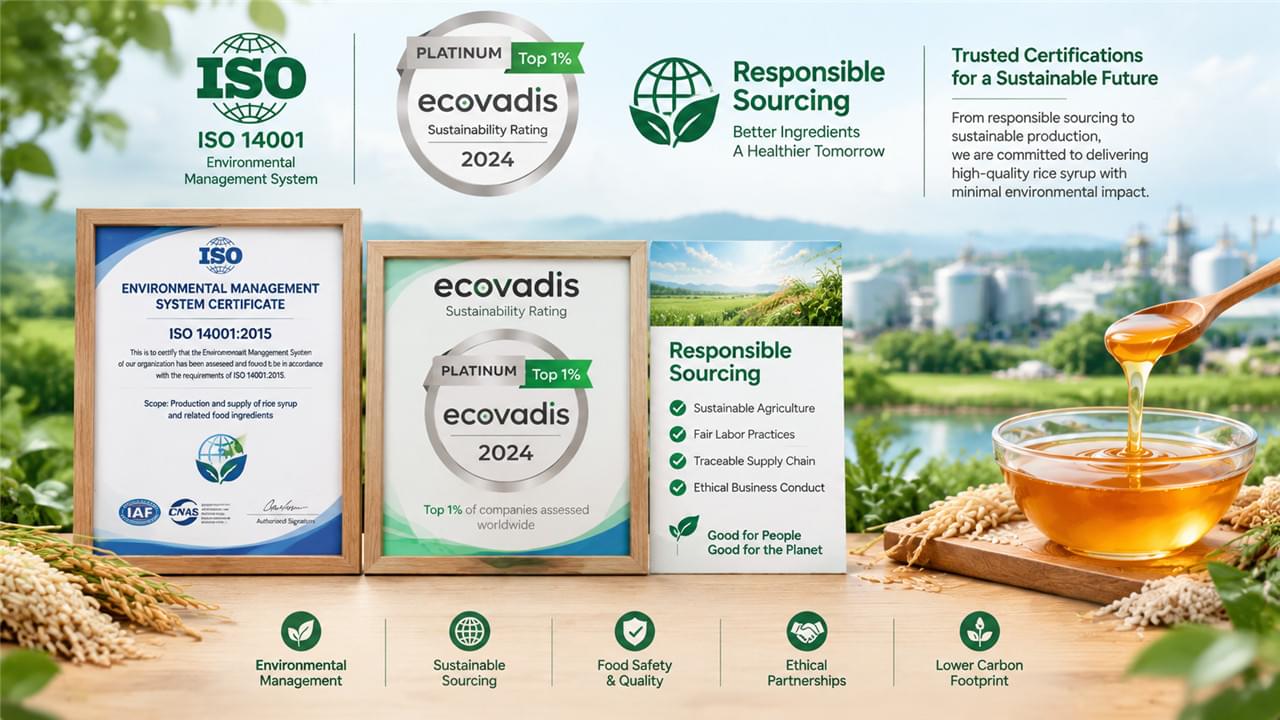
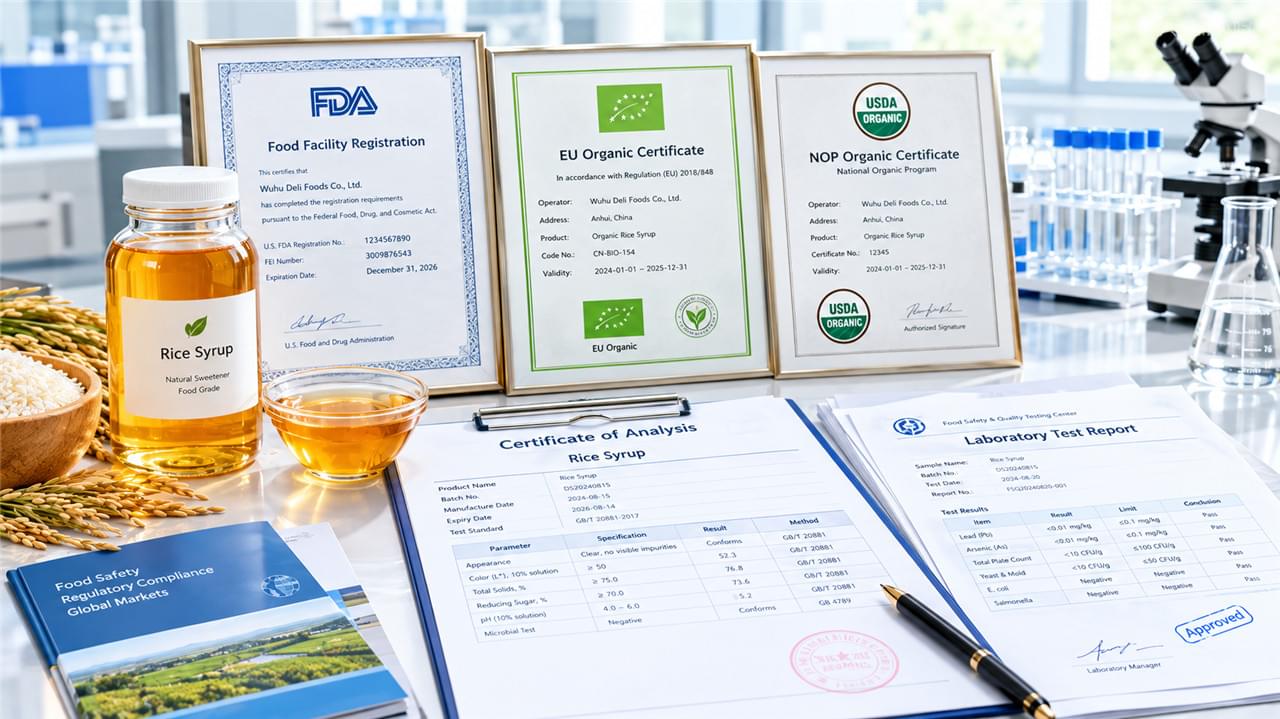
Environmental credibility gets substantiated through third-party certification:
Sustainable Rice Syrup Production, Certified by Third Parties
- ISO 14001: Environmental Management System certification — proof of systematic environmental performance management
- CDP: annual climate risk and emissions disclosure
- EcoVadis: the third-party sustainability rating major food brands use in supplier qualification
Together these certifications turn sustainable rice syrup production from a claim into a verifiable procurement criterion.
✅ Conclusion: A Present Reality, Not a Future Aspiration
Sustainable rice syrup production is not a future aspiration — it is a present operational reality at progressive manufacturers. As food brands intensify supply chain sustainability requirements, documented water efficiency, energy performance, responsible sourcing, and third-party certifications will become prerequisites for major customer relationships.
Wuhu Deli Foods is committed to continuous improvement in environmental performance and is prepared to provide detailed sustainability documentation to support customers’ procurement and reporting requirements.
Contact Wuhu Deli Foods for sustainability documentation.
 English
 Deutsch
 Español
 العربية
 Français
 Русский
 Bahasa Indonesia
 한국어
 日本語
 Polski
 Português
 Bahasa Melayu