
Rice syrup DE value selection is the most consequential specification decision you’ll make in rice syrup procurement. Get it wrong and the failures are immediate: confectionery that crystallizes in the bag, beverages that taste syrupy-sweet, bars that dry out or won’t set. The dextrose equivalent (DE) — a measure of how far the rice starch has been broken down into sugars — quietly governs sweetness, viscosity, crystallization behavior, and browning all at once. Here’s how to match DE to your application without learning through expensive trial and error.
⚖️ Understanding the DE-Property Relationship
Three properties move together as DE changes, and rice syrup DE value selection starts with knowing which one your product cares about most.
The Sweetness Side of Rice Syrup DE Value Selection
Sweetness rises with DE — the same dextrose equivalent logic that names the scale:
- DE 40 rice syrup ≈ 40–45% relative sweetness of sucrose
- DE 55 rice syrup ≈ 55–60% relative sweetness
- DE 65 rice syrup ≈ 65–70% relative sweetness
Higher DE means a sweeter product at the same usage level. If your label declares a sugar target, the DE you pick writes part of that nutrition panel for you.
The Viscosity and Crystallization Side of Rice Syrup DE Value Selection
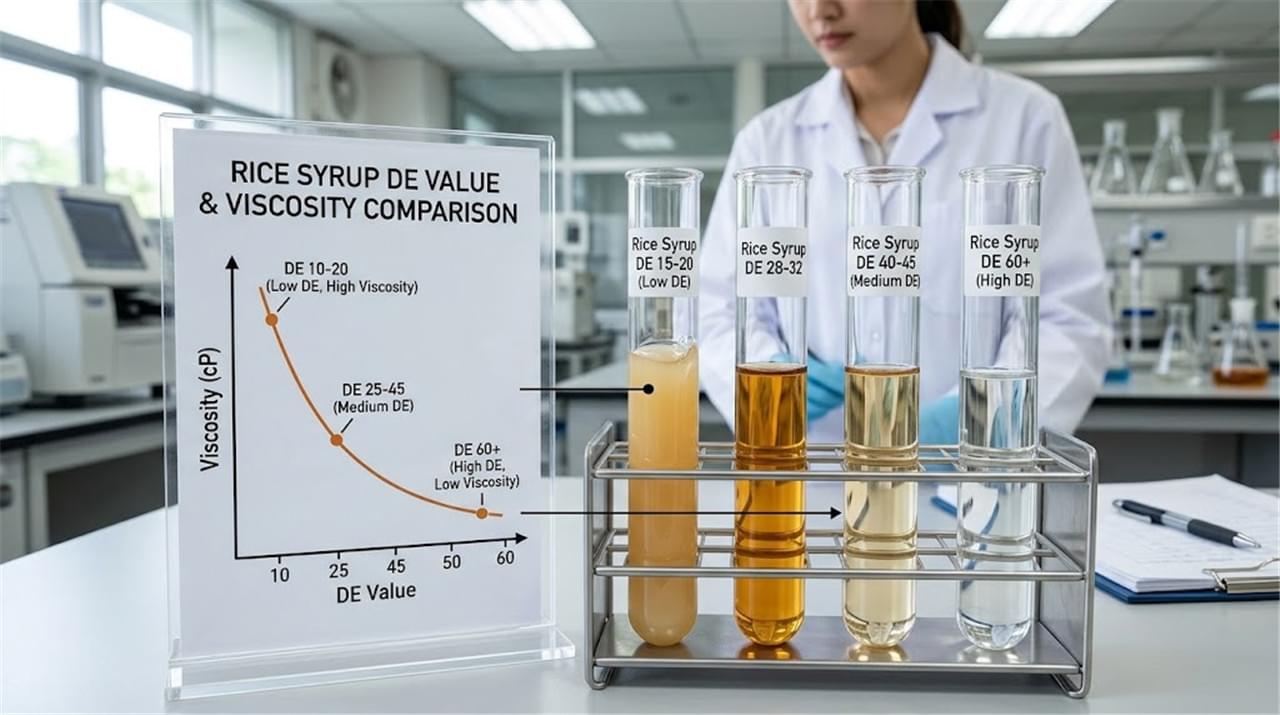
Rice syrup viscosity sweetness trade-offs work in opposite directions: viscosity decreases sharply as DE increases. At 80 Brix, DE 35 runs roughly 25,000–40,000 mPa·s — thick enough to slow a filling line — while DE 62 flows at just 500–1,000 mPa·s.
Rice syrup crystallization behaves the other way. Lower DE syrups carry more long-chain glucose polymers that obstruct sugar crystallization: below DE 40 you get a strong anti-crystallization effect, while above DE 55 that protection fades and crystallization risk climbs. Hard candy formulators live on this knife edge.
🎯 Matching DE to Your Application
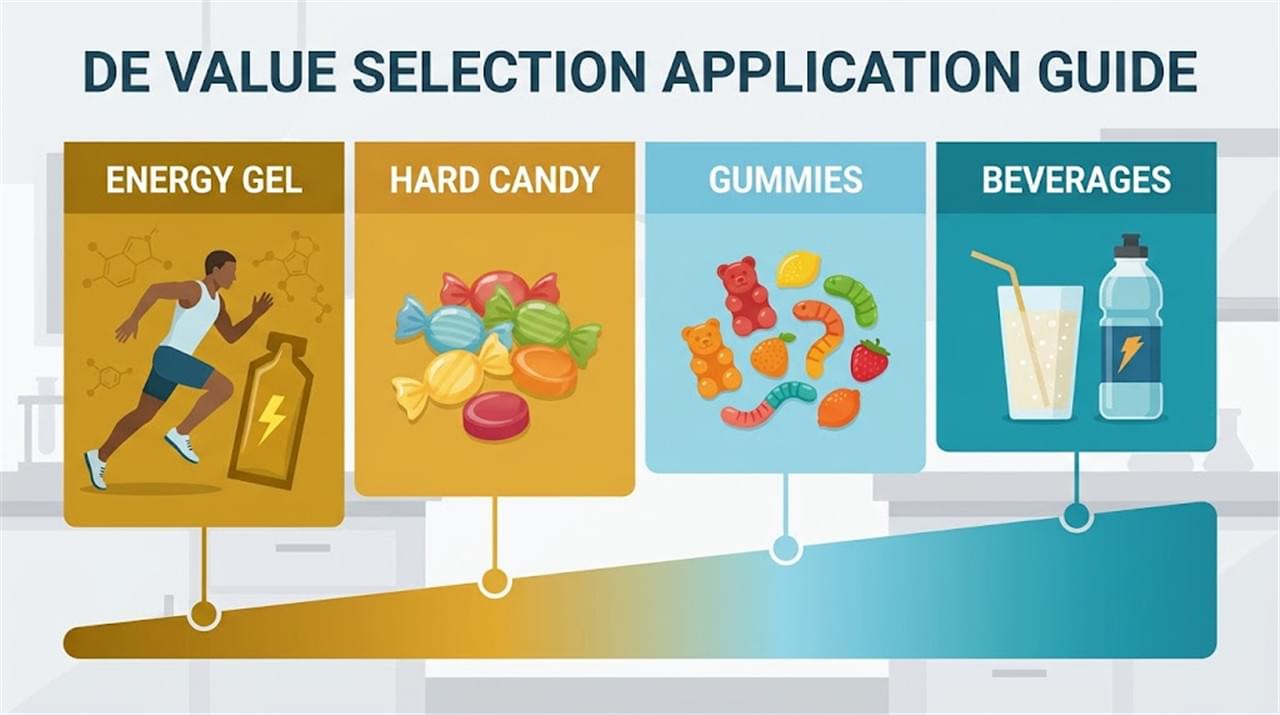
Rice Syrup DE Value Selection by Application: The Cheat Sheet
The table below compresses decades of formulation practice into one view:
| Application | Recommended DE | Key Reason |
|---|---|---|
| Hard Candy | DE 40–48 | Anti-crystallization + texture |
| Gummies & Soft Candy | DE 42–48 | Balance of viscosity and sweetness |
| Energy Gels | DE 45–55 | Carbohydrate availability + viscosity |
| Soft Cookies/Bars | DE 42–50 | Moisture retention + browning |
| Crisp Cookies | DE 35–42 | Reduced hygroscopicity |
| Beverages | DE 52–65 | Low viscosity + solubility |
| Infant Food | DE 38–45 | Purity + appropriate energy release |
| Ice Cream/Dairy | DE 35–42 | Anti-crystallization + body |
Notice the pattern: products that must stay clear and non-crystallizing sit in the low-to-mid DE range, while products that need to flow freely — beverages especially — climb toward DE 65.
📏 Specification Tolerance: Leave Room for Reality
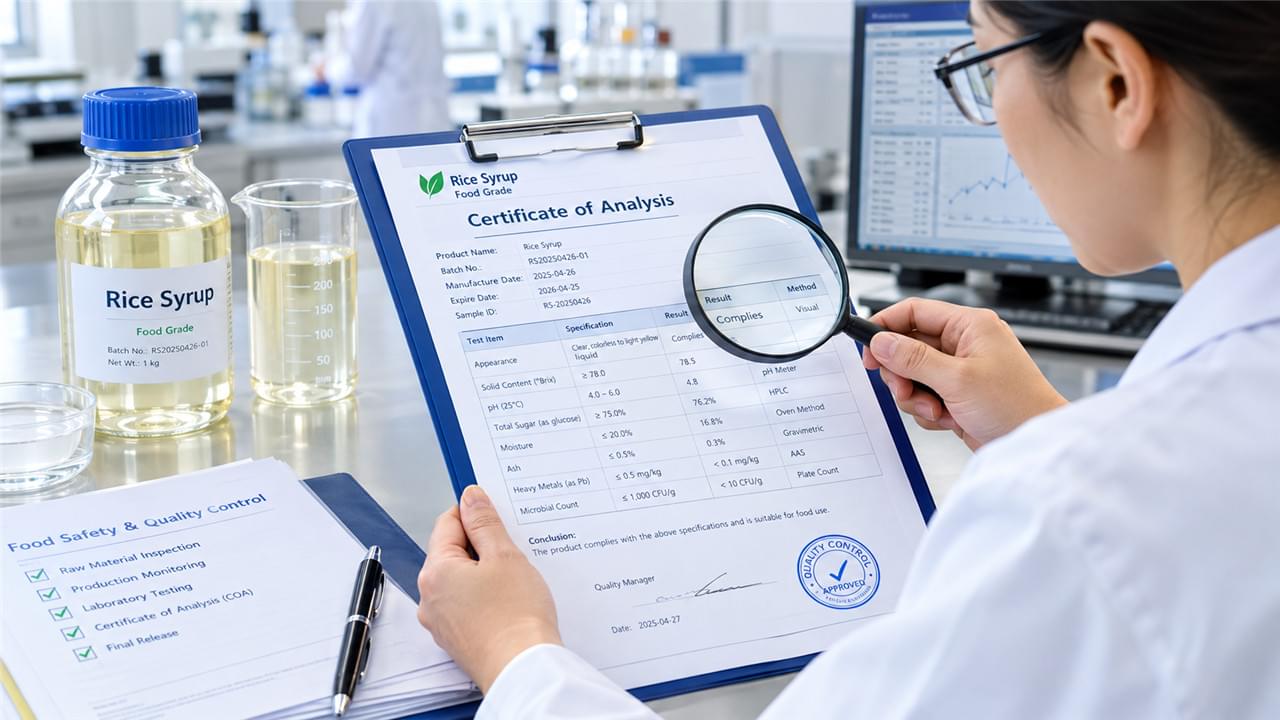
No production process holds DE perfectly constant — real-world tolerances for a dextrose equivalent rice syrup run ±2–3 DE units. Specifying a single exact number is setting yourself up for rejection letters over syrup that’s perfectly fine. When specifying:
Building Tolerance into Rice Syrup DE Value Selection
- Specify as a range (e.g., “DE 42 ± 2”)
- For critical applications, tighten to ±1–1.5 DE with a premium supplier
The second option costs more per kilo and saves more per batch — a fair trade when crystallization or sweetness drift would scrap the run.
🧪 Getting Sample Testing Right
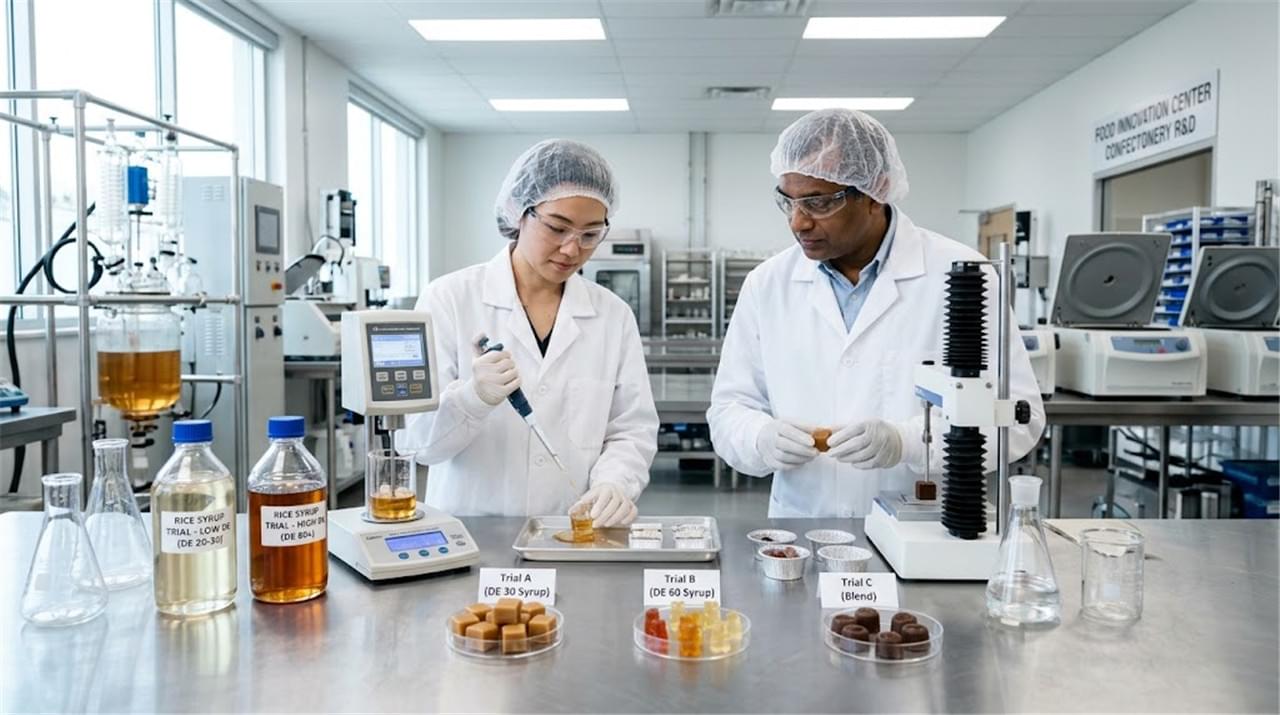
Theory narrows the field; trials make the call. Sample testing is where rice syrup DE value selection stops being theoretical, and a disciplined approach looks like this:
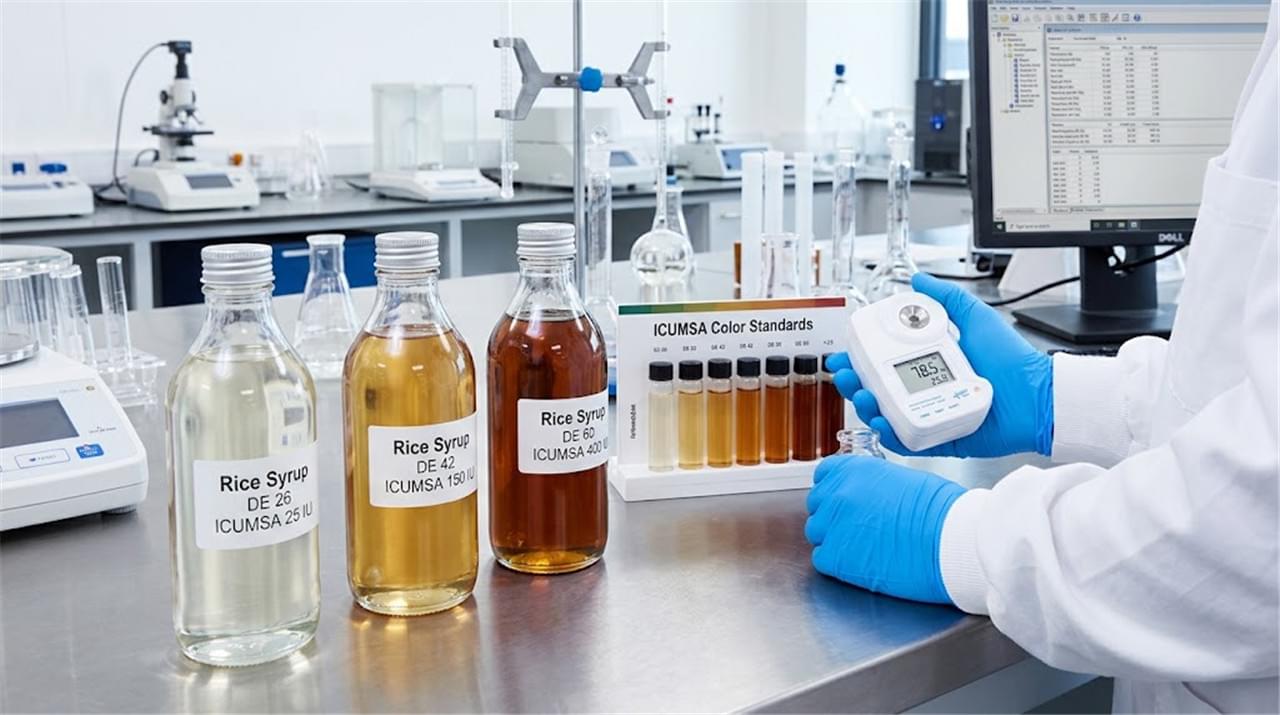
- Request samples of your target DE plus ±3 DE adjacent grades
- Conduct parallel formulation trials with each sample
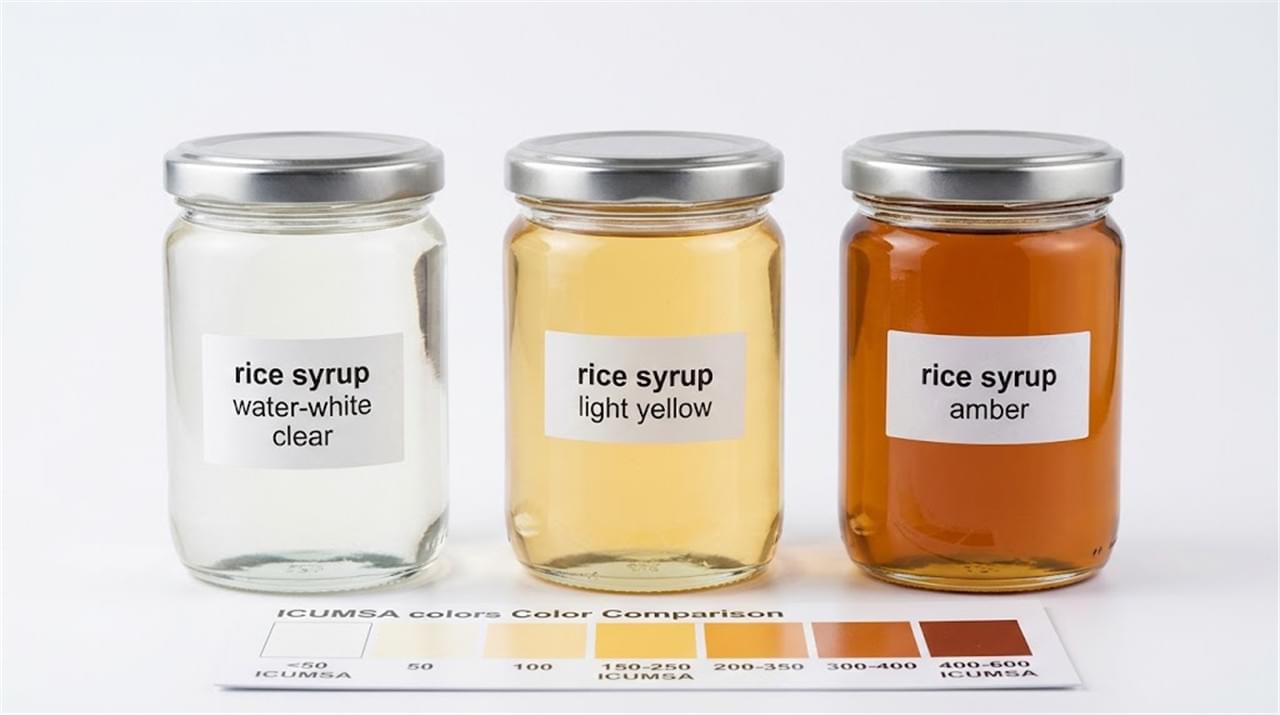
- Evaluate sweetness, texture, color development, and shelf stability side by side
- Define the specification from trial results — not theoretical prediction alone
Step 2 is where most teams economize, and it shows. Running three candidates in parallel for one week beats discovering at shelf-life review that your DE choice aged badly. Resources like IFT publish solid methodology on parallel formulation testing if your team wants a structured framework.
✅ Conclusion
Rice syrup DE value selection rewards careful analysis — understand how DE drives sweetness, viscosity, crystallization, and humectancy, and you can specify with precision instead of crossing your fingers.
Wuhu Deli Foods offers DE values from 30 to 65 with precise process control, and our technical team provides complimentary application consultation. Contact us
 English
 Deutsch
 Español
 العربية
 Français
 Русский
 Bahasa Indonesia
 한국어
 日本語
 Polski
 Português
 Bahasa Melayu