
Rice syrup viscosity management is where ingredient quality meets plant reality. It directly affects production efficiency, product consistency, and how long your pumps live — and most of the pain comes from treating viscosity as a fixed number rather than what it actually is: a moving target driven by temperature and DE. Get your arms around those two variables and rice syrup handling turns from a daily struggle into a well-controlled process parameter.
🌡️ Viscosity Fundamentals: Temperature and DE Interaction
The Two Levers of Rice Syrup Viscosity Management
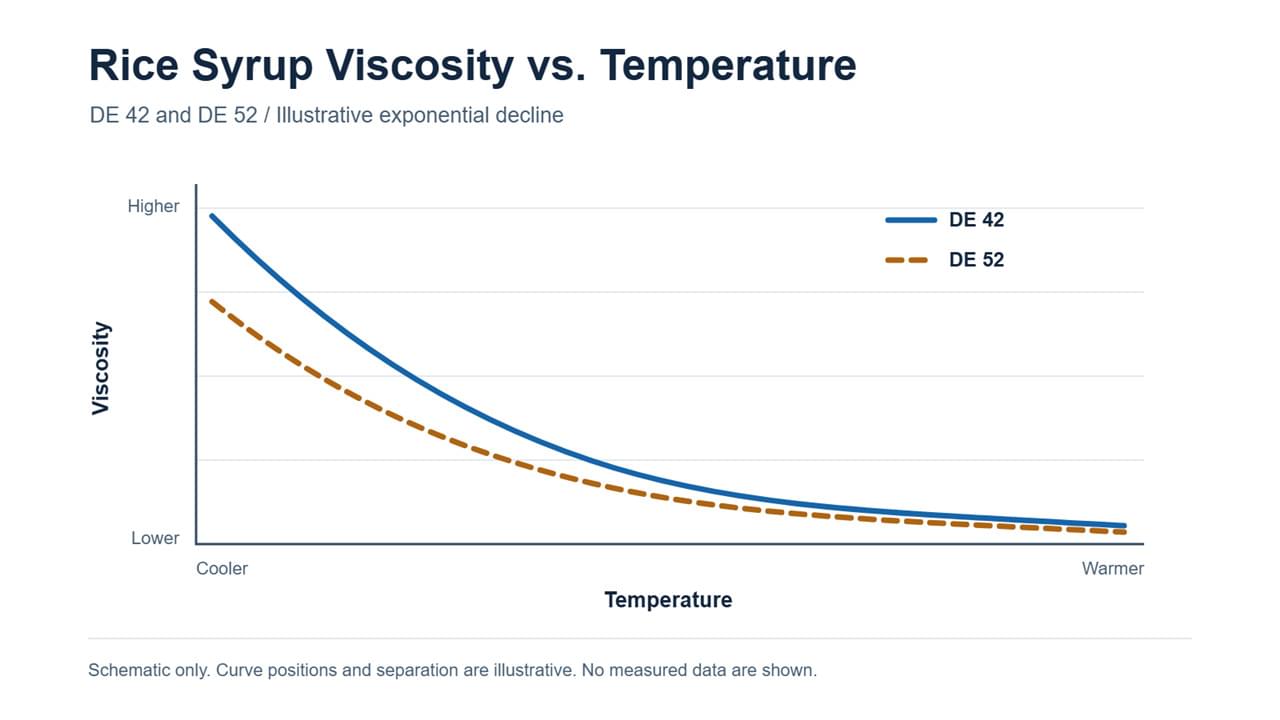
Rice syrup viscosity obeys two variables above all: Dextrose Equivalent (DE) and temperature. Viscosity falls dramatically as temperature rises — an exponential relationship, not a gentle one:
| Temperature | DE 42, 80 Brix | DE 52, 78 Brix |
|---|---|---|
| 20°C | 15,000–25,000 mPa·s | 3,000–5,000 mPa·s |
| 40°C | 3,000–5,000 mPa·s | 800–1,200 mPa·s |
| 60°C | 800–1,500 mPa·s | 300–500 mPa·s |
| 80°C | 300–500 mPa·s | 120–200 mPa·s |
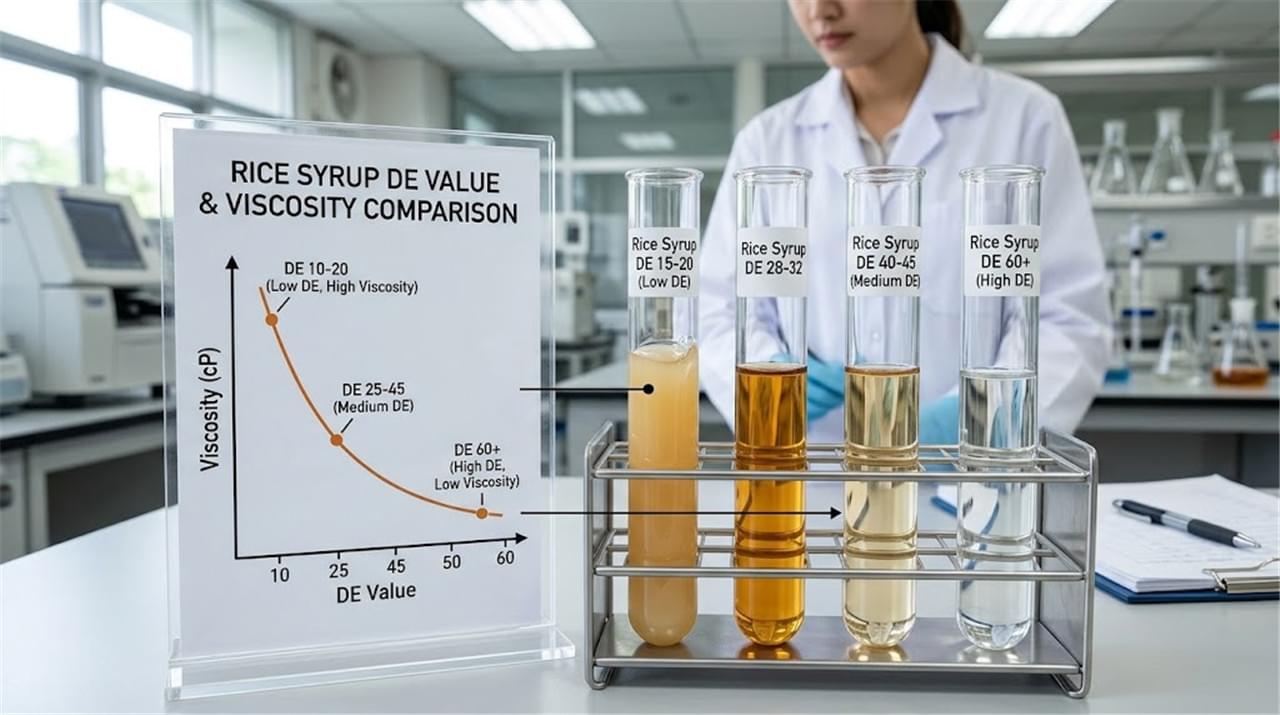
Two practical implications fall out of that table. First, always specify the temperature at which a viscosity figure was measured — a quote without a temperature is half a number. Second, at identical temperature and Brix, each 10 DE unit increase cuts viscosity by roughly 50–70%.
🚚 Unloading and Reception: The First Handoff
Incoming rice syrup arrives in bulk tankers, ISO tanks, or IBCs, and good rice syrup viscosity management starts before the first liter moves:
- Heated tankers: maintain at 50–60°C during transit to minimize unloading viscosity
- Transfer pumps: low DE grades (DE < 45) at ambient may need progressive cavity pumps; higher DE grades can run on centrifugal pumps
- Unloading pipelines: minimize pipe runs, maximize diameter (DN80–DN100), and install steam or hot water traced lines for cold climates
- IBC heating: electric heated IBC covers or hot water immersion heaters; target 40–50°C
Rice Syrup Viscosity Management at the Receiving Dock
The receiving bay is where rice syrup temperature handling either holds or quietly fails. Check tanker temperature on arrival, verify it against the COA, and don’t let syrup sit cold while paperwork clears — a DE 42 syrup that drops to ambient overnight becomes a different handling problem entirely.
🛢️ Storage Tank Systems
Rice Syrup Viscosity Management in the Tank Farm
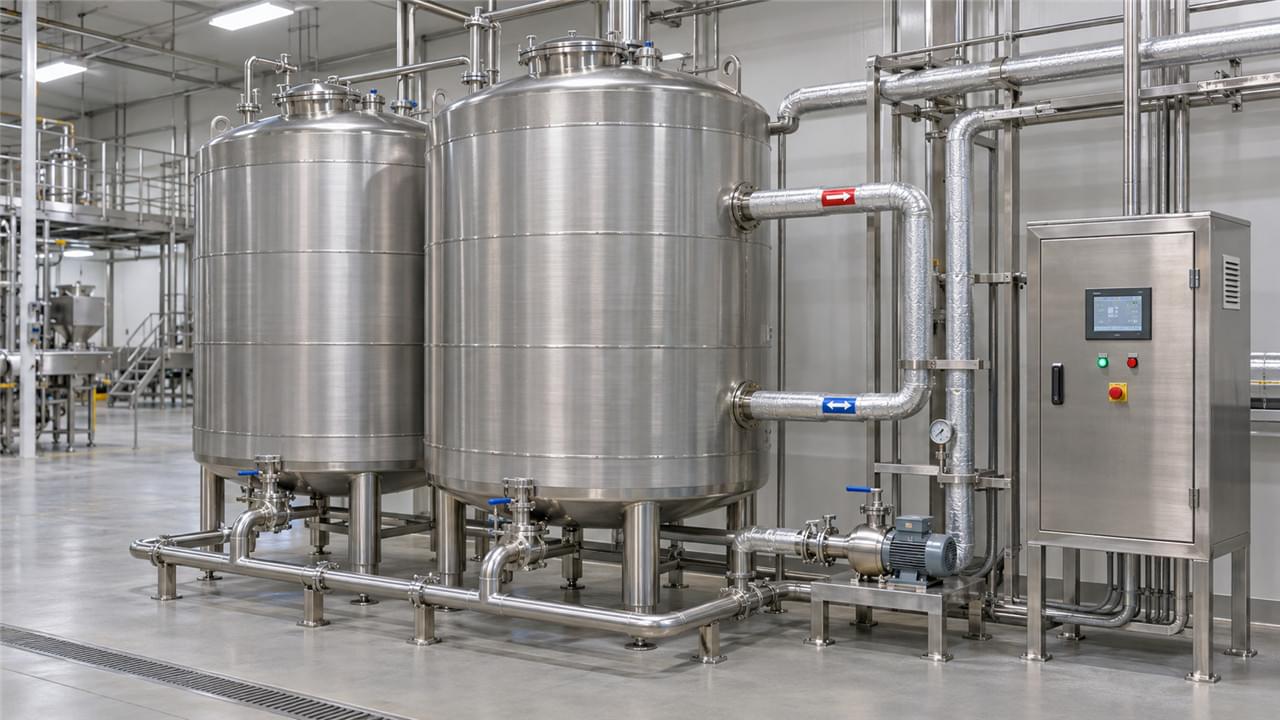
Rice syrup storage tanks should be designed around four priorities:
- Insulation: reduces heat loss and holds temperature without continuous heating
- Temperature maintenance: low DE grades (DE 30–42) need storage at 35–45°C; higher DE grades (DE 50+) can sit at ambient in temperate climates
- Heating options: electric resistance coils, hot water jacketed tanks, or steam coil heating
- Tank sizing: keep a minimum 3-day supply buffer
The 3-day buffer sounds like a luxury until the first delayed shipment. It’s cheaper insurance than emergency freight.
⚙️ Rice Syrup Pump Selection by Viscosity
Rice Syrup Viscosity Management Starts at the Pump
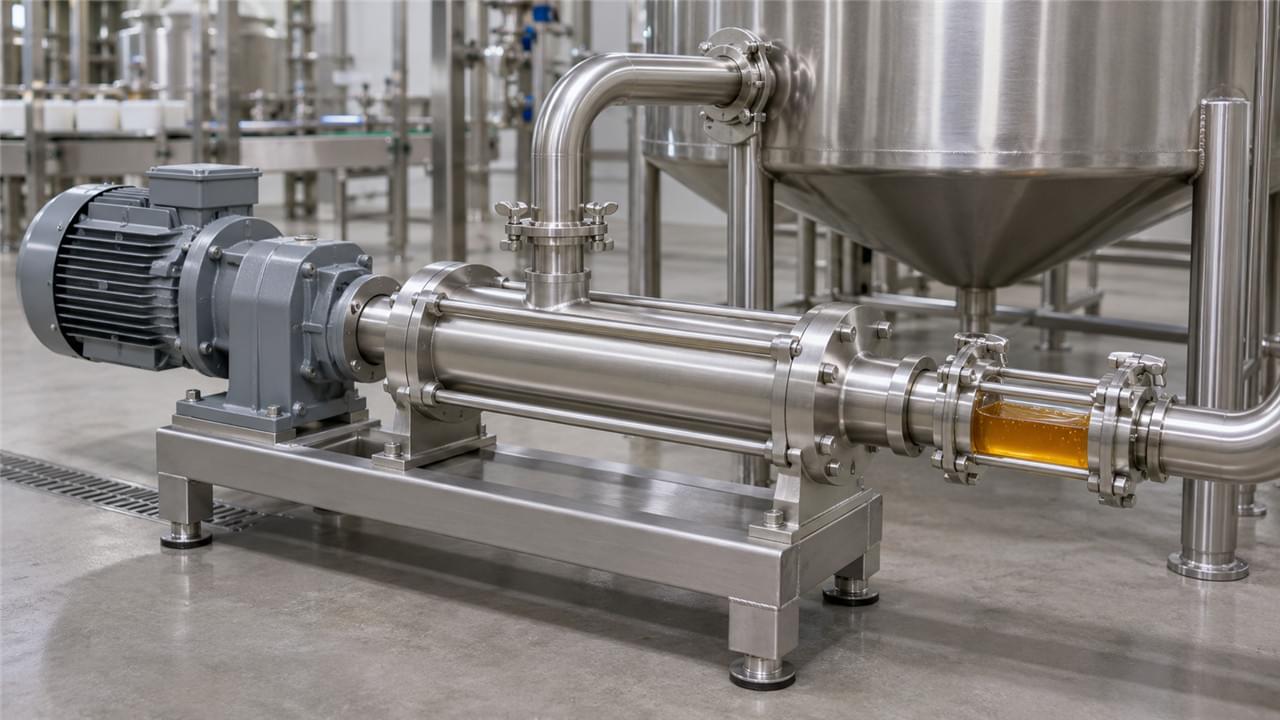
Rice syrup pump selection is dictated by one number — viscosity at operating temperature:
| Viscosity at Operating Temp | Recommended Pump Type |
|---|---|
| < 500 mPa·s | Centrifugal pump |
| 500–3,000 mPa·s | Centrifugal (high-head) or eccentric disc pump |
| 3,000–10,000 mPa·s | Progressive cavity pump or gear pump |
| > 10,000 mPa·s | Progressive cavity pump or screw pump |
Progressive cavity pumps are the workhorses of high-viscosity food ingredient transfer — gentle on the product, consistent flow, easy to clean.
🔧 Rice Syrup Pipeline Design: Five Rules That Prevent Headaches
The last leg of rice syrup viscosity management is the pipe itself, and it rewards simplicity while punishing improvisation:
- Minimize line length: every additional meter increases pressure drop
- Avoid low points: design all lines with a positive drainage slope
- Heat tracing: prevents viscosity spikes between batches
- Pressure relief: install relief valves on positive displacement pump discharge lines
- CIP compatibility: design for Clean-In-Place from day one — retrofitting CIP is expensive and rarely elegant
✅ Conclusion
Mastering rice syrup viscosity management transforms a potentially frustrating operational challenge into a well-controlled process parameter. With proper temperature handling, honest pump selection, and correctly designed transfer systems, rice syrup moves reliably from tanker to tank to line — batch after batch.
Contact our technical team for handling system consultation.

 English
 Deutsch
 Español
 العربية
 Français
 Русский
 Bahasa Indonesia
 한국어
 日本語
 Polski
 Português
 Bahasa Melayu