
Specialty rice syrup grades exist for one reason: standard commercial syrup no longer satisfies the buyers at the top of the food market. 🎯 When a product carries an organic seal, feeds an infant, or ferments into a high-value ingredient, procurement teams stop shopping on price alone and start shopping on specification. This guide walks through the seven specialty rice syrup grades that premium food brands ask for most — and what each one actually delivers.
The Specialty Grade Landscape at a Glance
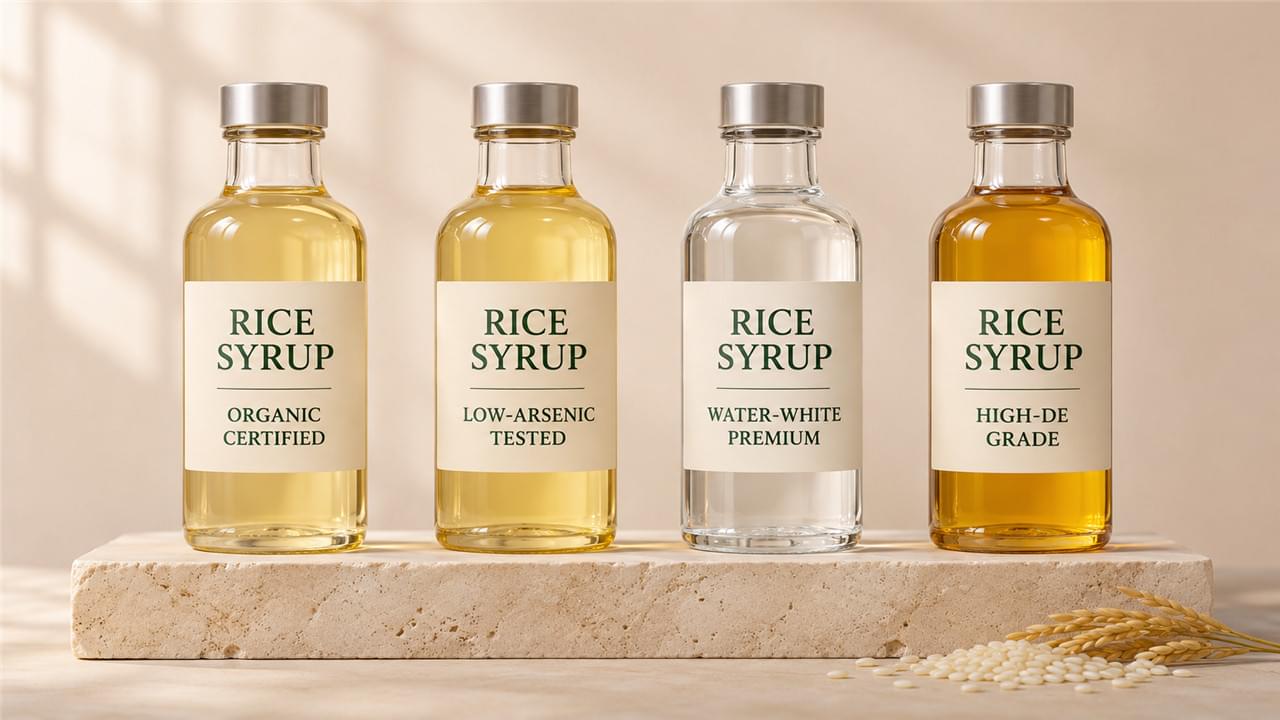
Before diving in, here’s the quick map 🗺️: USDA Organic certified syrup, low-arsenic certified syrup, high-DE fermentable syrup, water-white premium syrup, brown rice syrup, and fully custom specifications. Each targets a different buyer, a different regulation, and a different price point — so knowing which grade fits your application saves weeks of back-and-forth sampling.
1. Organic Rice Syrup — The Anchor of Specialty Rice Syrup Grades
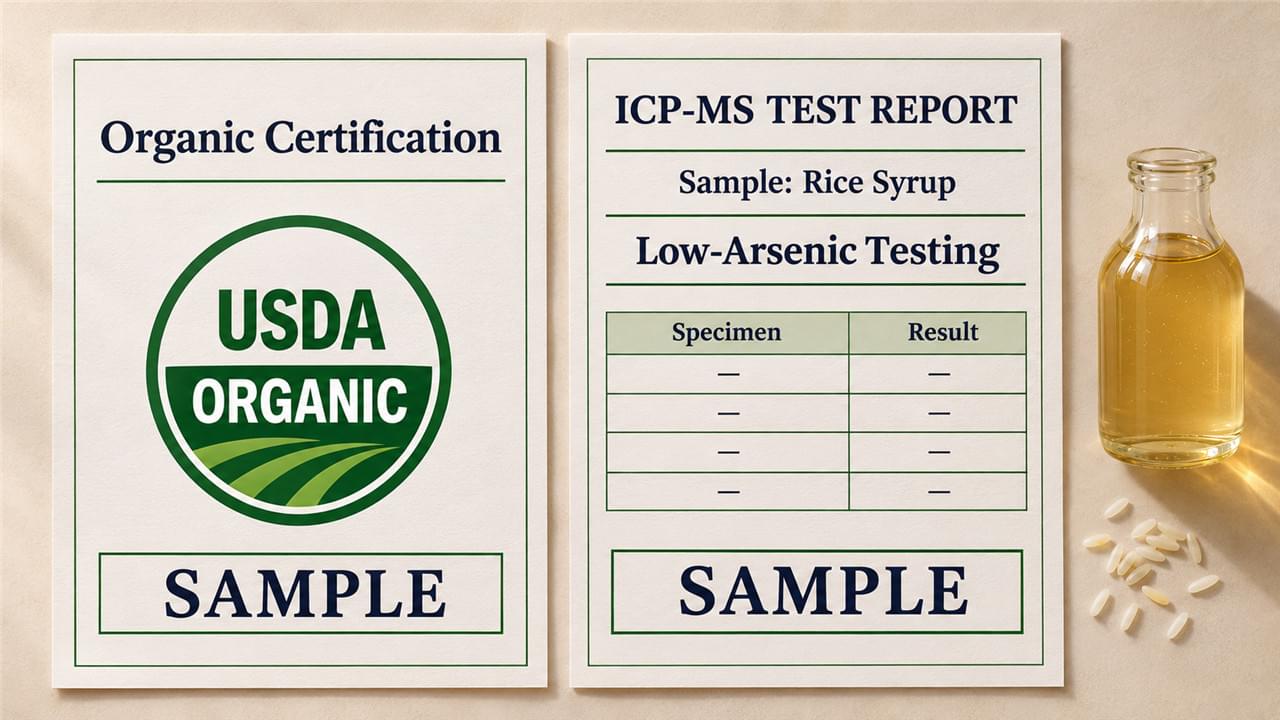
Organic rice syrup starts in the field, not the factory. The rice must come from certified organic acreage with no synthetic pesticides, no synthetic fertilizers, and no GMO varieties. Processing aids — enzymes, activated carbon — must be permitted under the USDA National Organic Program, and the producing facility needs a certified organic system plan plus annual third-party inspection.
Common organic grades include Organic DE 42, Organic DE 48–52, and organic water-white variants. Expect a market premium of roughly 20–40% over conventional syrup, justified by certified infants’ food, EU Organic exports, and natural retail brands that will pay for paperwork they can trust. ✅
2. Low-Arsenic Rice Syrup: The Specialty Rice Syrup Grade Infants Deserve
Inorganic arsenic in rice-derived ingredients has drawn serious regulatory attention, and infant-food buyers feel it most. Low-arsenic rice syrup answers with tighter limits and enhanced sourcing protocols.
| Grade | Inorganic Arsenic Limit |
|---|---|
| Standard | ≤ 0.10 mg/kg |
| Low-arsenic | ≤ 0.05 mg/kg |
| Infant-grade | ≤ 0.03 mg/kg |
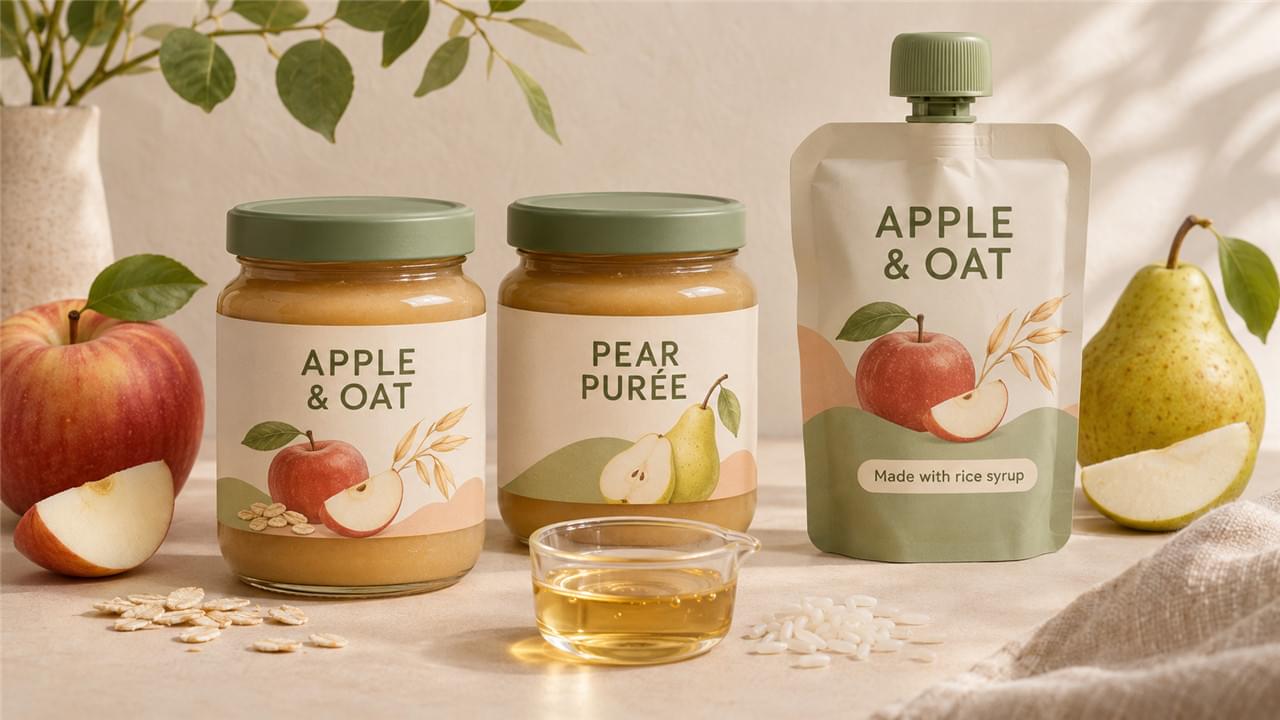
Production leans on targeted rice sourcing from low-arsenic regions, enhanced pre-process washing, ion exchange tuned for arsenic removal, and lot-by-lot ICP-MS testing. It’s the grade behind infant formula, Stage 2/3 baby foods, and FSMA-compliant infant rice cereal — buyers tracking the FDA’s work on metals in food treat this documentation as non-negotiable. 👶
3. High-DE Rice Syrup: The Specialty Rice Syrup Grade Built for Fermentation
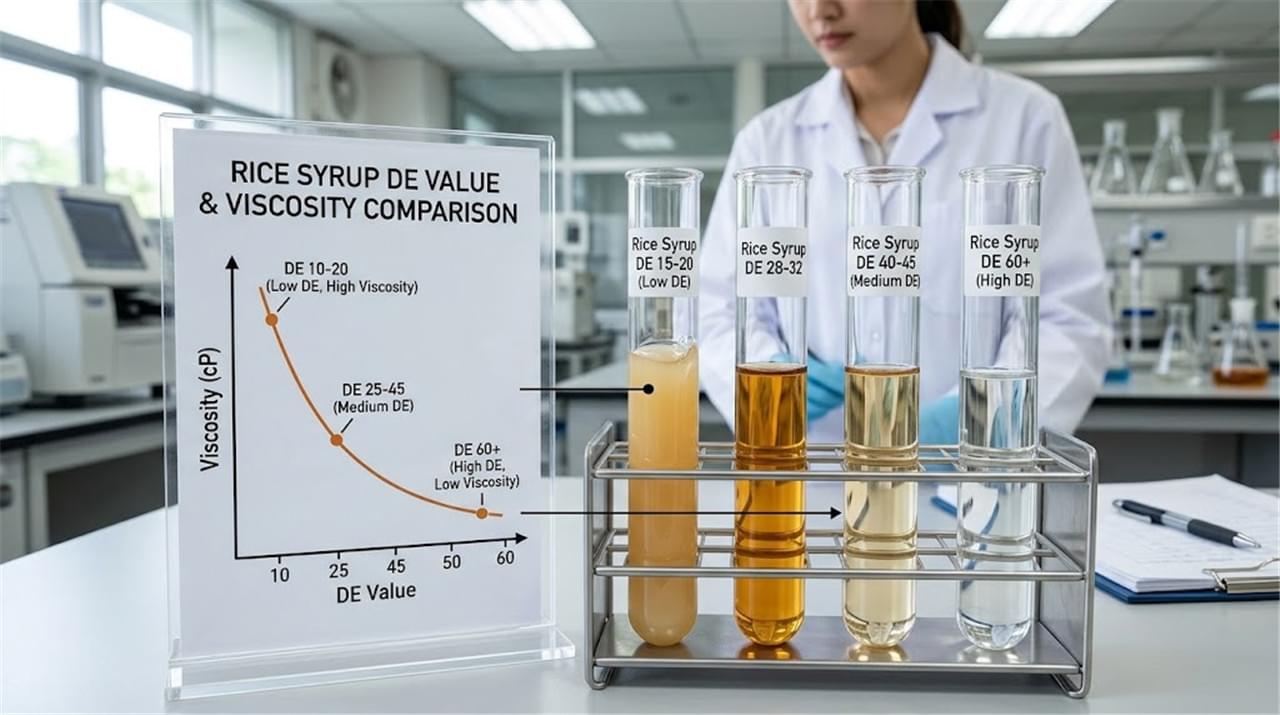
High-DE rice syrup (DE 58–68) is engineered for maximum fermentability and thin-viscosity carbohydrate delivery. Its sugar profile runs 45–65% glucose with 20–30% maltose, viscosity sits at a very workable 200–600 mPa·s at 78 Brix, and sweetness reaches 65–75% of sucrose.
That combination makes high-DE rice syrup the natural substrate for bioethanol and amino acid fermentation, liquid clinical nutrition, and high-energy beverage concentrates. ⚡ If your process needs the yeast to eat fast and cleanly, this is the spec to request.
4. Water-White Rice Syrup: The Purest of All Specialty Rice Syrup Grades
Water-white grade (ICUMSA < 30) is the highest color purity specification available. Intensive activated carbon and ion exchange purification strips color bodies almost completely, leaving a syrup with zero visual impact on the finished product.
It shines where clarity sells: pharmaceutical glucose solutions, transparent hard candy, and clear alcopop beverages. 💎 If your label says “no color contribution,” this is the grade that honors it.
5. Brown Rice Syrup: The Unrefined Counterweight Among Specialty Rice Syrup Grades
At the opposite end sits brown rice syrup, a low-refining grade that keeps the golden-amber color and mild grain flavor characteristic of rice. No aggressive decolorization, no identity loss.
Granola bars, artisan confectionery, and natural food products that want an authentic rice-based sweetener you can actually see rely on it. The visible color isn’t a defect — it’s the selling point. 🍂
6. Custom Specification Grades — Your Spec, Our Production Line
Leading producers go beyond the catalog with custom specification development: precise DE value within ±1.5 tolerance, a specific viscosity range at your defined process temperature, engineered sugar profiles, and pH adjusted to your line’s requirements. 🛠️
Custom work is where a supplier proves whether they actually control their process — or just relabels stock drums. Among specialty rice syrup grades, this is the one that turns a supplier into a development partner.
Conclusion: Match the Grade to the Buyer, Not the Brochure
Specialty rice syrup grades reward buyers who read specifications the way chemists do. The right grade protects your certification, your infant-safety claims, your fermentation yield, or your product’s visual purity — and the wrong one quietly undermines all four.
Wuhu Deli Foods maintains dedicated production lines and sourcing programs for every specialty grade described here, with full certification and documentation support. 📋 Contact our specialty grade team to discuss your requirements and request samples.
 English
 Deutsch
 Español
 العربية
 Français
 Русский
 Bahasa Indonesia
 한국어
 日本語
 Polski
 Português
 Bahasa Melayu