
Replacing high fructose corn syrup (HFCS) with rice syrup is one of the most commercially consequential reformulation moves in today’s food industry. Sustained consumer rejection of HFCS, regulatory scrutiny in several markets, and the pull of clean-label positioning have manufacturers across North America, Europe, and Asia actively weighing the switch. This rice syrup vs HFCS guide provides the technical depth needed to make informed formulation and procurement decisions — and shows where the payoff really lands.
🧪 Understanding HFCS: What It Is and Why It’s Controversial
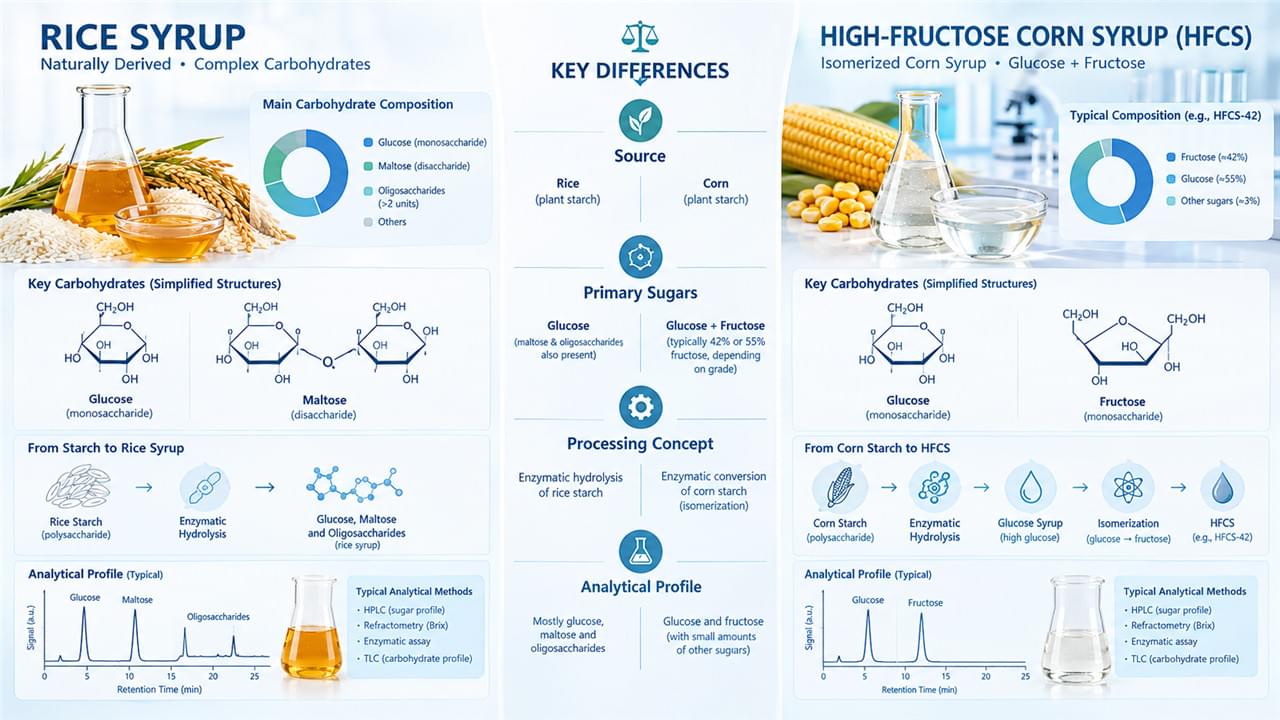
HFCS is produced from corn starch through enzymatic hydrolysis followed by isomerization, which converts a portion of glucose into fructose — a two-step industrial journey covered in detail on Wikipedia’s HFCS overview. The most common grades:
- HFCS-42: 42% fructose, 53% glucose, 5% oligosaccharides
- HFCS-55: 55% fructose, 40% glucose, 5% oligosaccharides
- HFCS-90: 90% fructose (used for blending)
Why Consumers Reject HFCS:
- Perceived unnaturalness: Multi-step enzymatic processing, often from GMO corn
- Fructose concerns: Ongoing scientific debate about fructose’s role in metabolic disorders
- “Processed food” association: A strong negative halo effect in consumer research
- Label readability: “High Fructose Corn Syrup” consistently ranks among the least-preferred label terms
🍬 Sugar Profile Comparison
Rice Syrup vs HFCS: The Sugar Profile Showdown
| Sugar Component | Rice Syrup (DE 42) | HFCS-42 |
|---|---|---|
| Fructose | <1% | 42% |
| Glucose | 18–22% | 53% |
| Maltose | 14–18% | <1% |
| Maltotriose | 11–15% | <1% |
| Higher oligosaccharides | 45–55% | 5% |
The fructose row is where any rice syrup vs HFCS comparison gets decided. As a genuinely fructose-free syrup, rice syrup contains virtually none of the sugar that puts HFCS under metabolic scrutiny — a difference that matters both to nutrition teams and to label readers. Meanwhile, rice syrup’s maltose and higher oligosaccharides deliver slower sweetness release and body that HFCS simply doesn’t have.
⚙️ Functional Property Comparison
| Property | Rice Syrup (DE 42) | HFCS-42 |
|---|---|---|
| Relative sweetness | 45–50% | 95% |
| Viscosity at 25°C (cP) | 3,000–5,000 | 600–800 |
| Water activity (at 80°Brix) | 0.83–0.85 | 0.78–0.80 |
| Hygroscopicity | Moderate | High |
| Browning (Maillard) | Moderate | Enhanced (fructose-driven) |
| Fermentability | Moderate | High |
| Crystallization inhibition | Good | Excellent |
Rice Syrup vs HFCS: Formulation Adjustments That Matter
In the rice syrup vs HFCS functional matchup, none of the gaps are dealbreakers — they’re just adjustment items. Here’s the short list.
Sweetness adjustment: HFCS-42 is roughly twice as sweet as rice syrup (DE 42). To close the gap, pick one of three paths:
- Option A: Increase rice syrup usage by 10–15% plus a minor sucrose addition
- Option B: Use high-DE rice syrup (DE 55–62) for a bigger sweetness contribution
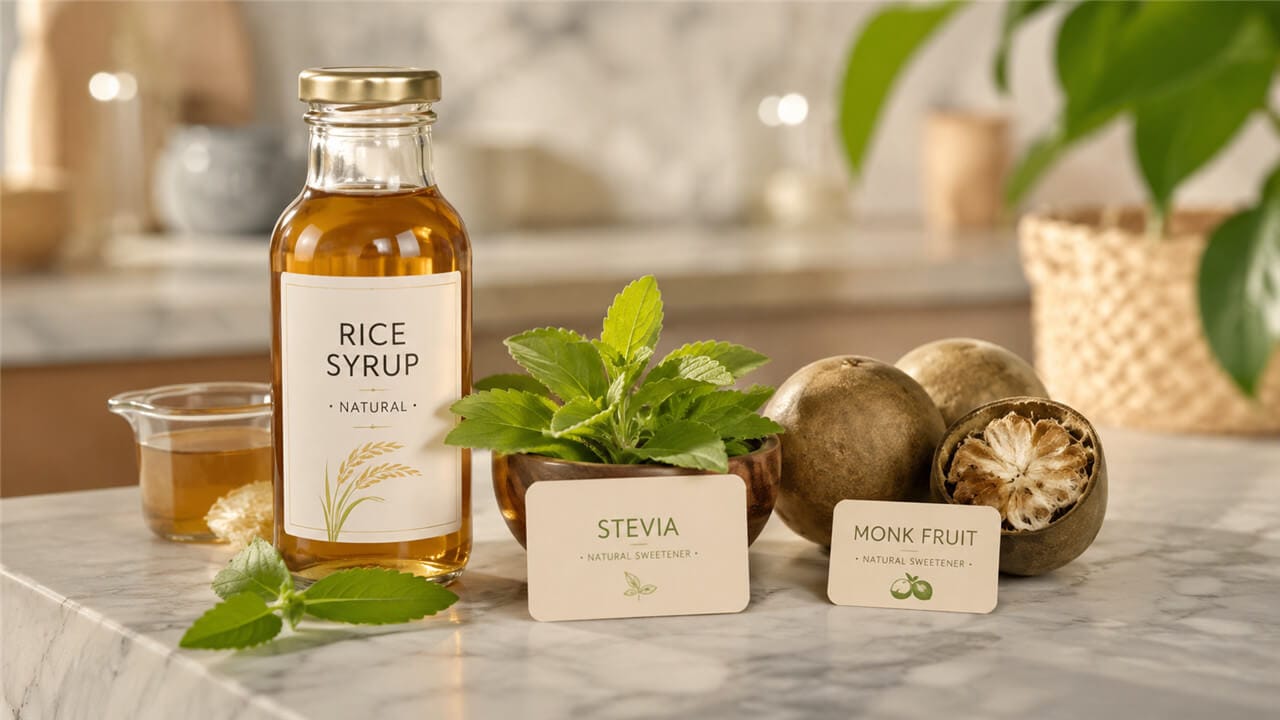
- Option C: Combine rice syrup with a trace high-intensity sweetener (stevia, monk fruit)
Viscosity adjustment: Rice syrup runs thicker, so plan for slightly elevated process temperatures (+3–5°C) to match flow behavior, and review pump sizing for high-viscosity grades.
Browning management: Without fructose to drive it, rice syrup browns more gently than HFCS. In bakery, expect to nudge oven temperature up (+5–8°C) or extend baking time. In caramel, color develops more slowly — adjust cooking time accordingly.
💧 Water Activity and Shelf Life Implications
In the rice syrup vs HFCS shelf-life equation, HFCS holds a small edge on paper: its lower water activity (aw 0.78–0.80 vs. 0.83–0.85) gives HFCS-formulated products slightly better microbiological stability at equivalent total solids. In most finished foods, though, other ingredients buffer the difference into near-irrelevance. For applications where aw is genuinely critical — bar formats and confections top the list — verify the total formula aw after substitution with a calibrated aw meter.
🏷️ Commercial and Label Impact
Rice Syrup vs HFCS: What Shoppers See on the Label
Consumer Label Research
Independent consumer research (multiple studies, US and EU markets, 2022–2025) keeps landing on the same headline in the rice syrup vs HFCS debate:
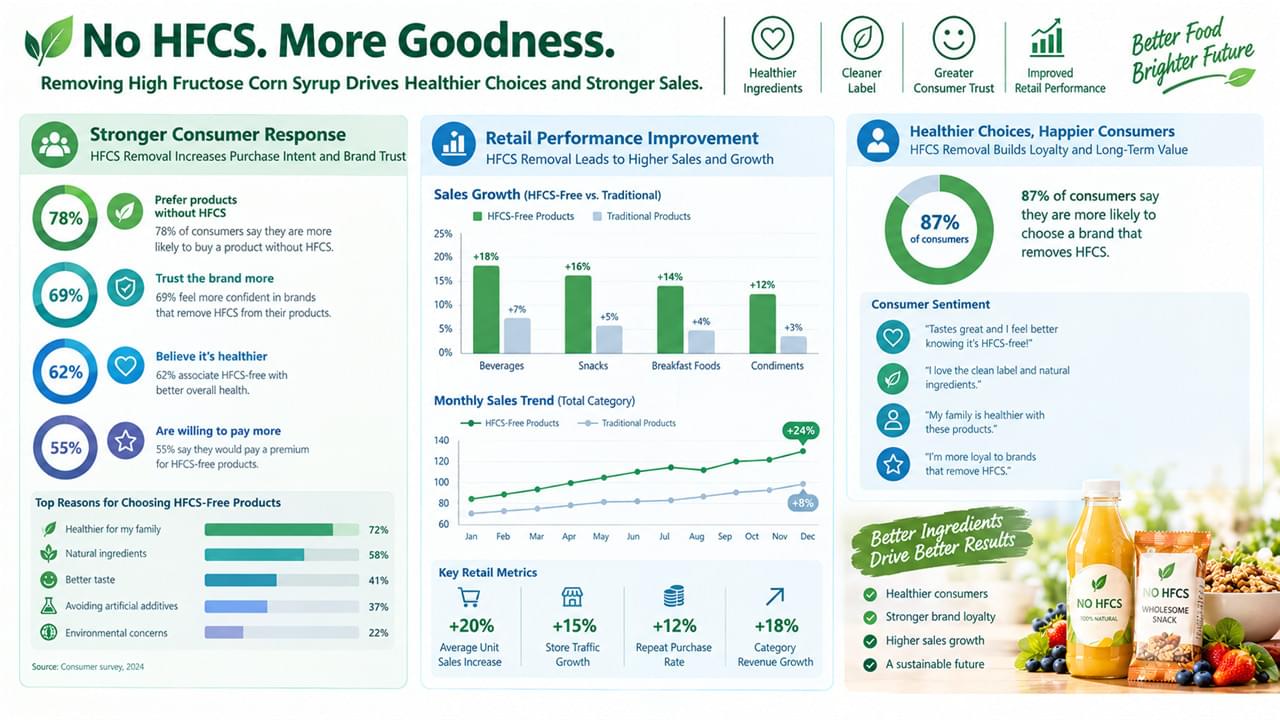
- 88% of consumers recognize “High Fructose Corn Syrup” as a negative ingredient
- 76% actively avoid products containing HFCS
- Only 12% express concern about “Rice Syrup” or “Brown Rice Syrup”
- Brands that removed HFCS reported average sales increases of 15–22% in natural and mainstream retail channels
Regulatory Context
- EU: HFCS isn’t banned but must be labeled “glucose-fructose syrup (from maize/corn)” — triggering mandatory GM declaration if from GM corn
- US: The FDA keeps “high fructose corn syrup” as the standard name under its food labeling framework; the 2012 attempt to rename it “corn sugar” was rejected
- China: No HFCS restriction, but the clean-label trend strongly influences premium food purchasing
💰 Cost Comparison and Economics
Rice Syrup vs HFCS: The Switching Payoff
HFCS pricing rides on US corn policy and domestic market dynamics; rice syrup pricing tracks Asian rice markets and tends to be more stable internationally.
General Price Positioning (2026 approximate):
- HFCS-42/55: USD 0.35–0.45/kg (US market)
- Rice Syrup (DE 42, standard): USD 0.55–0.75/kg (depending on grade and volume)
- Rice syrup premium: 20–50% over HFCS, but often justified by formulation and commercial benefits
Total Value Analysis: When brands account for the sales uplift from clean-label reformulation — typically 15–22% — the rice syrup vs HFCS economics usually turn net positive within 12–18 months. That’s the difference between reading a per-kilo quote and reading your own sales data.
🔄 Step-by-Step HFCS Replacement Transition
Here’s how a real rice syrup vs HFCS replacement project runs, step by step:
- Define target application and performance criteria (sweetness, texture, shelf life, aw)
- Request rice syrup samples (typically DE 42 as a starting point; high-DE for sweeter applications)
- Bench-scale reformulation: Test 3–5 formulation variants
- Sensory evaluation: Trained panel plus consumer testing
- Shelf-life study: Accelerated and real-time for critical parameters
- Scale-up pilot: Production trial with full quality monitoring
- Label update and regulatory review
- Commercial launch with a consumer communication strategy
Wuhu Deli Foods supports customers through every step of this process — a clean label sweetener partner, not just a supplier.
✅ Conclusion
Rice Syrup vs HFCS: The Bottom Line
The technical case for replacing HFCS with rice syrup is strong: comparable functionality in most applications with modest sweetness and viscosity adjustments, plus a fructose-free profile. The commercial case is even stronger — consumer rejection of HFCS is a proven, sustained trend that directly shapes purchasing decisions and brand equity.
Key Takeaways:
- Rice syrup contains <1% fructose vs. 42–55% in HFCS — a fundamental difference
- Sweetness adjustment of +10–15% is required; viscosity and browning monitoring recommended
- Consumer label preference for rice syrup over HFCS is overwhelming and commercially significant
- Total transition ROI is typically positive within 12–18 months based on sales uplift data
- Wuhu Deli Foods provides complete technical and commercial support for HFCS transitions
Contact Wuhu Deli Foods to start your HFCS reformulation project.
 English
 Deutsch
 Español
 العربية
 Français
 Русский
 Bahasa Indonesia
 한국어
한국어 日本語
日本語 Polski
 Português
 Bahasa Melayu