
Rice syrup applications are rapidly expanding across the global food industry as brands search for clean-label, functional, and consumer-friendly sweetening solutions. From bakery products to sports beverages, manufacturers are turning to rice syrup for its balanced sweetness, moisture retention, and excellent processing stability.
At Wuhu Deli Foods, rice syrup solutions are developed specifically for modern food production needs, helping manufacturers improve texture, shelf life, and formulation flexibility without sacrificing flavor or label appeal.
🌟 Why Rice Syrup Applications Are Growing in Food Manufacturing
Modern consumers increasingly prefer recognizable and naturally sourced ingredients. This shift has pushed manufacturers to reconsider traditional sweeteners and explore cleaner alternatives.
Rice syrup applications stand out because the ingredient delivers more than sweetness alone. It also contributes viscosity, binding performance, moisture control, and fermentation support across multiple product categories.
Key Functional Benefits of Rice Syrup Applications
✅ Mild and neutral sweetness
Rice syrup typically delivers around 40–50% of the sweetness of sucrose, allowing better sweetness management in formulations.
✅ Excellent binding ability
It helps ingredients adhere naturally, reducing dependence on artificial binders.
✅ Moisture retention
Rice syrup slows product drying and improves freshness in baked goods and snack bars.
✅ Anti-crystallization performance
It minimizes sugar bloom and crystal formation in confectionery applications.
✅ Clean-label positioning
Rice syrup is widely recognized as a non-GMO and allergen-friendly ingredient.
✅ Fermentation support
Its fermentable sugars assist yeast activity in bread and fermented beverages.
For manufacturers exploring broader clean-label ingredient strategies, the Bakery Applications Guide provides additional formulation insights.
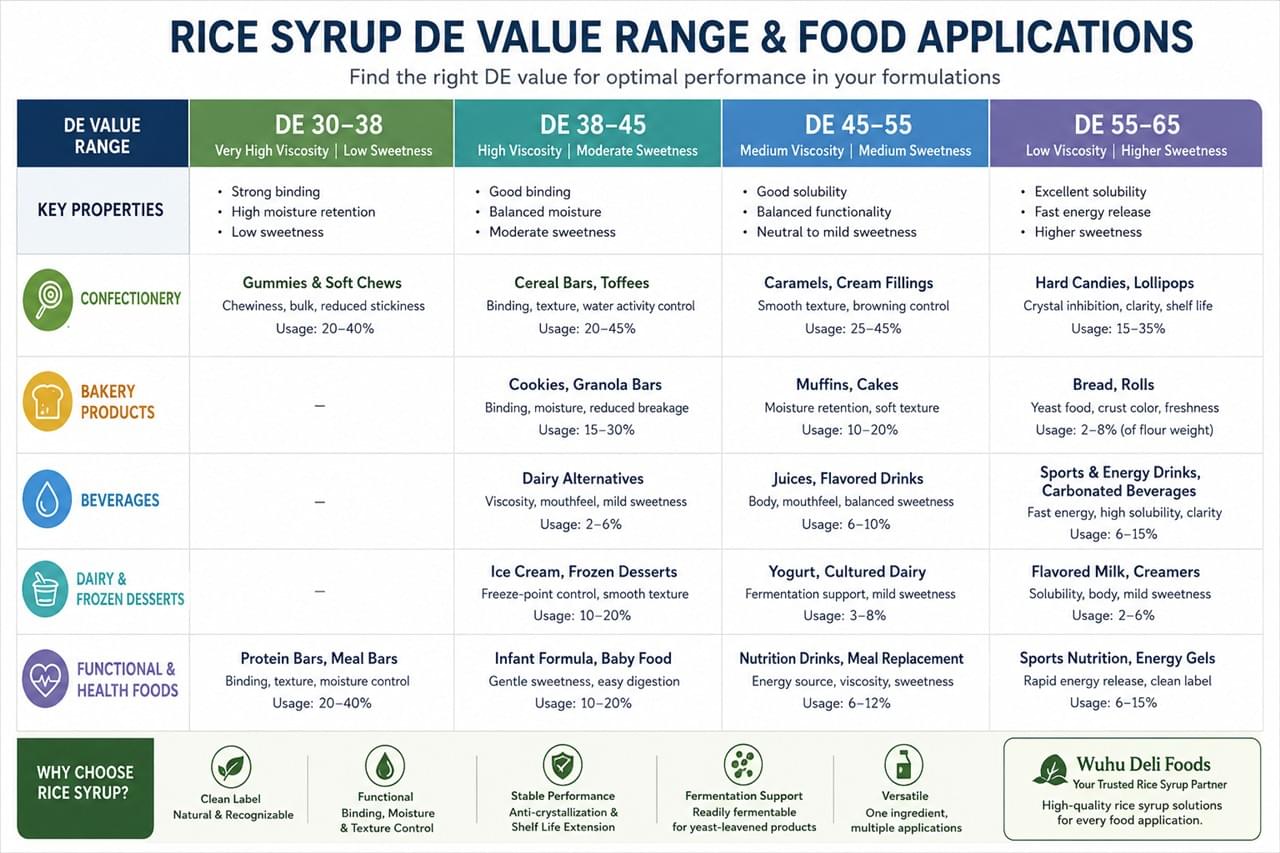
🏭 Rice Syrup Applications by DE Value
Different rice syrup applications require different DE (Dextrose Equivalent) values. The DE level directly affects sweetness, viscosity, and processing behavior.
| DE Value | Viscosity | Sweetness | Main Applications |
| DE 30–38 | Very High | Low | Gummies, chews, binding systems |
| DE 38–45 | High | Moderate | Bakery, cereals, snack bars |
| DE 45–55 | Medium | Medium | Dairy, beverages, sauces |
| DE 55–65 | Lower | Higher | Fermented drinks, coatings |
Understanding DE selection helps manufacturers optimize texture and shelf stability while controlling production consistency.
🍬 Rice Syrup Applications in Confectionery
🍭 Hard Candies and Lollipops
Rice syrup applications in hard candy production mainly focus on crystallization control and shelf-life improvement.
- Recommended DE: 42–50
- Usage Level: 15–35%
- Main Benefit: Clear appearance and smoother finish
Its stable structure helps candies maintain transparency while reducing unwanted graininess.
🍡 Gummies and Soft Chews
Lower DE rice syrup provides excellent chewiness while reducing excessive stickiness compared with conventional corn syrup.
- Recommended DE: 30–40
- Usage Level: 20–40%
- Main Benefit: Improved mouthfeel and texture balance
This makes rice syrup in food manufacturing especially attractive for functional gummies and nutraceutical products.
🥣 Cereal Bars and Energy Bars
Rice syrup acts as both a sweetener and structural binder.
- Recommended DE: 38–45
- Usage Level: 20–45%
- Main Benefit: Firm but chewy texture
Manufacturers also benefit from cleaner ingredient declarations for better retail positioning.
🍮 Caramels and Toffees
Rice syrup helps control browning reactions while maintaining smooth texture development.
- Recommended DE: 42–48
- Usage Level: 30–50%
- Main Benefit: Reduced graining and consistent caramel color
For more formulation support, manufacturers can explore ingredient resources from IFT – Institute of Food Technologists.
🥖 Rice Syrup Applications in Bakery Products
🍞 Bread and Rolls
Rice syrup applications in bread production improve fermentation activity and crust development.
- Recommended DE: 40–50
- Usage Level: 2–8% of flour weight
- Main Benefit: Better oven spring and longer freshness
The syrup also enhances golden crust coloration naturally.
🍪 Cookies and Biscuits
Rice syrup contributes sweetness, moisture control, and browning support.
- Recommended DE: 42–50
- Usage Level: 10–25%
- Main Benefit: Reduced breakage and improved crunch
As a clean label sweetener for bakery products, rice syrup supports premium positioning without overly sweet flavor profiles.
🥣 Granola and Breakfast Cereals
Manufacturers rely on rice syrup to bind cereal clusters effectively.
- Recommended DE: 40–48
- Usage Level: 15–30%
- Main Benefit: Stable clusters and glossy appearance
🧁 Muffins and Cakes
Rice syrup improves softness and reduces staling during storage.
- Recommended DE: 42–52
- Usage Level: 10–20%
- Main Benefit: Moist crumb texture and freshness extension
You can also review FDA Food Labeling Guidance for ingredient declaration compliance in export markets.
🥤 Rice Syrup Applications in Beverage Formulation
⚡ Sports and Energy Drinks
Organic rice syrup for beverages has become increasingly popular in sports nutrition products.
- Recommended DE: 55–65
- Usage Level: 6–15%
- Main Benefit: Fast-release carbohydrate energy
Its neutral taste works well with fruit and botanical flavor systems.
🥛 Plant-Based Milks
Rice syrup enhances mouthfeel and sweetness in dairy alternatives.
- Recommended DE: 45–55
- Usage Level: 2–6%
- Main Benefit: Creamier body and balanced sweetness
🥤 Carbonated Beverages
High-DE rice syrup dissolves rapidly and maintains excellent clarity.
- Recommended DE: 55–65
- Usage Level: 8–12% solids
- Main Benefit: No off-flavors or visible crystallization
For beverage manufacturers, the Beverage Applications Guide offers additional technical support.
🍦 Rice Syrup Applications in Dairy and Frozen Desserts
🍨 Ice Cream and Frozen Desserts
Rice syrup reduces ice crystal growth and improves scoopability.
- Recommended DE: 42–50
- Usage Level: 10–20%
- Main Benefit: Smoother texture and cleaner flavor release
🥛 Yogurt and Cultured Dairy
Its fermentable sugars help stabilize fermentation activity.
- Recommended DE: 45–55
- Usage Level: 3–8%
- Main Benefit: Balanced tartness and consistent texture
💪 Rice Syrup Applications in Functional Foods
👶 Infant Formula and Baby Food
Premium clarified rice syrup is valued for its mild sweetness and digestibility.
- Recommended DE: 40–48
- Required Grade: Organic and low protein
- Main Benefit: Gentle flavor and allergen-friendly positioning
🏋️ Sports Nutrition and Protein Bars
Rice syrup helps protein bars remain soft while improving ingredient cohesion.
- Recommended DE: 38–46
- Usage Level: 20–40%
- Main Benefit: Better texture stability and softer bite
These rice syrup applications are particularly important in high-protein formulations where texture deterioration is common.
🌱 Organic Rice Syrup Solutions for Premium Brands
Wuhu Deli Foods Organic Clarified Rice Syrup is developed for premium clean-label applications.
Key Specifications
- USDA Organic compatible
- Non-GMO formulation
- Typical DE: 42 ± 1
- Color: ≤ 20 ICUMSA units
Common Uses
✅ Organic cereals
✅ Premium baby foods
✅ Health and protein bars
✅ Functional beverages
This makes it ideal for brands focused on transparency and natural positioning.
📋 Quick Reference for Rice Syrup Applications
| Application | Recommended DE | Primary Function |
| Granola Bars | 40–45 | Binding strength |
| Hard Candy | 42–50 | Crystal prevention |
| Gummies | 30–38 | Texture control |
| Bread | 40–50 | Fermentation support |
| Beverages | 55–65 | Solubility and clarity |
| Ice Cream | 42–50 | Freeze-point control |
| Baby Food | 40–48 | Mild sweetness |
| Sports Drinks | 55–65 | Rapid energy delivery |
🔧 Formulation Tips for Manufacturers
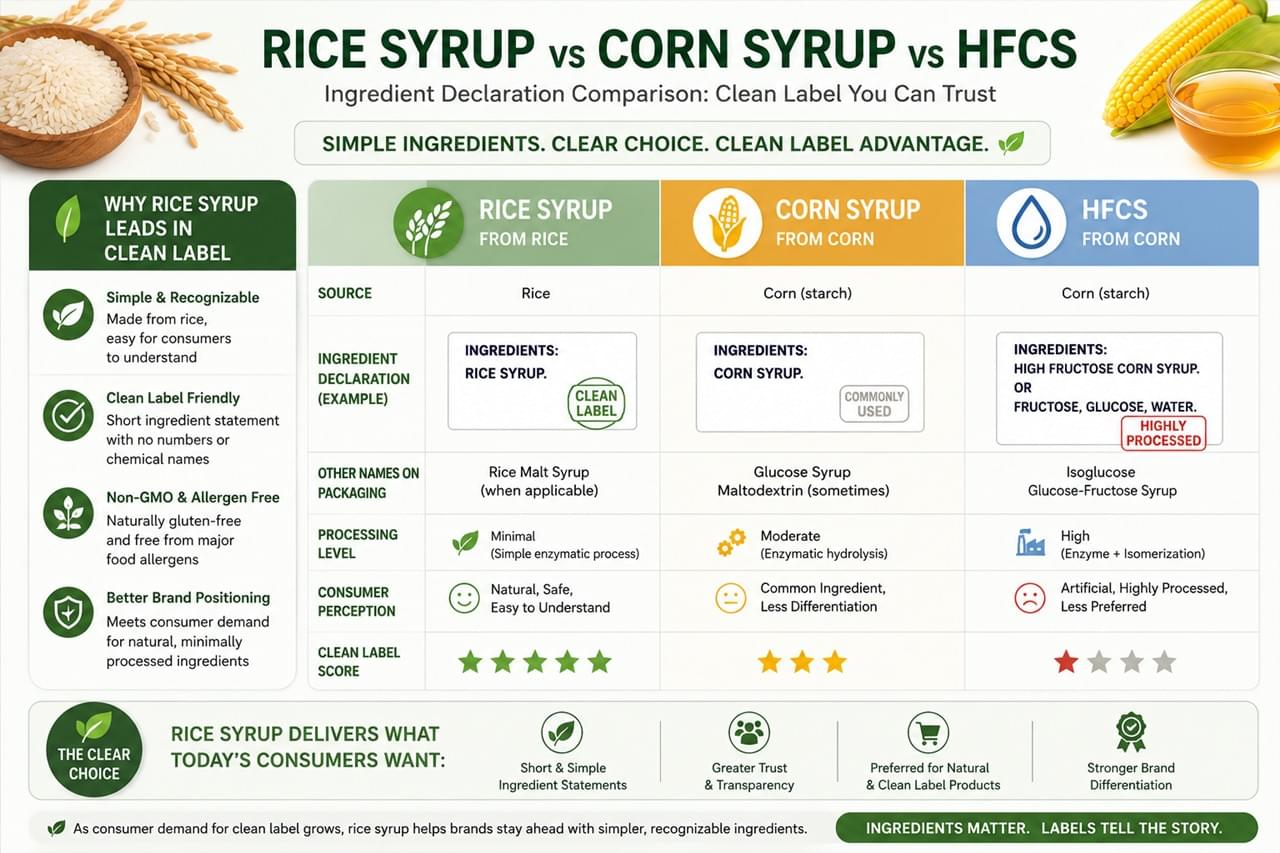
⚙️ Replacing Corn Syrup
Rice syrup can typically replace corn syrup at a 1:1 ratio by weight in most applications.
🌡️ Water Activity Management
Monitor Brix and water activity carefully after substitution to maintain product stability.
🔥 Browning Control
Higher DE syrups may increase Maillard browning during thermal processing.
🧪 Processing Adjustments
Lower DE syrups are more viscous and may require higher processing temperatures.
🏷️ Labeling Guidance
Rice syrup can usually be declared as:
- “Rice Syrup”
- “Rice Malt Syrup”
This supports cleaner and more recognizable packaging claims.
Rice syrup applications continue to expand as food manufacturers seek versatile sweetening systems that align with clean-label trends and modern processing requirements. Whether used in confectionery, bakery, beverages, or functional nutrition products, rice syrup delivers reliable functionality alongside consumer-friendly appeal.
Manufacturers looking for customized syrup solutions can explore the full product portfolio at:

 English
 Deutsch
 Español
 العربية
 Français
 Русский
 Bahasa Indonesia
 한국어
한국어 日本語
日本語 Polski
 Português
 Bahasa Melayu