
Why This Comparison Matters
Choosing a sweetener is one of the most consequential decisions a food manufacturer makes. It shapes taste, texture, shelf life, nutrition, cost — and increasingly, the label itself. As consumer expectations shift and regulators sharpen their focus, brands are re-examining every ingredient on the spec sheet. The rice syrup vs alternative sweeteners debate sits at the center of that re-examination.
If you’re weighing a natural sweeteners comparison for your next reformulation, this guide covers the seven alternatives rice syrup is most often measured against — HFCS, corn syrup, maltose syrup, invert sugar, cane sugar, honey, and agave — with technical, nutritional, and commercial insights to support procurement decisions.
⚖️ The Sweetener Landscape: Overview
Rice Syrup vs Alternative Sweeteners: The Landscape at a Glance
Before diving into individual rice syrup vs alternative sweeteners matchups, it helps to see the whole field:
| Sweetener | Source | Primary Sugar | Typical DE | Relative Sweetness | Key Markets |
|---|---|---|---|---|---|
| Rice Syrup | Rice starch | Glucose + oligosaccharides | 30–65 | 40–55% | Global |
| HFCS-55 | Corn starch | Fructose (55%) + Glucose | ~70 | ~100% | US, global |
| Regular Corn Syrup | Corn starch | Glucose + maltose | 42–65 | 30–60% | US, Americas |
| Maltose Syrup | Starch (corn/wheat) | Maltose | 40–65 | 30–50% | Asia |
| Glucose Syrup (EU) | Various starch | Glucose + dextrins | 38–65 | 30–65% | EU, global |
| Invert Sugar | Sucrose | Glucose + fructose | ~120 | ~120% | Global |
| Cane/Beet Sugar | Sugarcane/beet | Sucrose | N/A | 100% | Global |
| Honey | Floral nectar | Fructose + glucose | N/A | ~120% | Premium |
| Agave Syrup | Agave plant | Fructose (~70–90%) | N/A | 130–140% | Health/natural |
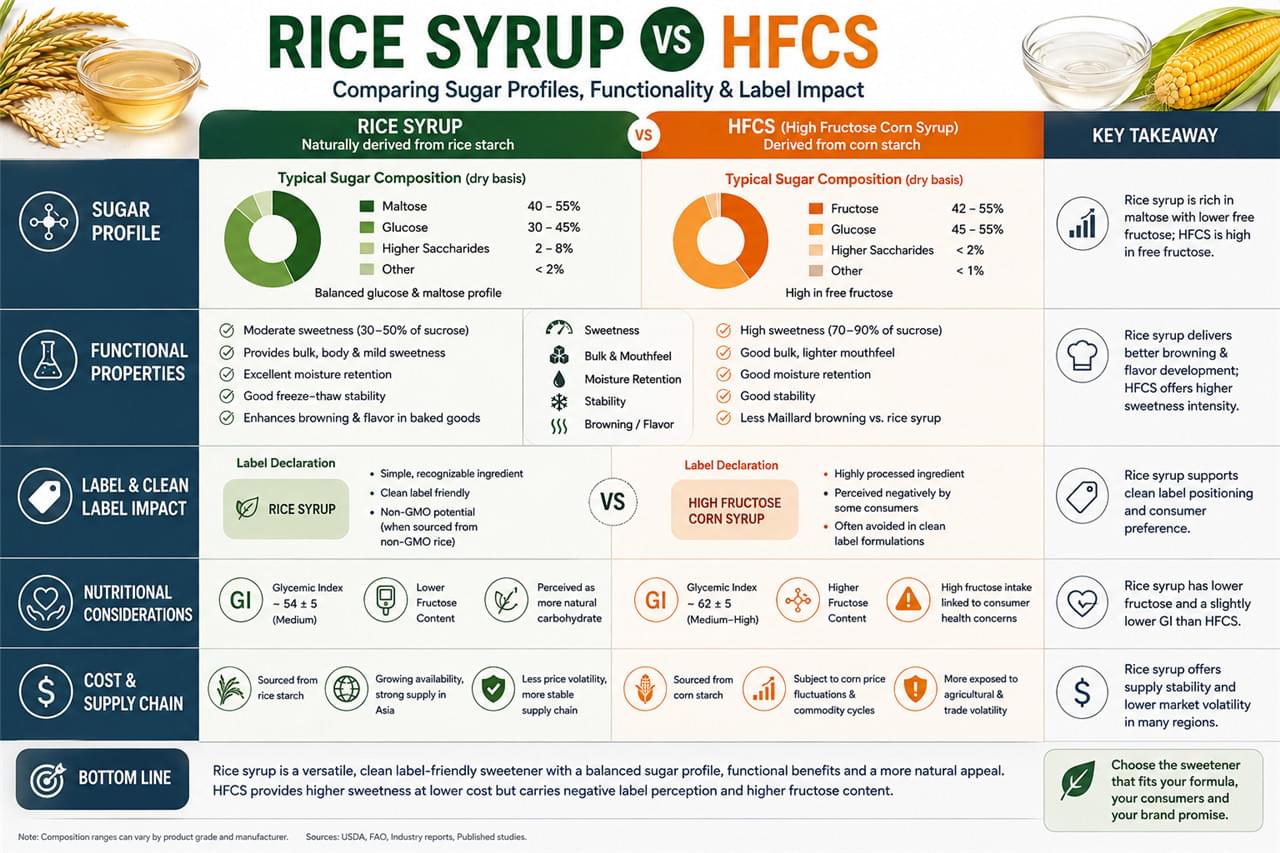
🌽 Rice Syrup vs. High-Fructose Corn Syrup (HFCS)
The Rice Syrup vs HFCS Matchup That Matters Most
The rice syrup vs alternative sweeteners story starts with HFCS, the incumbent that has faced sustained consumer and regulatory pressure since the early 2000s. Swapping HFCS for rice syrup is now one of the most common reformulation projects in North American — and increasingly European — food manufacturing.
Technical Comparison:
| Parameter | Rice Syrup (DE 42) | HFCS-42 | HFCS-55 |
|---|---|---|---|
| Fructose content | <1% | 42% | 55% |
| Glucose content | 18–22% | 53% | 40% |
| Oligosaccharides | 55–65% | 5% | 5% |
| Relative sweetness | 45% | 95% | 100% |
| Viscosity (25°C) | 3,000–5,000 cP | 600–800 cP | 500–700 cP |
| Fermentability | Moderate | High | High |
| Water activity | 0.83 | 0.78 | 0.76 |
Where they differ functionally:
- Rice syrup is less sweet — formulators typically add 5–15% more by weight to match sweetness
- Viscosity runs higher, which may mean minor processing tweaks
- No fructose-driven browning acceleration, unlike HFCS
Consumer sentiment: Repeated consumer studies show “Rice Syrup” or “Brown Rice Syrup” on an ingredient label generates significantly more positive reactions than “High Fructose Corn Syrup.”
Commercial recommendation: For most applications currently running on HFCS-42, rice syrup (DE 42–48) works as a direct functional substitute with an immediate label upgrade. Plan on roughly +10–15% usage to compensate for the lower sweetness.
🌽 Rice Syrup vs. Standard Corn Syrup
Rice Syrup vs Corn Syrup: The Closest Cousins
Within the rice syrup vs alternative sweeteners lineup, standard corn syrup is the closest functional relative. Both are glucose-based, share similar DE ranges, and behave similarly across most applications.
| Parameter | Rice Syrup | Corn Syrup (Standard) |
|---|---|---|
| Source grain | Rice | Corn (maize) |
| GMO risk | Very low (no GM rice) | High (most corn is GM) |
| Organic availability | Yes | Limited |
| Flavor profile | Very clean, mild | Slightly more intense |
| Color | Lighter (≤50 ICUMSA) | ≤50–100 ICUMSA |
| Non-GMO certification | Readily available | More complex |
Substitution: 1:1 by weight in virtually every application. Wuhu Deli Foods can also match any corn syrup DE specification you’re currently using.
🍬 Rice Syrup vs. Maltose Syrup
Maltose syrup is a staple across Asian confectionery, bakery, and traditional foods. The technical gap between the two is narrow but worth understanding:
| Parameter | Rice Syrup (DE 42) | High-Maltose Syrup | Standard Maltose Syrup |
|---|---|---|---|
| Maltose content | 14–18% | 50–75% | 35–50% |
| Glucose content | 18–22% | 3–8% | 12–18% |
| Sweetness | 45–50% | 35% | 40% |
| Fermentability | Moderate | Low | Low-Moderate |
| Crystallization resistance | Good | Excellent | Good |
What this means in practice:
- For ultra-low fermentability needs (think low-sugar confections), high-maltose syrup still has the edge
- Rice syrup wins on label positioning versus wheat-derived maltose syrup — a real allergen consideration
- For traditional Asian confections built around a maltose flavor profile, dedicated maltose syrup remains the right call
🥄 Rice Syrup vs. Invert Sugar
Invert sugar — an equimolar glucose-fructose blend from sucrose hydrolysis — is a workhorse in baked goods and confectionery.
| Parameter | Rice Syrup (DE 52) | Invert Sugar (Total inversion) |
|---|---|---|
| Fructose content | <1% | ~50% |
| Sweetness | 55% | 120% |
| Hygroscopicity | Moderate | High |
| Anti-crystallization | Good | Excellent |
| Fermentability | High | Very high |
| Caramelization | Moderate | Enhanced |
When rice syrup steps in for invert sugar:
- Baked goods: cut total sweetener by 15–20% and watch browning closely
- Beverages: rebalance the formula — invert sugar’s sweeter profile needs compensating
- Label: both are clean-label, but rice syrup is increasingly the preferred call
🍬 Rice Syrup vs. Cane Sugar (Sucrose)
Cane sugar is where the rice syrup vs alternative sweeteners decision gets interesting, because the two ingredients behave very differently in a formula. Sucrose replacement is common in clean-label, reduced-sugar, and texture-driven reformulations.
| Parameter | Rice Syrup (DE 42) | Sucrose |
|---|---|---|
| Form | Liquid | Crystalline |
| Solubility | Already in solution | Requires dissolution |
| Sweetness | 45% | 100% |
| Anti-crystallization | Excellent | N/A (crystallizes) |
| Hygroscopicity | Moderate | Low (dry) |
| Processing | Easier in liquid systems | Requires dissolution step |
| Organic availability | Yes | Yes |
The substitution math:
- Replace 100g sucrose with 80g rice syrup (80% solids basis) plus a small water adjustment
- Or use high-solids rice syrup (85% solids) for a near 1:1 swap
🍯 Rice Syrup vs. Honey
No rice syrup vs alternative sweeteners comparison is complete without honey — its closest rival in clean-label, organic, and health-forward products.
| Parameter | Rice Syrup | Honey |
|---|---|---|
| Sugar profile | Glucose + oligosaccharides | Fructose + glucose |
| Sweetness | 45–55% | 100–120% |
| Flavor | Neutral | Distinct floral notes |
| Cost stability | High | Variable (weather-dependent) |
| Vegan | Yes | No (contested) |
| Infant suitability | Yes (no Clostridium risk) | No (<12 months, botulism risk) |
| Supply consistency | Excellent | Variable |
Where rice syrup pulls ahead:
- Infant-safe: honey is off-limits for children under 12 months due to Clostridium botulinum risk; rice syrup carries no such concern
- Neutral flavor lets other ingredients shine instead of competing with them
- Far more consistent supply and pricing
- Vegan-certified options available
🌵 Rice Syrup vs. Agave Syrup
Agave grew fast as a “natural” sweetener, then hit a wall of scrutiny over its 70–90% fructose content.
| Parameter | Rice Syrup | Agave Syrup |
|---|---|---|
| Fructose | <1% | 70–90% |
| Glycemic index | ~55–65 | ~15–25 (misleading — high fructose) |
| Sweetness | 45–55% | 130–150% |
| Consumer perception | Positive | Mixed (fructose concerns) |
| Cost | Moderate | Higher |
Recommendation: For health-food brands rethinking agave, rice syrup delivers genuinely low fructose, clean-label positioning, and moderate sweetness — a compelling transition.
🧪 Rice Syrup vs. Artificial Sweeteners
Rice syrup isn’t a direct stand-in for artificial sweeteners in calorie-reduction work, but rice syrup vs alternative sweeteners doesn’t have to be an either/or choice. The two combine powerfully:
The synergy play:
- Rice syrup at 10–20% standard level + stevia or monk fruit at sub-threshold levels
- Rice syrup supplies body, texture, and bulk; the high-intensity sweetener supplies the missing sweetness
- The label reads “Rice Syrup, Stevia Extract” — fully clean, no artificial sweeteners, aligned with FDA guidance on high-intensity sweeteners
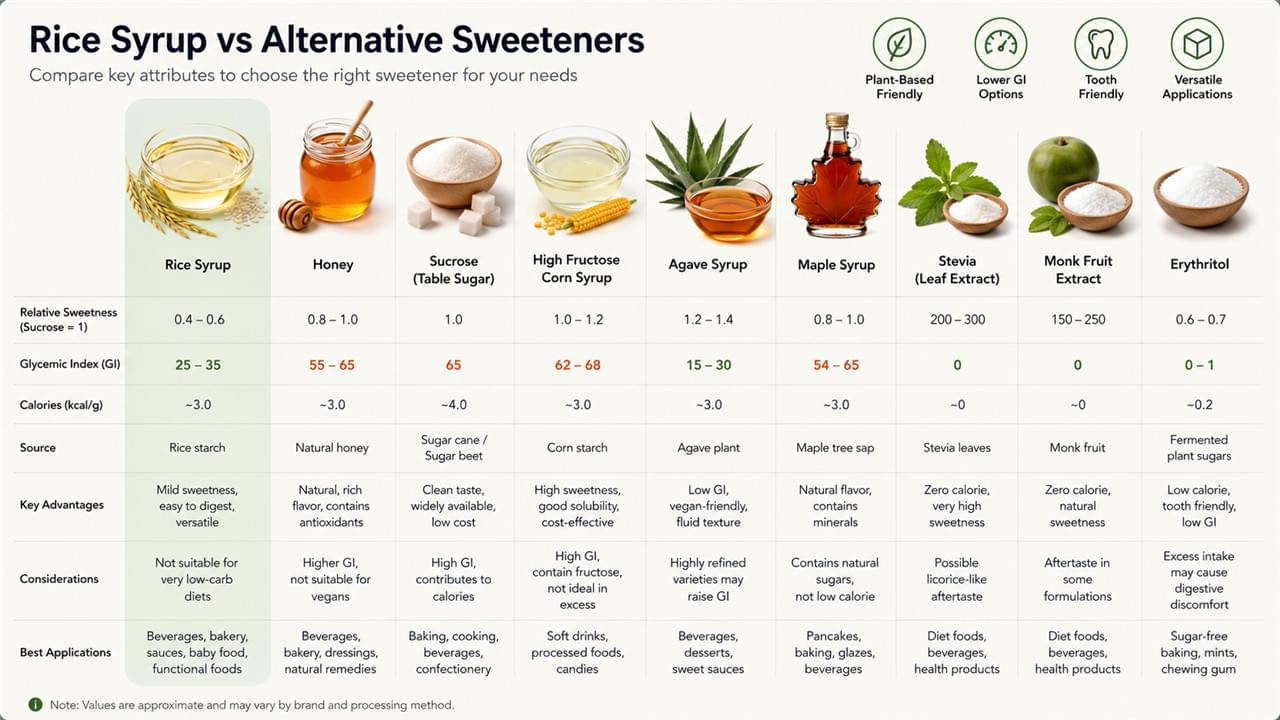
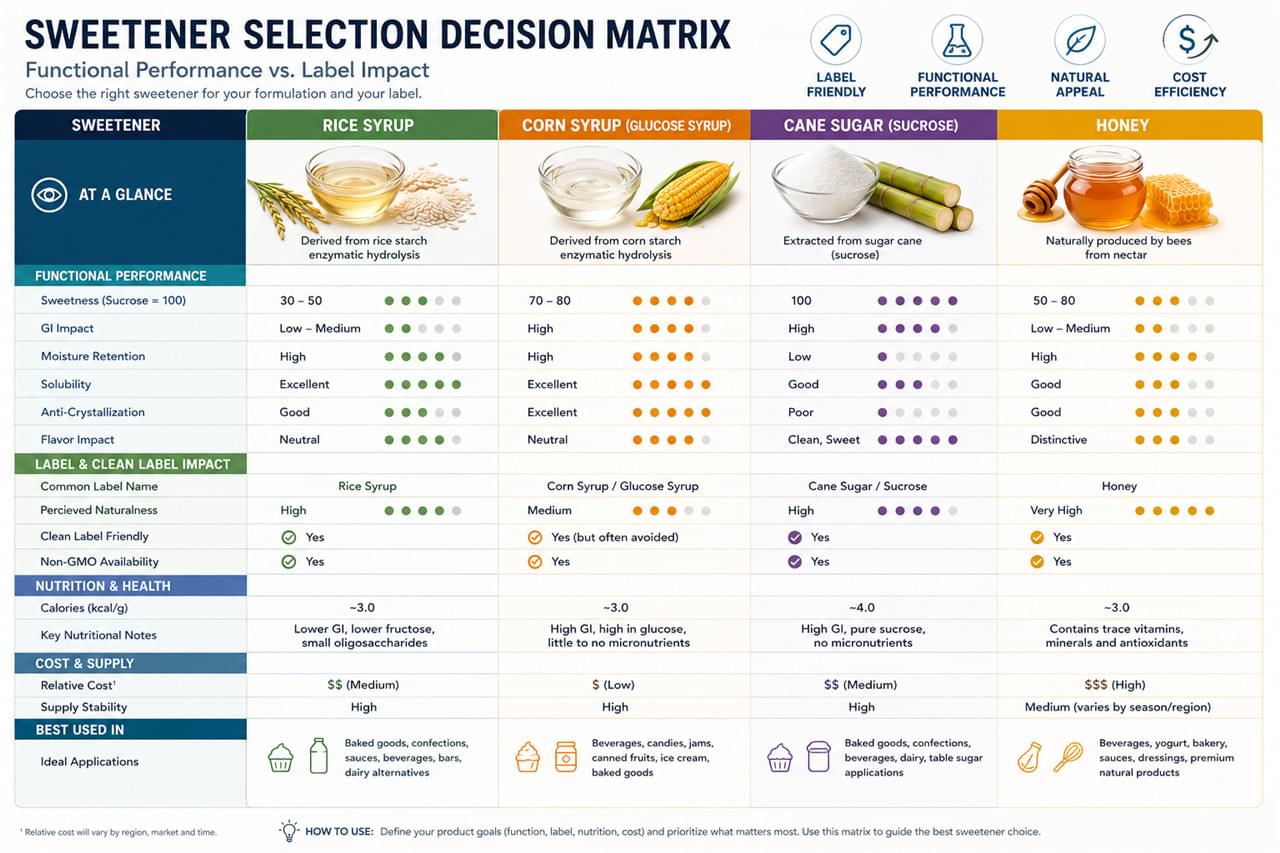
📊 Sweetener Selection Framework
Rice Syrup vs Alternative Sweeteners: The Decision Matrix
The rice syrup vs alternative sweeteners decision comes down to five criteria — functionality, label, cost stability, organic, and non-GMO. Here’s how the leading candidates stack up:
| Criterion | Rice Syrup | HFCS | Corn Syrup | Cane Sugar | Honey |
|---|---|---|---|---|---|
| Functional | ★★★★ | ★★★★ | ★★★★ | ★★★ | ★★★ |
| Label | ★★★★★ | ★★ | ★★★ | ★★★★ | ★★★★★ |
| Cost stability | ★★★★ | ★★★ | ★★★★ | ★★★ | ★★ |
| Organic | ★★★★★ | ★★ | ★★ | ★★★★ | ★★★★ |
| Non-GMO | ★★★★★ | ★★ | ★★★ | ★★★★ | ★★★★★ |
| Infant safe | ★★★★★ | ★★★★ | ★★★★ | ★★★★ | ★ |
🤝 Wuhu Deli Foods: Your Switching Partner
Rice Syrup vs Alternative Sweeteners: Switching Made Simple
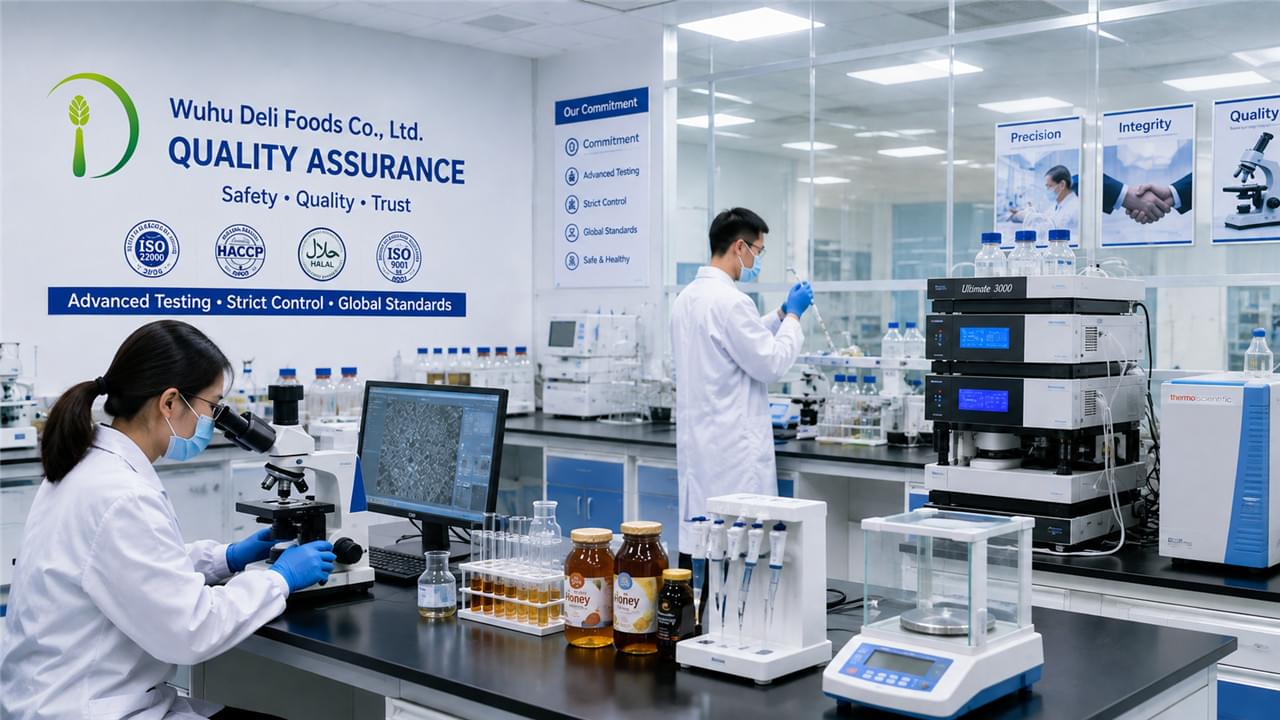
Switching sweeteners means formulation work, validation testing, and regulatory documentation. Wuhu Deli Foods takes on that lift:
- Free reformulation consultation — our food technologists guide the transition
- Sample program — custom DE rice syrups for trial formulations
- Technical documentation — complete COA, specifications, regulatory docs
- Scale-up support — from bench to production, with continued technical assistance
Contact Wuhu Deli Foods to kick off your sweetener transition project.
✅ Conclusion
Rice Syrup vs Alternative Sweeteners: The Bottom Line
The rice syrup vs alternative sweeteners verdict, in short: rice syrup rarely forces a compromise. It delivers comparable or better functional performance while offering standout label credentials, organic and Non-GMO availability, and infant-safe formulation compatibility. Against HFCS specifically, it wins on nearly every consumer-facing metric while keeping technical parity.
Key Takeaways:
- Rice syrup vs. HFCS: near-equivalent function, dramatically better label perception
- Rice syrup vs. corn syrup: 1:1 functional replacement with superior GMO and organic positioning
- Rice syrup vs. honey: neutral flavor, vegan, infant-safe, and more price-stable
- Rice syrup vs. agave: genuinely low fructose and stronger consumer confidence in 2026
- Rice syrup + high-intensity sweetener: a powerful calorie-reduction strategy that keeps the label clean
 English
 Deutsch
 Español
 العربية
 Français
 Русский
 Bahasa Indonesia
 한국어
한국어 日本語
日本語 Polski
 Português
 Bahasa Melayu