
The rice syrup vs artificial sweeteners comparison isn’t straightforward, because the two aren’t playing the same game. Artificial sweeteners deliver intense sweetness at near-zero calories. Rice syrup brings bulk, texture, and moderate sweetness with a natural ingredient profile. That distinction shapes everything that follows in this guide.
This clean label sweetener comparison explores when each type fits, and — more importantly — how rice syrup and natural high-intensity sweeteners can work together to deliver the best of both worlds.
⚖️ The Sweetener Landscape in 2026
Rice Syrup vs Artificial Sweeteners: Where the Market Stands
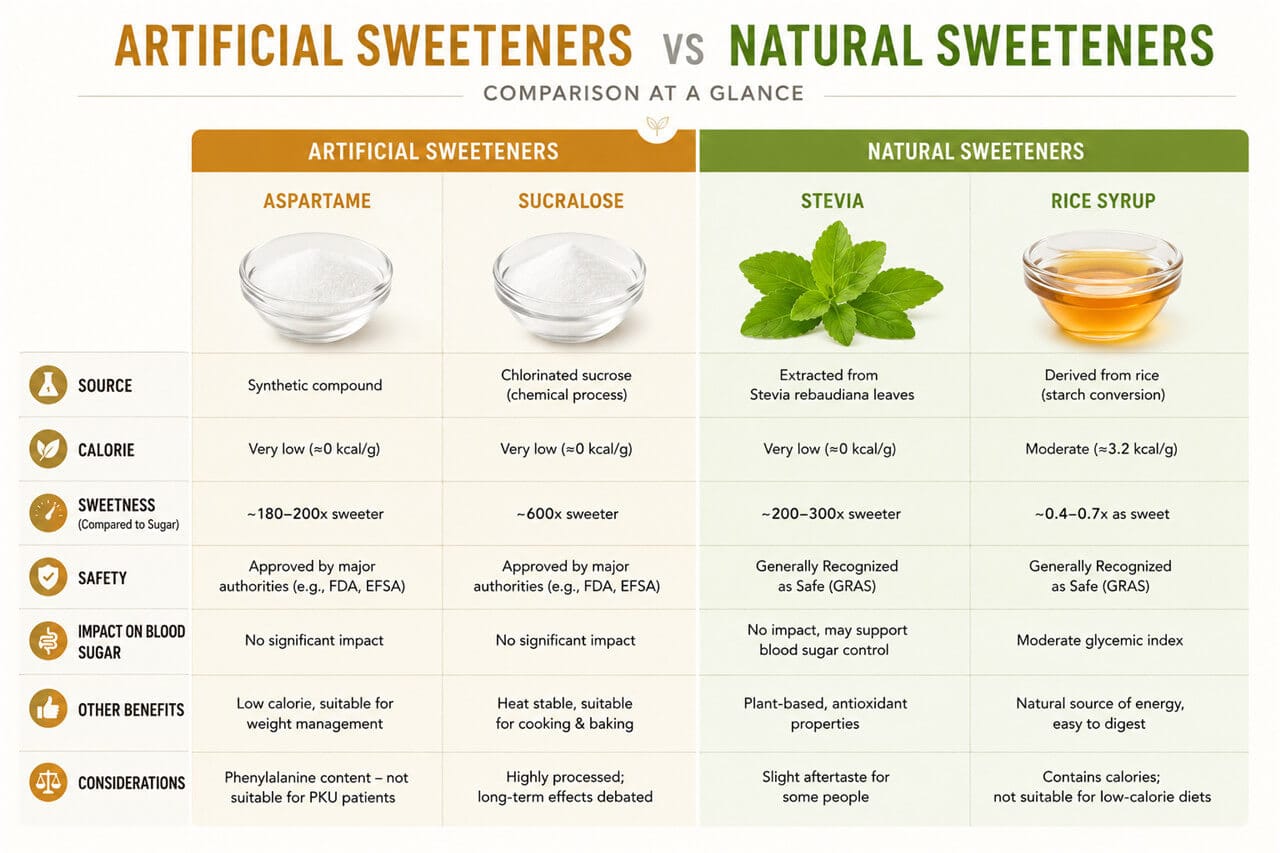
Before sizing up rice syrup vs artificial sweeteners, it helps to see the full roster:
| Sweetener | Type | Sweetness (×sucrose) | Caloric | Key Concerns |
|---|---|---|---|---|
| Aspartame | Artificial | 180–200× | Near-zero | Phenylalanine; IARC Group 2B (2023) |
| Acesulfame-K | Artificial | 150–200× | Zero | Regulatory debate; off-taste |
| Sucralose | Artificial | 600× | Near-zero | High-temperature baking concerns |
| Saccharin | Artificial | 200–700× | Zero | Oldest; persistent regulatory history |
| Stevia (reb-A) | Natural extract | 200–350× | Zero | Licorice aftertaste at high levels |
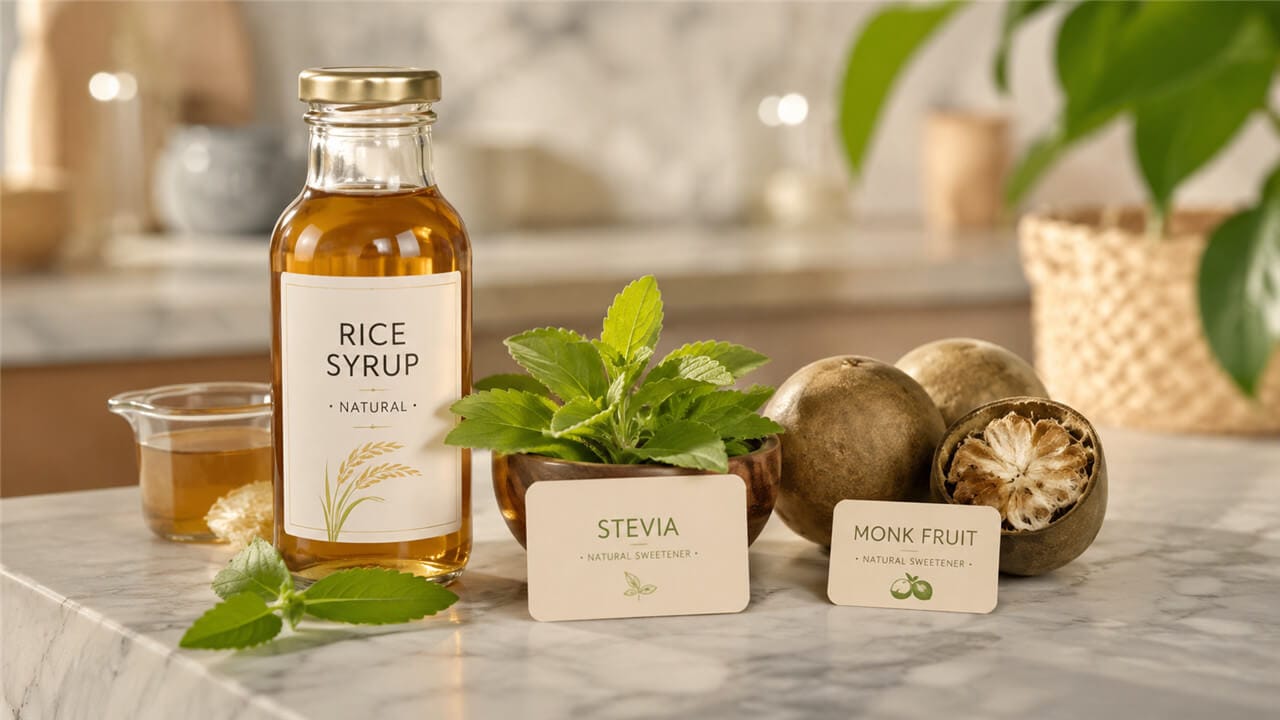
| Monk Fruit (luo han guo) | Natural extract | 150–250× | Zero | Cost; supply limitations |
| Allulose | Rare sugar | 0.7× | 0.4 kcal/g | GRAS, natural positioning |
Consumer sentiment toward artificial sweeteners in premium segments has deteriorated sharply. A 2024 global consumer study found:
- 67% of health-conscious consumers actively avoid “artificial” sweeteners
- Aspartame’s 2023 IARC classification (see the WHO/JECFA announcement) pushed avoidance to 78% in EU markets
- “Natural” sweetener labels generate 2.3× higher purchase intent in premium food retail
🍚 Rice Syrup’s Functional Role — What Artificial Sweeteners Cannot Replace
Rice Syrup vs Artificial Sweeteners: Why They’re Not Substitutes
Artificial sweeteners provide sweetness and little else. Rice syrup delivers:
- Bulk and volume — critical in bars, gummies, and baked goods
- Texture and mouthfeel — viscosity and body that water can’t replicate
- Binding — holds ingredients together in bar and cluster formats
- Moisture management — controls water activity and extends freshness
- Browning — Maillard reaction in baked goods and caramels
- Fermentation support — provides yeast and bacterial substrate
No artificial sweetener can cover any of these. That’s the rice syrup vs artificial sweeteners distinction in a nutshell: they’re not true substitutes — they’re complementary.
🧪 The Power Blend: Rice Syrup + Natural High-Intensity Sweetener
Rice Syrup vs Artificial Sweeteners: The Smart Compromise
The most effective clean-label, reduced-calorie strategy combines both worlds:
Rice Syrup (15–30% usage level): provides bulk, texture, binding, moisture management
Stevia or Monk Fruit (sub-threshold level): provides the missing sweetness increment
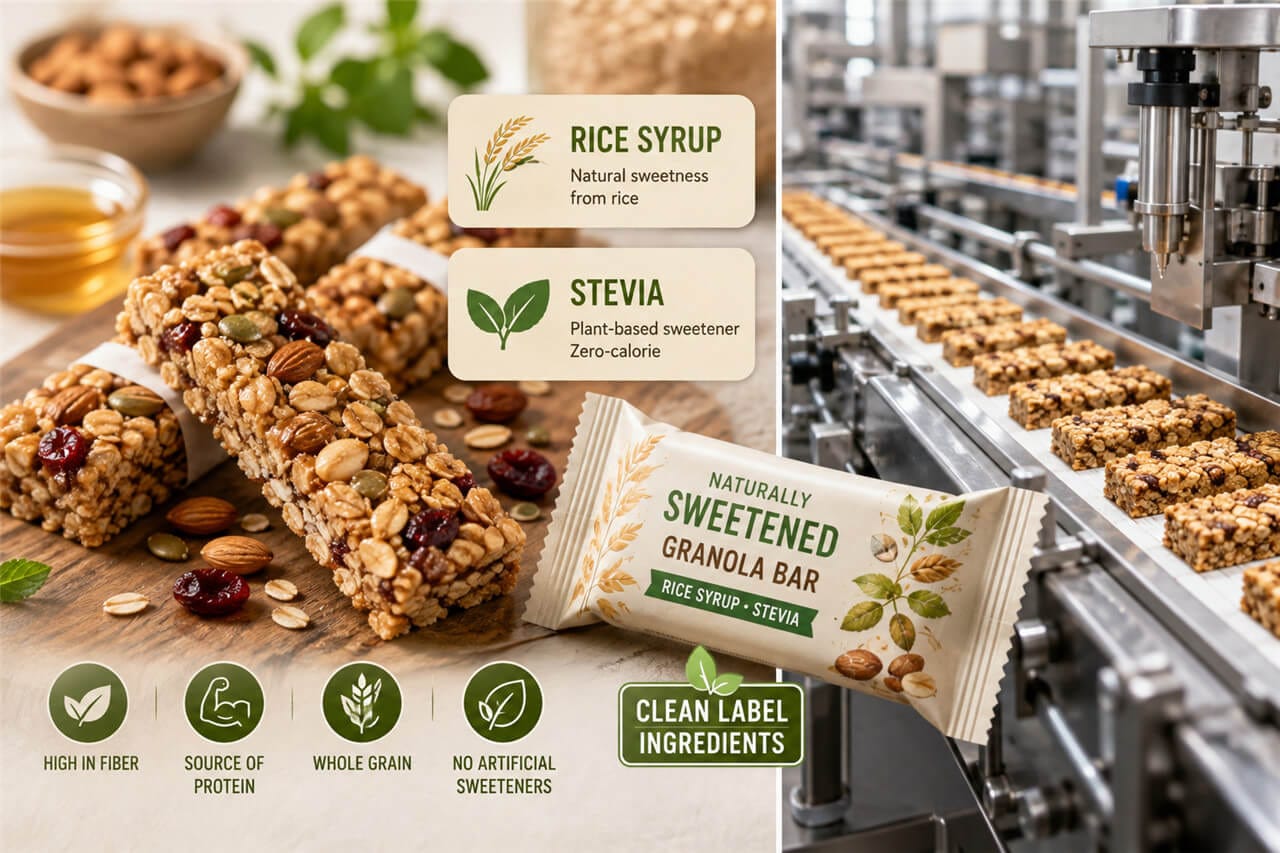
Example: Reduced-Calorie Granola Bar
Original formula (high-calorie):
- Rice syrup: 30% (96 kcal per 100g contribution)
- Sugar: 10%
Reformulated (reduced-calorie):
- Rice syrup: 22% (70 kcal per 100g contribution) — a 27% calorie reduction
- Stevia: 0.015% (equivalent sweetness of an 8% reduction in rice syrup)
- No artificial sweeteners
Label result: “Ingredients: Oats, Rice Syrup, Stevia Extract” — 100% clean label, reduced calorie, zero artificial sweeteners.
Stevia synergy with rice syrup: the rice syrup stevia blend works because:
- Rice syrup’s moderate sweetness masks stevia’s bitter/licorice aftertaste at sub-threshold levels
- Stevia’s intensity compensates for rice syrup’s natural sweetness limitation
- The combined declaration (“Rice Syrup, Stevia Extract”) is among the most consumer-positive sweetener labels on the market
Optimal ratio: for every 10% reduction in rice syrup, add roughly 0.01–0.02% stevia, depending on rebaudioside A purity and application.
🩺 When Artificial Sweeteners Remain Appropriate
Rice Syrup vs Artificial Sweeteners: When Artificial Still Makes Sense
For the majority of formulations, natural sweetener alternatives are the better fit. But a handful of applications genuinely need artificial sweeteners:
- Medical/clinical nutrition — diabetic products requiring strict glycemic control
- Pharmaceutical applications — drug delivery systems requiring zero carbohydrates
- Extreme calorie reduction — products targeting <50% of normal calorie levels
- Sugar-free hard candy — zero-calorie hard candy needs non-fermentable, non-browning sweeteners
In these cases, rice syrup typically isn’t the primary sweetener, but it can still lend bulk and texture support at low inclusion levels.
📋 Regulatory Comparison
For procurement teams checking market eligibility, here’s the regulatory picture at a glance (consistent with FDA guidance on high-intensity sweeteners):
| Sweetener | EU Status | US Status | China Status | Consumer Acceptance |
|---|---|---|---|---|
| Rice Syrup | Permitted food ingredient | GRAS | GB 2760 compliant | Very high |
| Stevia (reb-A) | Permitted (E960) | GRAS | Permitted | High |
| Aspartame | Permitted (E951) | GRAS | Permitted | Declining |
| Sucralose | Permitted (E955) | GRAS | Permitted | Moderate |
| Monk Fruit | Permitted | GRAS | Permitted | High |
🏷️ Consumer Communication Strategy
When transitioning from artificial sweeteners to a rice syrup + natural sweetener approach:
Recommended label language:
- “Sweetened with rice syrup and stevia”
- “Naturally sweetened”
- “No artificial sweeteners”
Marketing messages:
- Highlight the removal of artificial ingredients
- Communicate the natural origin of rice syrup
- Educate consumers that stevia is plant-based
Certification support:
- Non-GMO Project: both rice syrup and stevia typically qualify
- Organic: organic rice syrup + organic stevia → fully organic declaration
🤝 Wuhu Deli Foods: Supporting Your Natural Sweetener Strategy
Wuhu Deli Foods provides:
- Technical consultation on rice syrup + natural sweetener combinations
- Application testing for specific products
- Regulatory documentation for market approval
- Graduated sample program for bench trial optimization
Contact Wuhu Deli Foods → to design your natural sweetener formulation strategy.
✅ Conclusion
Rice Syrup vs Artificial Sweeteners: The Bottom Line
The rice syrup vs artificial sweeteners verdict is simple: they’re not in direct competition, because they play different formulation roles. For most natural and premium food brands, the winning strategy is combining rice syrup’s bulk and texture with a natural high-intensity sweetener like stevia or monk fruit — calorie reduction and clean-label positioning, without any artificial sweeteners.
Key Takeaways:
- Artificial sweeteners provide sweetness only; rice syrup provides bulk, texture, binding, and functional properties
- The rice syrup + stevia combination is the most effective natural, reduced-calorie strategy
- Consumer rejection of artificial sweeteners is strong and growing — especially in premium segments
- Rice syrup masks stevia’s aftertaste, enabling lower stevia usage
- The clean-label pairing achieves calorie reduction without compromising texture or consumer acceptance
 English
 Deutsch
 Español
 العربية
 Français
 Русский
 Bahasa Indonesia
 한국어
한국어 日本語
日本語 Polski
 Português
 Bahasa Melayu