
Cane sugar (sucrose) is the sweetener everyone knows — cheap, familiar, and reliably sweet, which is why it stays the benchmark for every alternative. Yet the rice syrup vs cane sugar question keeps showing up in formulation meetings for a good reason: more brands are rediscovering what liquid form, crystal control, and a nearly fructose-free profile can do for their products. When the liquid sweetener comparison comes up in your sourcing meetings, this guide gives you the technical scorecard, application by application, so you can see exactly when to switch, when to blend, and when to leave the sugar bag alone.
🌾 Fundamental Differences
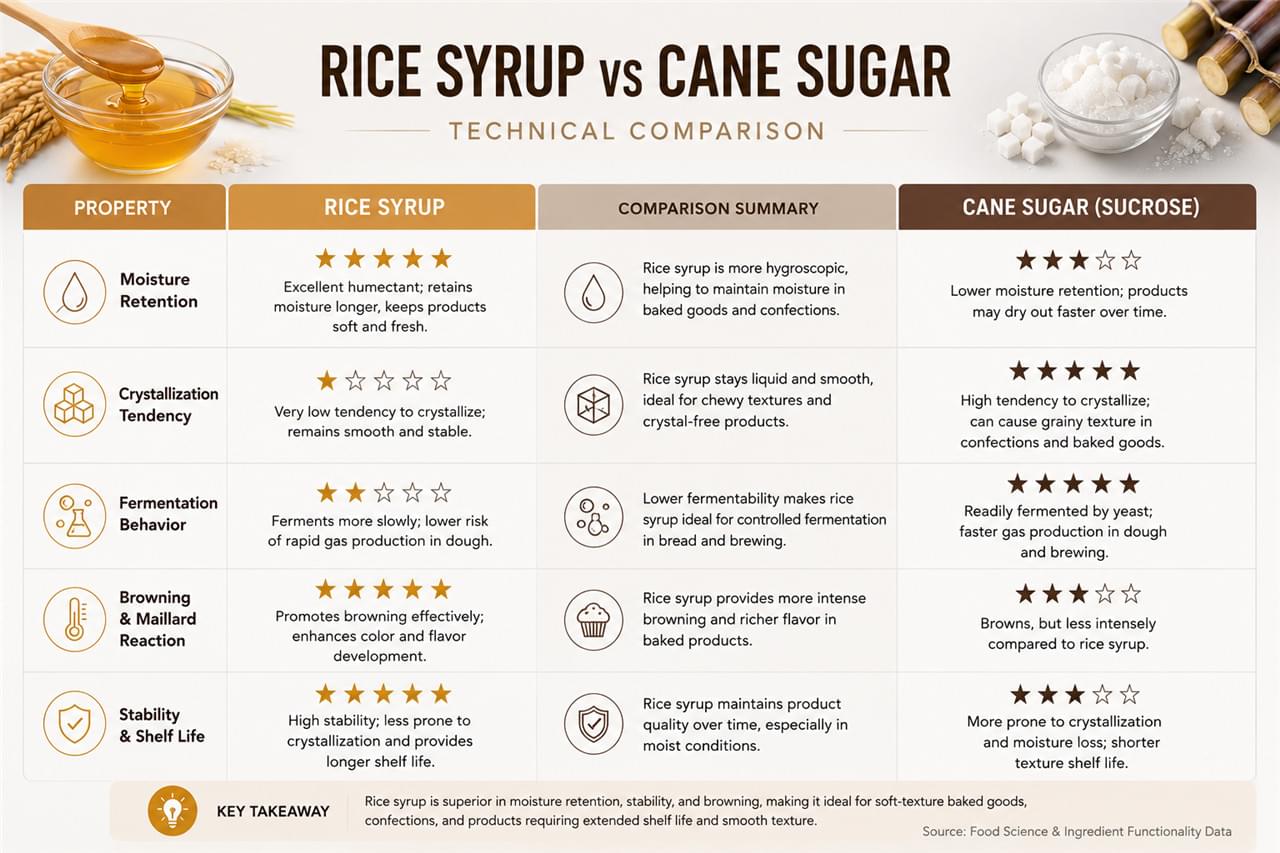
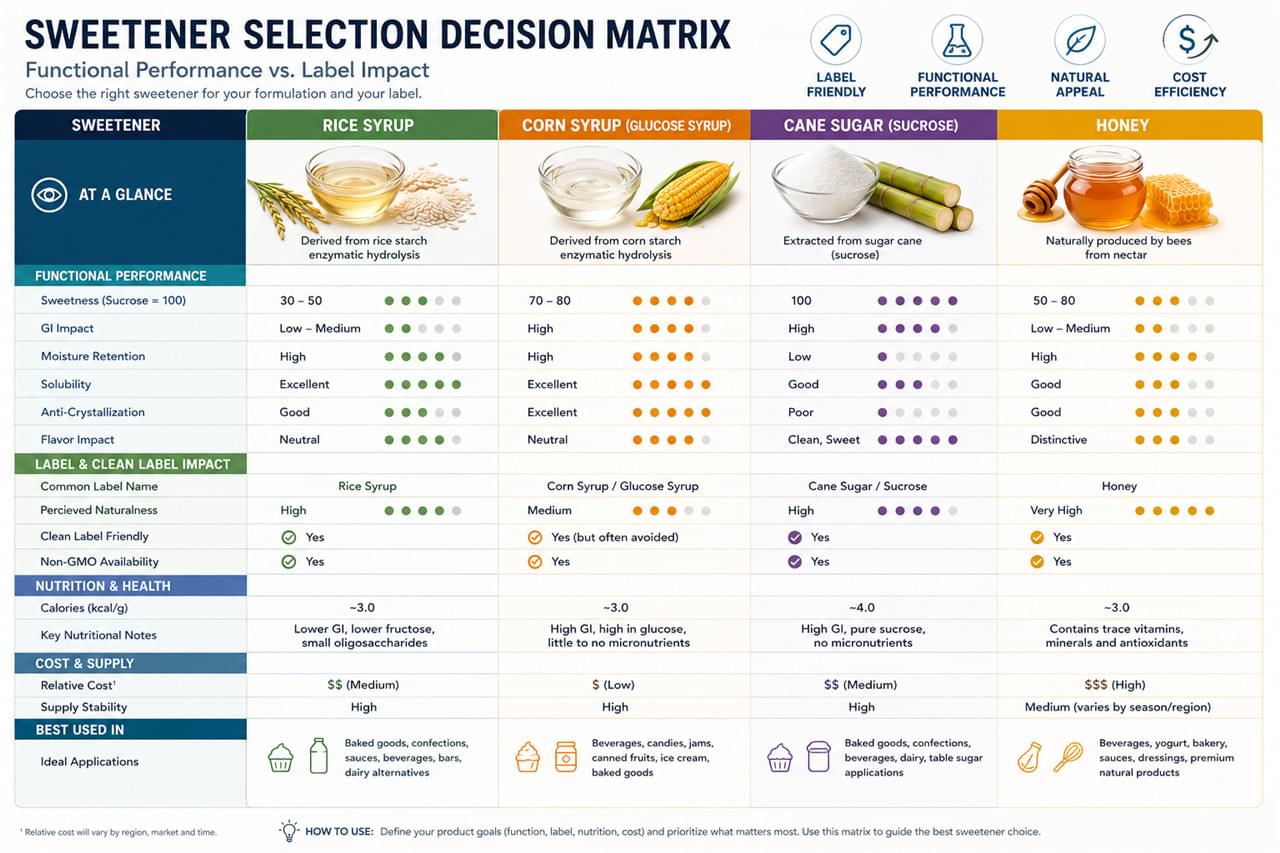
Rice Syrup vs Cane Sugar: Start with the Scorecard
| Property | Rice Syrup (DE 42) | Cane Sugar (Sucrose) |
|---|---|---|
| Form | Liquid (75–85% solids) | Crystalline solid |
| Composition | Glucose + maltose + oligosaccharides | Sucrose (disaccharide) |
| Sweetness | 45–50% relative to sucrose | 100% |
| Solubility | Pre-dissolved | Must dissolve |
| Hygroscopicity | Moderate | Low (dry form) |
| Anti-crystallization | Excellent | N/A (crystallizes itself) |
| Fermentability | Moderate (glucose and maltose) | High (after inversion) |
| Browning | Moderate (Maillard) | Low until caramelization |
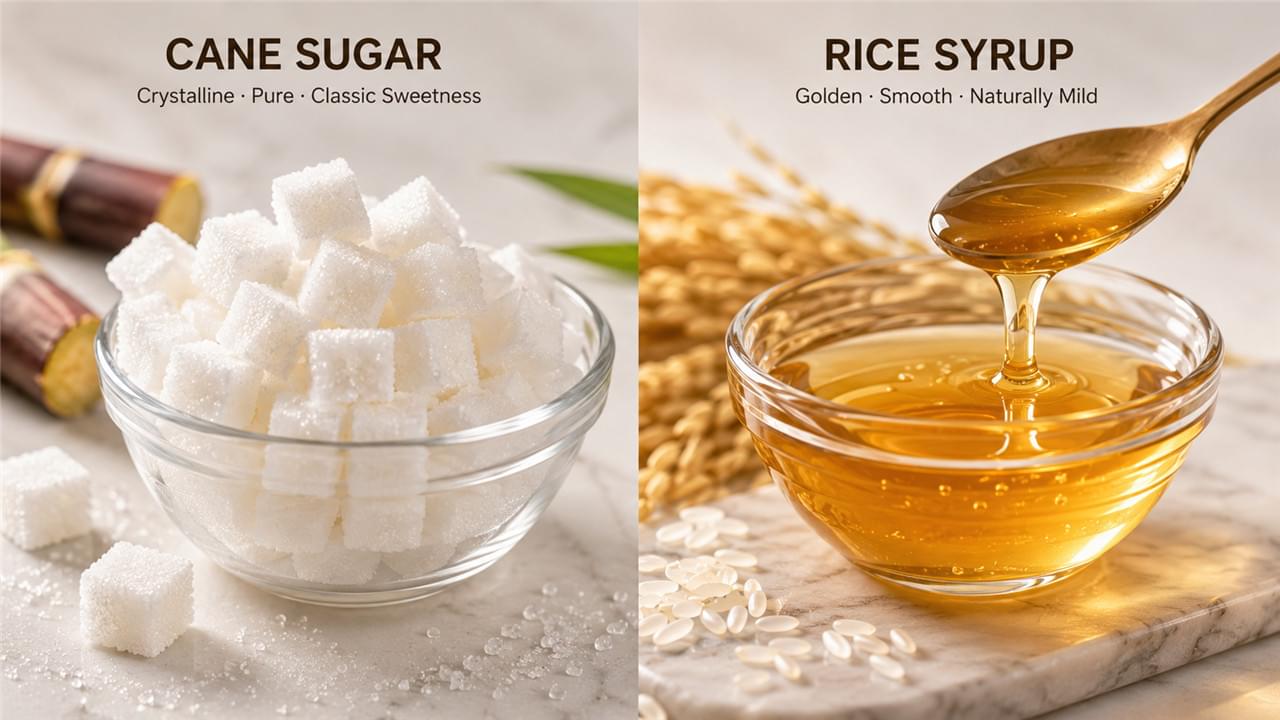
The table tells the story in one glance. Rice syrup arrives pre-dissolved, so it skips the mixing tank entirely, while cane sugar has to be coaxed into solution. Rice syrup also refuses to crystallize, which is either a blessing or a footnote depending on what you’re making. And because it lands at only 45–50% of sucrose sweetness, you’ll always think in volume, not just weight, when you swap one for the other — that’s the crux of any rice syrup vs cane sugar decision.
Where Rice Syrup Has the Edge
- Applications needing liquid form without a separate dissolution step
- Products where crystallization prevention is critical
- Fermentation-based products needing gradual sugar release
- Shelf-life sensitive products that benefit from a humectant
Where Cane Sugar Has the Edge
- Applications demanding extreme sweetness intensity
- Products where crystalline texture matters (sugar coatings, for example)
- Cost-sensitive lines, since sugar is generally cheaper
- Dry-form logistics, where powder beats drums of liquid
🥐 Application-by-Application Analysis
Rice Syrup vs Cane Sugar in Bakery: The Hybrid Play
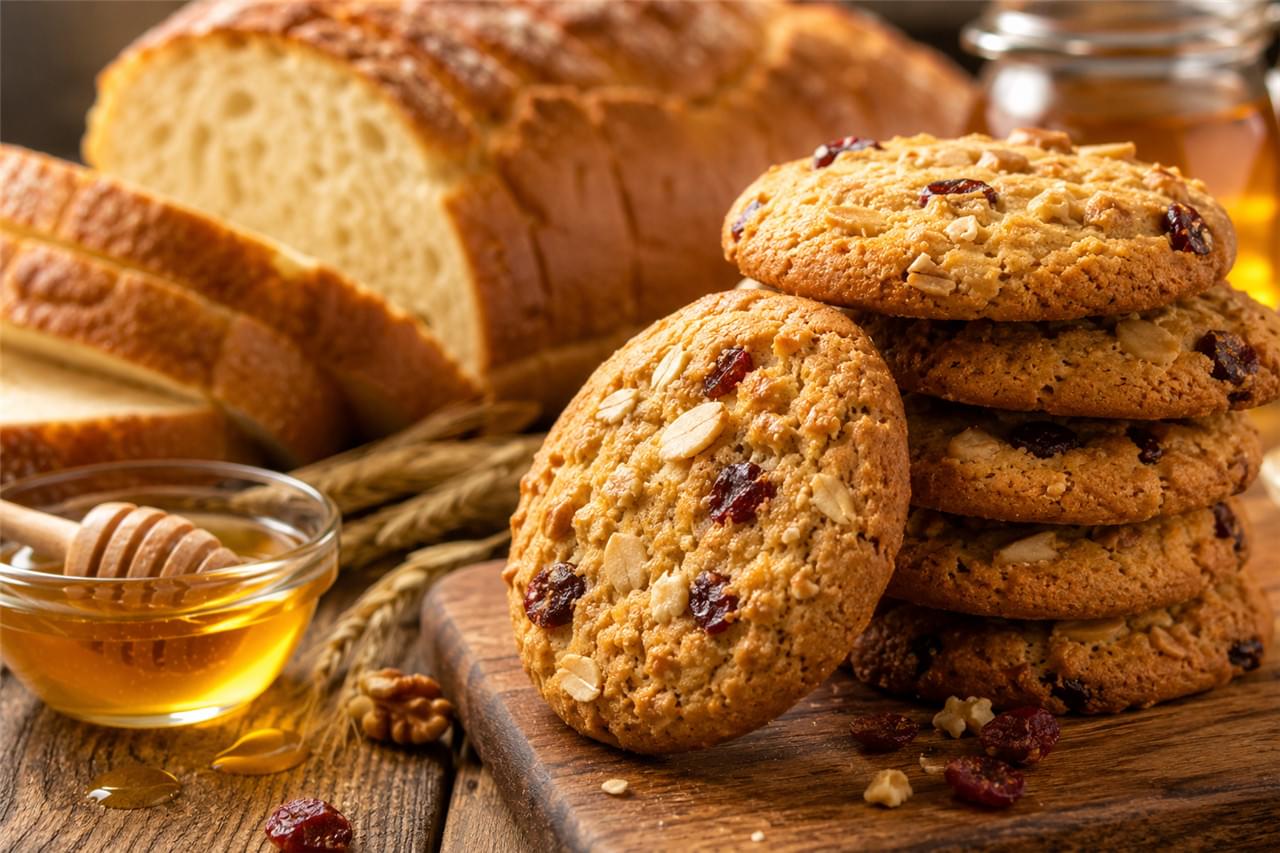
If you’re weighing rice syrup vs cane sugar for your bakery line, rice syrup earns its keep in four quiet ways. It’s pre-dissolved, so batter homogeneity improves without extra mixing time. Its humectant effect holds moisture, which typically extends shelf life by 2–4 days. Yeast systems ferment more consistently on glucose and maltose than on sucrose alone. And because the Maillard reaction — the chemistry behind golden crusts — kicks in at a lower temperature, you get more even browning across the batch.
Cane sugar counters with higher sweetness per gram, a lower price tag, and easy metering in dry mixes. That’s why most premium brands skip the either-or debate and run a hybrid: 70–80% sucrose blended with 20–30% rice syrup. You keep sucrose-level sweetness while banking the shelf life and fermentation benefits.
Confectionery: The One Place Sugar Can’t Go Alone
Here’s the hard rule when the rice syrup vs cane sugar debate lands in your candy line: in hard candy, caramels, and toffees, you need rice syrup or an equivalent. Cane sugar crystallizes on its own, and the entire science of confectionery is really about controlling that crystallization with “doctoring agents” — corn syrup, invert sugar, or, for clean labels, rice syrup. There is no pure-sucrose replacement that works. If your label strategy rules out corn syrup, rice syrup becomes the clean-label doctoring agent of choice.
Beverages
For premium and RTD drinks, the rice syrup vs cane sugar call usually comes down to label strategy. Rice syrup offers direct dosing without dissolution, a neutral flavor that won’t fight fruit, tea, or coffee notes, and a better label than HFCS or corn syrup. Sucrose still wins on sweetness density and sheer processing familiarity. A practical middle ground: rice syrup at DE 55–62 for premium positioning, sucrose for cost-sensitive, high-sweetness lines.
🍎 Nutritional Comparison
Rice Syrup vs Cane Sugar: The Fructose Factor
| Parameter | Rice Syrup (per 100g) | Cane Sugar (per 100g) |
|---|---|---|
| Energy (kcal) | 316–320 | 387 |
| Total carbohydrate | 76–82g | 100g |
| Sugars (mono + disaccharides) | 35–45g | 100g |
| Fructose | <0.5g | 50g |
| Fiber | 0 | 0 |
| GI (estimated) | 55–65 | 65 |
The single most nutritionally interesting difference hides in the fructose row — and it’s where the rice syrup vs cane sugar tradeoff becomes simple for nutrition teams. Rice syrup contains virtually no fructose, while half of every sucrose molecule splits into fructose during digestion. For consumers actively watching their fructose intake — and their dietary sugar limits — rice syrup is a genuinely meaningful improvement, not a marketing talking point.
📉 Sugar Reduction with Rice Syrup
The Rice Syrup Sugar Reduction Playbook
Rice syrup makes one common sugar-reduction strategy genuinely easy to execute. The rice syrup sugar reduction approach follows four steps:
- Partial replacement: Swap 20–30% of sucrose for rice syrup
- Label improvement: “Rice Syrup” appears alongside or instead of sugar
- Calorie reduction: Rice syrup carries 316 kcal/100g versus 387 for sugar
- Texture preservation: Its humectancy compensates for the moisture lost when sugar drops
Example: Cookie Reformulation
- Original: 100g sucrose per 1kg flour
- Reformulated: 70g sucrose + 38g rice syrup — equivalent functional volume, slightly lower sweetness, improved shelf life
💰 Cost Analysis
Direct Cost Comparison
On a straight weight basis, rice syrup typically costs 20–60% more than cane sugar. That number scares buyers until the full ledger lands on the table. Beyond the raw rice syrup vs cane sugar price gap, four factors quietly change the math:
- Processing efficiency: No dissolution step means real energy savings
- Shelf life: Fewer stale returns and less food waste
- Label value: Premium positioning supports higher price points
- Fewer add-ons: Rice syrup can replace added humectants entirely
Total Cost of Ownership
For premium product lines, total cost of ownership frequently tips in rice syrup’s favor once every factor is counted. The trick is modeling your own line — your energy costs, your return rate, your label strategy — instead of eyeballing per-kilo quotes.
🧪 Substitution Formulas
Rice Syrup vs Cane Sugar: Substitution Made Simple
Following this rice syrup vs cane sugar conversion guide, start with 100g of granulated sucrose:
- At 80°Brix rice syrup: Use 100g rice syrup and reduce other liquid by ~20g
- At 82°Brix rice syrup: Use 100g rice syrup and reduce other liquid by ~18g
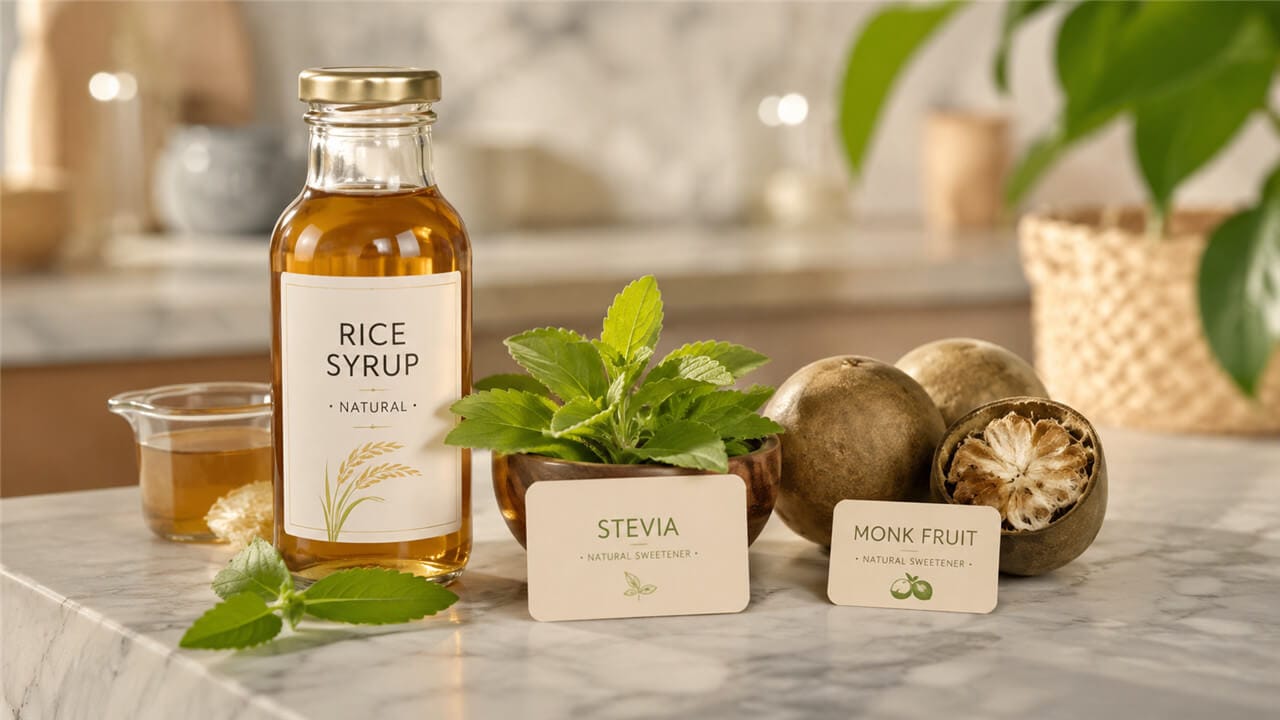
- Sweetness adjustment: Boost rice syrup by 10–15% or add a little sucrose/stevia to close the sweetness gap
When you convert baked goods from sucrose to rice syrup, watch the liquid balance. Rice syrup adds moisture, so reduce water, oil, or milk proportionally. Then check spread and rise after the first bake — small tweaks of 2–5% in liquid are normal and expected, not a sign the formula is broken.
✅ Conclusion
Rice Syrup vs Cane Sugar: The Bottom Line
At the end of the rice syrup vs cane sugar debate, the honest answer is that these two aren’t rivals — they’re complementary tools that work best in combination. Rice syrup wins where liquid form, crystal inhibition, fermentation support, and clean labels matter. Cane sugar wins where sweetness density and low cost rule. Blend them, and you capture both.
Key Takeaways:
- Rice syrup can’t fully replace sucrose on sweetness alone — blend or adjust with other ingredients
- In confectionery, rice syrup is technically necessary to prevent sucrose crystallization
- In bakery, a 20–30% sucrose-to-rice-syrup blend delivers shelf life and fermentation benefits
- The near-zero fructose profile is a real nutritional advantage, not a marketing claim
- Premium label positioning from rice syrup usually justifies its cost premium vs. sucrose
Contact Wuhu Deli Foods for sucrose substitution technical support.
 English
 Deutsch
 Español
 العربية
 Français
 Русский
 Bahasa Indonesia
 한국어
한국어 日本語
日本語 Polski
 Português
 Bahasa Melayu